Showing posts with label Military. Show all posts

Monday, May 25, 2026

Memorial Day

As Americans gather this Memorial Day to visit cemeteries, place flags upon graves, attend parades, and spend time with loved ones, we pause to remember something greater than ourselves: the immense cost of liberty. Memorial Day is not merely the unofficial beginning of summer. It is a sacred moment of national reflection - a day set aside to honor those who gave their lives in defense of the United States of America.

This year’s observance carries an even deeper significance as our nation approaches the 250th anniversary of its founding. Two and a half centuries ago, a bold experiment in liberty was born upon the conviction that all men are created equal and endowed by their Creator with certain unalienable rights. That experiment has endured not because freedom is easy, but because generation after generation of Americans have been willing to defend it often at the expense of their own lives.

Among those generations have been countless Freemasons.

From the earliest days of the American Revolution, Freemasons played a profound role in the Founding of the United States. Many of the men who helped shape the nation were members of the Craft, including George Washington, Benjamin Franklin, Paul Revere, and numerous officers, statesmen, and patriots who believed deeply in the principles of liberty, equality, morality, and human dignity. Masonic Lodges became places where men of different backgrounds could meet “upon the level,” setting aside class and status in pursuit of Brotherly Love, Relief, and Truth.

The ideals that shaped American democracy were not created by Freemasonry, but Freemasonry helped cultivate and reinforce many of the virtues necessary for a free republic to survive: civic responsibility, moral discipline, charity, tolerance, and devotion to something greater than self-interest.

Those ideals did not end with the Founding Fathers.

Throughout every major conflict in American history, Freemasons have stood among those who answered the call to serve. Masons fought at Lexington and Concord, endured the brutal winter at Valley Forge, and helped secure independence during the Revolutionary War. They later fought to preserve the Union during the Civil War, defended freedom in the trenches of World War I, stormed the beaches of Normandy during World War II, and served with courage in Korea, Vietnam, Iraq, Afghanistan, and countless other places around the globe.

Many never returned home.

Memorial Day reminds us that freedom is never inherited permanently. Every generation must decide whether it is willing to preserve the principles handed down to it. The men and women we honor today answered that question not merely with words, but with sacrifice.

For Freemasons, remembrance carries a particularly solemn meaning. Our fraternity teaches reverence for duty, fidelity to obligations, and the immortality of noble deeds. We are taught that a person’s life is measured not simply by wealth or achievement, but by character, service, and the good left behind for future generations. The fallen exemplified those virtues in their highest form.

As America approaches its Semiquincentennial, we should reflect not only upon our triumphs, but on the sacrifices that made those triumphs possible. The freedoms we often take for granted were purchased dearly by soldiers, sailors, airmen, Marines, Coast Guardsmen, and guardians who stood watch over the Republic across generations.

This Memorial Day, may we remember them with gratitude.

May we honor them not only with ceremonies and flags, but by striving to be citizens worthy of their sacrifice.

And may we never forget that the American experiment in liberty has endured for 250 years because brave men and women were willing to defend it with their lives.


Thursday, September 4, 2025

RIP Reese Harrison

I just heard that Bro. Reese Harrison passed away on August 29, 2025. He could be outspoken at times, but always devoted and knowledgeable.

Reese Lenwood Harrison, Jr., of San Antonio, Texas, passed away on August 29, 2025. Born January 5, 1938, he devoted his life to the law, to military service, to his church and community, and above all to Freemasonry, where his record of service and leadership stands among the most distinguished in Texas history.

A graduate of Baylor University and Southern Methodist University School of Law, Reese was admitted to the bar in 1962 and began his career as an Assistant U.S. Attorney for the Western District of Texas, appointed by President Lyndon B. Johnson and Attorney General Robert F. Kennedy. He later became a senior partner, CEO, and litigation chair at Oppenheimer, Blend, Harrison & Tate, and practiced with Clark Hill PLC. Board Certified in Civil Trial Law and nationally recognized for his litigation work, he was consistently named among Best Lawyers in America and Texas Super Lawyers.

In addition to his distinguished legal career, Reese served nearly 35 years in the Texas Air National Guard and U.S. Air Force Reserve, retiring as a Colonel and later receiving a brevet promotion to Brigadier General. He was honored with the Major General Paul D. Straw Trophy in 1991 for exemplary military and civic service.

A devoted husband and proud father of two daughters, Reese was also deeply active in civic, charitable, and heritage organizations, including the San Antonio Livestock Exposition, Trinity Baptist Church, the Sons of the Republic of Texas, and Freemasonry, where he held many national and international offices. He will be remembered as a man of service, leadership, and faith who gave tirelessly to his country, profession, and community.

His Masonic career is quite extensive, and it’s almost impossible to sum it up quickly…so I won’t try. Raised in Albert Pike Lodge No. 1169 (1959), Reese went on to serve as Worshipful Master (1969–70) and later Cibolo Lodge No. 151 (2004–05). He served as District Deputy Grand Master (1982), District Education Officer (1997–2000), Grand Orator (1987), and the President of the Masters, Wardens, and Secretaries Association. He received numerous honors, including the Golden Trowel Award, the Henry Price Medal (Massachusetts), and the Pierpoint Edwards Medal (Connecticut). He served as Most Worshipful Grand Master of Masons in Texas in 2004.

Reese was exalted in San Antonio Chapter No. 381 (1959), Royal Arch Masons, where he served as Excellent High Priest and long-time Treasurer. He was District Deputy Grand High Priest (1971) and Most Excellent Grand High Priest of Texas in 2014. In Cryptic Masons, Reese was greeted in San Antonio Council No. 14 (1960), serving as Thrice Illustrious Master. He was District Deputy Grand Master (1971, 1974) and Most Illustrious Grand Master of Texas in 2018. In Templary, he was knighted in San Antonio Commandery No. 7 (1960), where he served as Eminent Commander (1974). He was recognized with the Commander’s Merit Award, the Knight Templar Cross of Honor (2001), and the ranks of Knight Commander of the Temple (1992) and Knight Grand Cross of the Temple (1999) by the Grand Encampment of Knights Templar USA.

Reese received the 32° in 1959, invested a KCCH in 1971, and coroneted 33° Inspector General in 1979. He held multiple presiding offices in the Valley of San Antonio, including Venerable Master and Wise Master, and served as Personal Representative of the SGIG. He was also active in the Scottish Rite Research Society.

Reese was created a Noble of Alzafar Shrine (1959), later serving as Potentate in 1979 and President of the International Past Potentates Association (1985–86). He served as Monarch of Omala Grotto (1979), longtime Zone Director, and national officer. Reese was also active in the Royal Order of Jesters, Order of Quetzalcoatl, and the Cabiri.

Reese held some of the highest offices in Masonry internationally:

  • Governor General (1998–2000), Regent, and recipient of the Knight Grand Cross of York in the York Rite Sovereign College of North America
  • Grand Master General (2004–2005) and later Grand Treasurer-General in the Knights of the York Cross of Honour
  • Sovereign Grand Preceptor (2003–2007) and later Grand Treasurer in the Sovereign Order of Knights Preceptor 
  • Most Illustrious Grand Sovereign (2006–2007) in the United Grand Imperial Council of the Red Cross of Constantine of the USA and its Jurisdictions
  • Past Chief Adept of Texas College, IX° (1992), and Knight Grand Cross (1999) in the Societas Rosicruciana in Civitatibus Foederatis
  • Most Excellent Great Chief of the Grand Council of the USA (1996) in the Knight Masons.
  • Most Venerable Sovereign Grand Master of the USA (1999) for the Allied Masonic Degrees.
  • Most Worthy Grand Master (USA, 2016–2017) in the Order of St. Thomas of Acon
  • Life Member (1967) and Substitute Provincial Grand Master of the USA in the Royal Order of Scotland
  • Most Illustrious Grand Chancellor (2007) in the Grand College of Rites
  • Most Honorable Commander General (2003–2007) in the Masonic Order of the Bath
  • Most Eminent Grand Preceptor of the Grand College of America, Holy Royal Arch Knight Templar Priests 
  • Master Councilor, Chevalier, Legion of Honor, Executive Officer for Texas, and Grand Master of DeMolay International (1982–83) in the Order of DeMolay 

He was also a member of the Order of High Priesthood, Silver Trowel, Knights Crusaders of the Cross, National Sojourners, Heroes of ’76, High Twelve International, Order of the Eastern Star, Order of the Amaranth, Order of the White Shrine of Jerusalem, Tall Cedars of Lebanon, Ancient Egyptian Order of Sciots, Texas Lodge of Research, Philalethes Society, Scottish Rite Research Society, and Alabama Confederate Military Lodge of Research

Across more than six decades, Reese rose from Blue Lodge leadership to the highest councils of the Craft worldwide. His dedication, intellect, and unwavering commitment will long be remembered by his brethren in Texas and around the globe.

Sunday, January 21, 2024

Thurman C. Pace

I'm saddened to learn of the death of Brother Thurman C. Pace, Jr. of New Jersey. He was 99 years old (next week he would have turned 100). While I had only met him a few times, I learned how dedicated he was to Freemasonry.

Thurman was a World War II Veteran who was present when the Dachau Death Camp was liberated. After the end of the war, he returned to the States and earned a Bachelors degree from Auburn University. He retired in 1987 as Financial Executive of the corporation and President of the United States Mutual Liability Insurance Company. In 1950 he married his wife Betty and they had three children: Donna, Arthur, and Susan. They were married for 74 years.

As another Mason said, "Sir Knight Thurman's Masonic record is an enviable one. He's presided over more than 30 Masonic organizations during his life. Again, space does not permit their listing. It would be far easier to list what Thurman hasn't done!"

Thurman was a 33° and former Deputy of New Jersey for the Ancient & Accepted Scottish Rite, Northern Masonic Jurisdiction of the USA; Past Commander of the Legion of Honor Preceptory for New Jersey DeMolay; a Most Illustrious Past Grand Chancellor and Knight Grand Cross in the Grand College of Rites; Past Grand Commander and Past Grand Recorder of the Grand Commandery of Knights Templar of New Jersey, Past Department Commander of the Northeastern Department (1982-1985), recipient of the Knight Commander of the Temple, and an Honorary Most Eminent Past Grand Master of the Grand Encampment of Knights Templar USA; a Most Excellent Past Great Chief of the Grand Council of Knight Masons USA; an Honorary Most Venerable Past Sovereign Grand Master of the Grand Council of the Allied Masonic Degrees of the USA; a Most Illustrious Past Grand Sovereign of the United Grand Imperial Council of the Red Cross of Constantine; the founder and first Grand Preceptor of the Sovereign Order of Knights Preceptor (he served for over 25-years as Grand Preceptor); and a Most Worthy Past Supreme Magus and a Knight Grand Cross of the Societas Rosicruciana in Civitatibus Foederatis where, in 2002, he also chaired the proclamation ceremony for the formation of the Societas Rosicruciana in Lusitania (Portugal) and the investiture of the Supreme Magus for the newly formed High Council.

I'm sure I missed an accomplishment of this truly amazing Mason and his death will be felt around the world of Freemasonry. Requiesce in pace.

Saturday, November 11, 2023

Veteran's Day

To all of my Brothers and Sisters of the Armed Forces, past and present, I wish you all a Happy Veteran's Day. God bless all of you and God bless the United States.

Friday, November 11, 2022

Happy Veteran's Day

To all of my Brothers and Sisters of the Armed Forces, past and present, I wish you all a Happy Veteran's Day from the Holy Land. God bless all of you and God bless the United States.


Wednesday, September 28, 2022

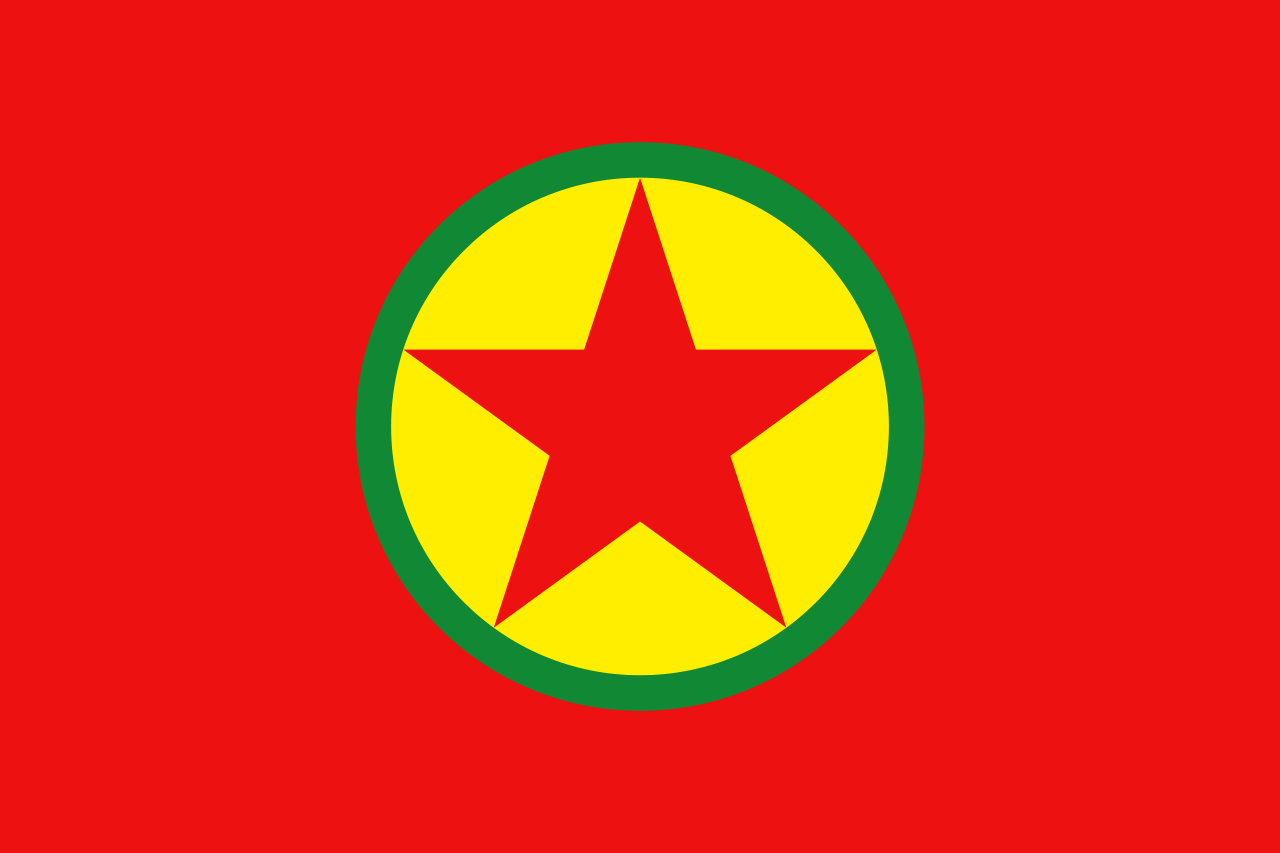
Kurdistan Worker’s Party (PKK)

Today was one of those days when I was going through my computer when I found this paper that I wrote for a International Relations Seminar on Civil War and Terrorism that I took in 2014. I chose to focus on a group related to the Kurds as I was deployed to Kirkuk, Iraq, in 2004-2005 and my unit interacted with the Kurdish people.

Introduction

Considered the world’s largest population without a state, the Kurds are a people who reside in parts of Turkey, Iraq, Iran, and Syria. After WWI, they were promised an autonomous region, but were cheated out of such independence. Their culture has been attacked by the Turkish government and forced into assimilation; the Turks seeing Kurdish nationalism as a threat to the security and order of the state (Bruno 2007). They have been brutally attacked by despots of the region. Out of such a harsh lifestyle the Kurdish Worker’s Party, or Partiya Karkeran Kurdistan (PKK), emerged in the 1970s as a movement to fight for Kurdish independence and free itself from “imperialistic powers” it sees as a threat to its goals. This group has evolved over the years and has gone through a few name changes. The PKK has also been referred to as Kurdish Kongreya Azadi u Demokrasiya Kurdistan (KADEK), Kurdish Kongra Gele Kurdistan (Kongra-Gel), Congress for Freedom and Democracy in Kurdistan, and Halu Mesru Savunma Kuvveti (HSK) (Amini 2010).

This paper will cover the pre-history and events leading to the establishment of the PKK, their grievances, their methods of attacks or tactics, methods of recruitment and mobilization, motivations, government responses to their actions, their successes and failures, interventions, and prospects for either peace or further violence in the future. The PKK is an interesting case to study as it shines a light on a unique situation of a people without a state. This group is a key to stability in the region. They have affected relations between the United States and Turkey, the United States and Iraq, Turkey and Syria, Turkey, and the European Union. Without an end to the fighting, the Kurdish people will only be further oppressed and alienated which only embolden the PKK to commit further acts of violence in response. Neither side trusts each other and this case may require a neutral, independent 3rd party to intervene and bring both parties to concessions, and ensure that both parties stick to the agreements, punishing those who attempt to break the peace and cause further conflict.

When the Ottoman Empire was defeated by the Allied powers during WWI, its dominion was shattered and turned into several sovereign states. One such zone, which never came into fruition, was the zone designated as an autonomous region for the Kurdish people. The Turkish government since the fall of the Ottomans has endeavored to remove from existence the Kurds by forcing them to assimilate to include the banning of their language, culture, and their names for geographical areas. Their justification is that Kurds are not real and that they are really just “Mountain Turks” (Gunter 2000). These oppressive acts continued until the late 1970s when Abdullah Öcalan established the PKK who didn’t start using violence until the mid-80s, but that information is contested. The 1980s was a violent time in Turkey, going through a military coup which only further brutalized the Kurdish people. The PKK began to use violence as a tool to coerce the government to accommodate their demands for independence.

The PKK has been a force of instability in the region has caused around 30,000 to 40,000 deaths, many of whom were civilians not military targets (Bruno 2007). The PKK is also not recognized by the Patriotic Union of Kurdistan (PUK) or the Kurdish Democratic Party (KDP) who are seen as two legitimate political entities that are also striving for Kurdish independence (Kutschera 1994). The actions of the PKK are viewed as counterproductive and injure the legitimacy of the cause. The PKK see themselves as protectors of the Kurdish people, but have used indiscriminate attacks that have left many innocent lives ravaged and discriminate attacks that have targeted Kurdish persons. This also has a toll of the economy of Turkey as it spends around 20% of its national budget on defense which pays for a well-armed Turkish Army, half of whom are stated in and around Kurdistan (Menon 1995).

The Kurdish region, often called “Kurdistan” lies upon the southeast part of Turkey, northeast corner of Syria, northern Iraq, and northwestern Iran. This region was originally supposed to be given to the people after the fall of the Ottoman Empire, but the Treaty of Sevres was never ratified and that promise was never fulfilled to the Kurdish people (Zalman 2007). Had the treaty been enforced it would have taken away 2.5-million square kilometers of land from Turkey. Kurdistan is extremely rich in oil as about 10% of the total oil resources of the Middle East are here (Menon 1995). The Kurds are a distinct ethnic group found in the Middle East with their own language, but most of them are Sunni Muslims. In Turkey, the Kurds make up around 15-20% of the population; in Iraq, 23% of the total population (Zalman 2007); in Iran, around 13% of the population; and around 12.7% of the population in Syria (Menon 1995).


Grievances

During the days of the Ottoman Empire, the Kurds were left relatively alone and given autonomy, but after WWI the Turkish leader, Mustafa Kemal Ataturk, refused to allow the Kurds to have independence and implemented policies that attempted to quell their culture, language, and any notion of self-determination by banning anything that was Kurdish (Pike 2013). When the people protested they were treated with further oppression, massacres, destruction of entire villages, deportation, forced assimilation, torture, imprisonment, police and military intimidation, and Turkish “colonization” of Kurdish lands (Menon 1995). At present, it is legal to speak Kurdish in Turkey, but celebrations and expressions of Kurdish culture are still restricted by the Turkish government (Bruno 2007). Turkey was able to secure an agreement with Iraq and Iran for them not to recognize Kurdish independence. The struggle for independence was squashed for a time (Washington Post 1999), but this forced assimilation only planted the seeds for the emergence of a Kurdish nationalistic movement in the region (Zalman 2007).

The political environment combined with the repressive acts of the government created a unique situation for the creation of the PKK. Turkey, being a Democracy, acted in a brutal manner towards an ethnic group who was better off under an autocratic government (the Ottomans). The Kurds were alienated from their own culture and forced into a life they didn’t want. Those Kurds who attended a university were exposed to other ideologies. Seeing Turkey’s form of government as failing to protect and represent the people’s desires many saw other ideologies are more desirable. It is no surprise then to see the followers of the PKK follow Marxist doctrine. In the 1970s communism was starting to decline, but was still working in China and was also starting to spread to some of the smaller countries where insurgent groups were adopting it as their ideology (an example being the Tamil Tigers in Sri Lanka or the MLR in Finland).


Pre-Formation and Early History

The Kurds trace their origins back to the Medes, an ancient people who lived in western Iran and southeast Turkey, who founded an empire after they defeated the Assyrians in the 7th century BC (Menon 1995). They themselves were defeated by the Persian Empire and never rose again. The Kurds themselves exercised independence under the authority of the Ottoman Empire, but after they were defeated and partitioned, the Kurdish region was split among multiple states. The brutality of the Turkish government kept the Kurds at bay for decades, but in the 1950s and 1960s, Kurds started forming clubs as well as establishing a political party known as the Kurdistan Democratic Party of Turkey, or KDPT (Kutschera 1994). The response was a massacre of students and the imprisonment, assassination, or exile of the leaders of KDPT. The Workers' Party of Turkey, or TIP, emerged and started distributing a journal that was in the Kurdish language. The Turkish government implemented assimilation camps where Kurds were forced to send their children. With the 1970s only came further oppression and instability in the state as there was a military coup in March of 1971. The government proceeded to use the prisons and schools as indoctrination centers, propagating anti-Kurdish and pro-Turkish material.

More clubs continued to emerge through the 1970s; one of them was started by students led by Abdullah Öcalan. This one was not solely about Kurdish grievances, but was also about supporting Marxist ideals (Amini 2010). This group wasn’t formalized until 1978, when the agenda was set and which was influenced by the writings of Mao as well (Zalman 2007). Öcalan wished to cause a revolution that would free the Kurdish people and establish a Kurdish state (START 2014). Öcalan was the son of a poor peasant and studied political science at Ankara University where he was introduced to communist ideals (Menon 1995). The group was composed of two different wings, a political wing, and an armed wing, with smaller branches or cells below. This group would not start its campaign of violence until 1984 (Amini 2010). The early 1980s marked another time of political upheaval as yet another military coup occurred in September of 1980 (Kutschera 1994). Once it started using violence it was primarily located in rural areas and often against military targets, but by the 1990s they started employing terrorist tactics and had moved into more urban areas where a greater population could be effected (Pike 2013).

The PKK was dealt a harsh blow in 1999 when the leader, Abdullah Öcalan, was captured and is now currently serving a life sentence (Australian National Security 2013). Originally he was sentenced to death, but there was enough commotion from the international community that the Turkish government commuted it to life in prison. In his absence, a council was formed to run the operations of the group. In his absence, there seems to be a power struggle between the leaders of the Executive Council and those in the armed or military wing of the group.


Goals

The goal of the PKK is to establish an “independent, communist, ethnically pure Kurdish state” by taking land from Turkey, Iraq, Iran, and Syria (Onay 2008). Some of the other objectives changed as the political environment in Turkey changed (Australian National Security 2013): such as the Turkish government giving Kurds voting rights. The leaders who took over after Öcalan was arrested have added his release as to their objectives (PKK 2011). Since his capture though, Öcalan has called for peaceful change and has asked the PKK to abandon violent and terrorist tactics, and seek concessions through political means, but this was most likely coerced by the Turkish government. In January 2000, the group did make attempts to move towards achieving their goals through political means (Pike 2004). This would change in 2004 when the PKK abandoned a ceasefire and returned to using violence rather than peaceful means. In 2010 concessions were attempted in Oslo between Turkey and the PKK, but failed and conflict between the two groups resumed. This led to 2-years of large scale violence (Pike 2013). In March of 2013, Öcalan again pleaded for his followers to use peaceful methods and to withdraw from Turkey (BBC 2013).


Motivations

The PKK is primarily voted by nationalistic ideals and the drive to be allowed to be an independent state. They motivate their members by using community support, particularly as they call for martyrdom. On the PKK website, it states, “We commemorate all the martyrs of the revolution with respect and gratitude and promise that we are going to crown the freedom struggle with victory in their memory.” (Pike 2004) The repressive actions of the Turkish government have, for the most part, unified the Kurdish people, although not all agree on the means on how to accomplish their independence. The PKK demonizes the governments, particularly the Turkish, and their collaborators in the brutal treatment of the Kurdish people which justifies any means necessary to defeat them. The group exploits emotional, communal, religious, and secular sentiments to gain popularity and gain new recruits (Australian National Security 2013). Although we see this isn’t fully working as the PKK is said to be down to around 5,000 members, falling from around 50,000 members at its height (Bruno 2007).


Operations and Mobilization Strategies

The PKK operates primarily in Turkey, Iraq, Syria, and Europe (Amini 2010). Most of its targets reside in Turkey, but is known to attack targets in Iraq. The PKK would use the states surrounding Turkey as a safe haven and spots for mobilization before crossing the Turkish border. The No-Fly Zones established by the United States and Turkey provided protection from the Iraqi military during the days of the Saddam regime (Cagaptay and Unver 2007). The PKK recruits most of its members from southeast Turkey where Kurds are most oppressed by the Turkish government, but gains members from Kurds found in Iraq, Syria, Iran, and the Kurdish diaspora in Europe (Australian National Security 2013).


Support

The PKK receives support from a large Kurdish diaspora present in Europe (France, Germany, Greece, Austria, etc) (Amini 2010). It also gains funding from criminal activity such as drug trafficking, human smuggling, extortion, money laundering, prostitution, and “voluntary” tax collection (Australian National Security 2013). The PKK is also said to receive support from a network of local news agencies, television stations, radio stations, newspaper companies, and publishing companies found throughout Europe (Onay 2008). For a time it also received support, usually just political, from Syria, but in the late 1990s this changed and Syria was coerced into withdrawing support from them (Zalman 2007). When the PKK was able to operate within Syria they used it as places for training camps as they faced less danger training in Syria than attempting the same in Turkey or even Iraq.


Tactics of the PKK

The PKK did not start using violence until 1984, but since then have used guerilla and terrorist tactics, inspired by the writings of Mao, in an attempt to achieve their goals (Zalman 2007). Some of their activities have included kidnappings, bombings of tourist sites like hotels, suicide bombings, placing of landmines, arson, vandalism, sabotage, and ambushes against military targets in Iraq and Turkey, often striking over the border then retreating back to the other country for safe haven (Australian National Security 2013). They have also been known to attack local officials and villagers who are opposed to their operations (Amini 2010). They may also attack the family of officials and village leaders to coerce them to comply and support the PKK (Onay 2008). Looking at the database compiled by the Chicago Project on Security and Terrorism, 11 suicide attacks have been carried out by the PKK and in 6 of the attacks the gender was known and we find that the PKK was just as likely to use women as men, although this analysis is skewed by the fact that gender information on the other 5 cases is missing which could either accept or reject this speculation (Pape 2014). Some do speculate though that most of the suicide bombings were employed by women, but no corroborating data is provided (Ministry of Foreign Affairs 2011).

While some of the PKK’s attacks have caused collateral damage and may have been indiscriminate, most of their attacks are targeted at specific individuals or groups whom they see as a threat, enemy, or collaborator (Zalman 2007). Many of these attacks seem to do a few things: 1) cause as much damage on the populace that the government feels pressured into giving in to the PKK’s demands, 2) provoke military repression against the populace that the community loses its faith in the legitimacy of the government and military, and 3) to intimidate and coerce the populace, particularly the Kurds, into supporting its cause and the means to achieve it.


Success and Failures

The PKK has been fighting the Turkish government for 30-years and has employed a vast array of tactics to coerce the government to accommodate them, but little concessions have been given by Turkey. In 2009, reforms were emplaced aimed at giving the Kurdish people more rights in Turkey (Amini 2010). This wasn’t done because of the actions of the PKK, but most likely originated from pressures put on by the international community, particularly the European Union. Since 1987 Turkey has attempted to join the European Union, but has been denied membership some reasons have been Turkey’s glaring human rights abuses, particularly against the Kurdish people (BBC 2013). Membership has dropped dramatically; roughly 90%. The motivational and mobilization policies have not kept a steady stream of new recruits. The PKK attempted to reinvent itself, by adopting softer policies and changing its name, but is still considered by most states to be a terrorist organization (Bruno 2007). The final point in all of this is that no Kurdistan exists, either as an independent state or a recognized autonomous region.


Government Responses

As noted above, the Turkish government has given some political and economic concessions to the Kurdish people such as the National Unity Project (Amini 2010), but in response to the actions of the PKK, the Turkish government has employed oppressive acts against the PKK and the Kurdish people in general. The Turkish government eventually grew tired of the cross border attacks and started crossing into Iraq to attack the PKK. Iraq, to include Kurdish leaders of the PUK and KDP, have disavowed the PKK and refused to give them safe haven or support (Amini 2010). European states have arrested and punished criminal elements tied with the PKK and have also listed the PKK as a terrorist organization. The PKK is also listed by the United States and NATO as a terrorist organization. The United States has had a long relationship with Turkey and, with the Iraqi conflict, has strong ties with the government of Iraq. The United States has also been supportive of the Kurdish people, but has opposed the terrorist activity of the PKK.

All states use repression and in this case, we have seen negative and positive effects. While the indiscriminate violence created the landscape for the emergence of the PKK. Its oppressive nature of the Kurdish people has only solidified the people in their desires for an independent state free from the grip of the Turkish regime. It has made some notable positive steps by making political and economic reforms in an attempt to distinguish the fire that has enabled the PKK.

Until 1999, Syria had given support to the PKK, but gave it up under the pressure of the Turkish government. Turkey and Syria had been at odds with each other for decades which stemmed from border and water rights disputes. It is over this friction between the two that most likely influenced Syria to give aid to the PKK.


Current State of Affairs

As of today the PKK still exists, but in March of 2013, the imprisoned leader, Abdullah Öcalan, asked for the PKK to cease operations and withdraw from Turkey. Little can be found on the organization for events occurring in later 2013 and in 2014. According to CNN, PKK leaders have threatened to resume operation in Turkey as they feel Turkey is using the entities in Syria to conduct a proxy war against Kurds in that state (Coles 2013). From the press releases on the PKK websites, they continue to condemn Turkey for a variety of reasons, but have not openly committed any attacks in 2014. Öcalan remains in jail, but many are moving that he be given better facilities and treatment. As it sits right now, the PKK is holding to its promise of a cease-fire, but with the current conflict in Syria and Iraq, instability could cause a reemergence of the PKK in Turkey.


Prospects for the Future

The PKK seems to be looking for reasons to resume fighting has lost much of its support. Turkey has given some concessions, but in the event that they make any strong repressive moves against the Kurdish people, it may give the PKK the needed support and justifications to resume fighting in Turkey.

While Abdullah Öcalan is considered the de facto leader of the PKK, there appears to be a conflict between the two branches, political and armed/military. It was the leaders of the Executive Council, who took over after Öcalan’s arrest, that made attempts with peace, but it was the hardliners and leaders of the military wing who reinstated the use of violence in 2004. If the Turkish government wants to end or at least cripple the PKK, they need to accommodate the Kurdish people more by giving them more rights and freedoms, particularly with cultural expressions. Doing so would remove or limit further support of the PKK as it would remove the grievances and give legitimacy to the governance of the Republic of Turkey, at least over that of what is offered by the PKK. The Turkish government can also use Öcalan as propaganda and give him better accommodations in prison which would also give his messages of peace further legitimacy which may keep in check most of his followers in the PKK. There must also be multilateral operations to stem the criminal activity in Europe that funds much of the PKK.

It is likely the PKK will again try to turn into a political party, but this may be rejected by the Turkish government which could cause some escalation of violence. They may also try to become a political party in the Kurdish region of northern Iraq and seek to compete with the PUK and KDP, which could cause instability in that area of Iraq. Though they banned them in the past, the Turkish governments could win over the Kurdish populace by allowing the KDP and/or the PUK to be allowed as legitimate political parties within Turkey. This would give the Kurdish people hope for political change in their favor and address any current or future grievances that may arise.


Conclusion

For 30-years the Turkish-PKK conflict has caused the deaths of 30,000-40,000 people, instability in the region, and which has resulted in Turkey’s reputation being tarnished in the eyes of the international community and losing legitimacy among a large portion of its population. Both sides have committed human rights violations in an attempt to accomplish their goals. In its conflict with the PKK, the Turkish government has also harmed its economy by putting so much of the budget to the military to quell this terrorist organization (Gunter 2000). The Kurds number in the millions and are “people without a home”. Their promised land was taken from them and in return, they were brutalized for decades. Their culture, heritage, language, and identity were treated as a crime. The PKK appears as an extreme example of the nationalistic mentality that has emerged as a result of the repressive behavior of the Turkish government. Since his capture, the symbolic leader, Abdullah Öcalan, has called for peace between the two, but not lasting peace has occurred. Even now there is a ceasefire in place, but this is no indication of future events. Recent events in Syria could cause the reemergence of conflict between the PKK and Turkey, and in general, the instability caused by this conflict is the biggest challenge facing Turkey and its future.

Regardless, neither side trusts each other and this case will require a neutral, independent 3rd party to intervene and bring both parties to concessions and ensure that both parties stick to the agreements, punishing those who attempt to break the peace and cause further conflict. The PKK was strong enough to inflict serious damage on Turkey, but hasn’t been strong enough to win the concessions it strived to at its birth. Stephen Gent (2008) and Patrick Regan (2009) both point out that a state will only intervene when outcomes will be favorable and when the non-state actor is strong enough or evenly matched in their capabilities with the government. Regan does state in his book that diplomacy and mediation are a type of intervention that is more effective than military intervention. An organization like the United Nations would be an appropriate mediator and arbiter for the necessary accords to end this bloody conflict. Without such intervention, the PKK-Turkish conflict may be static now, but there is no certainty for lasting peace and further conflict could easily be stirred up again.

References

1. Amini, Shiler. 2010. “The PKK and the US State Department’s Terror Report.” August 13. http://kurdistancommentary.wordpress.com/2010/08/13/the-pkk-and-the-us-state-departments-terror-report/ (June 20, 2014). 

2. BBC. 2013. “Profile: The PKK.” March 21. http://www.bbc.com/news/world-europe-20971100 (July 3, 2014). 

3. Bruno, Greg. 2007. “Inside the Kurdistan Workers Party (PKK).” October 19. http://www.cfr.org/turkey/inside-kurdistan-workers-party-pkk/p14576 (June 20, 2014). 

4. Cagaptay, Soner and H. Akin Unver. 2007. “Iraqi Kurds and the Turkish-Iraqi Memorandum against the PKK.” August 21. http://www.washingtoninstitute.org/policy-analysis/view/iraqi-kurds-and-the-turkish-iraqi-memorandum-against-the-pkk (June 20, 2014).

5. Coles, Isabel. 2013. “Kurdish rebels threaten new fight in Turkey as Syria clashes intensify.” October 22. http://www.reuters.com/article/2013/10/22/us-turkey-kurds-pkk-idUSBRE99L06820131022 (July 9, 2014). 

6. Gent, Stephen E. 2008. “Going in When It Counts: Military Intervention and the Outcome of Civil Conflicts.” International Studies Quarterly 52 (December): 713-735. 

7. Gunter, Michael M. 2000. “The Continuing Kurdish Problem in Turkey after Öcalan's Capture.” Third World Quarterly 21 (October): 849-869. 

8. Kutschera, Chris. 1994. “Mad Dreams of Independence: The Kurds of Turkey and the PKK.” Middle East Report 189 (July-August): 12-15. 

9. Menon, Meena. 1995. “Kurds in Turkey: Fighting for Survival.” Economic and Political Weekly 30 (April): 668-669. 

10. Onay, Abdulkadir. 2008. “PKK Criminal Networks and Fronts in Europe.” February 21. http://www.tc-america.org/files/news/pdf/PKK_Criminal_Network_in_Europe.pdf (June 30, 2014). 

11. Pape. Robert. 2014. “Suicide Attack Database.” Chicago Project on Security and Terrorism. http://cpost.uchicago.edu/ (June 24, 2014). 

12. Pike, John. 2004. “Kurdistan Worker’s Party (PKK).” May 21. http://fas.org/irp/world/para/pkk.htm (June 20, 2014). 

13. Pike, Joh. 2013. “Kurdistan Workers' Party (PKK).” August 9. http://www.globalsecurity.org/military/world/para/pkk.htm (June 20, 2014). 

14. PKK Executive Committee. 2011. “34th anniversary of Kurdistan Workers Party.” November 26. http://www.pkkonline.com/en/index.php?sys=article&artID=175 (July 5, 2014). 

15. Regan, Patrick. 2009. Sixteen Million One. Boulder: Paradigm Publishers 

16. START. “Kurdistan Workers' Party (PKK).” http://www.start.umd.edu/tops/terrorist_organization_profile.asp?id=63 (July 1, 2014). 

17. Zalman, Amy. 2007. “Kurdistan Workers Party (PKK).” http://terrorism.about.com/od/groupsleader1/p/PKK.htm (June 21, 2014). 

18. 1999. “Who are the Kurds?” February. http://www.washingtonpost.com/wp-srv/inatl/daily/feb99/kurdprofile.htm (June 22, 2014). 

19. 2011. “PKK/Kongra-Gel.” http://www.mfa.gov.tr/pkk_kongra-gel.en.mfa (June 30, 2014). 

20. 2013. “Kurdistan Workers Party (PKK).” http://www.nationalsecurity.gov.au/Listedterroristorganisations/Pages/KurdistanWorkersPartyPKK.aspx (July 1, 2014)

Monday, May 30, 2022

Memorial Day

I hope everyone has a Happy Memorial Day and takes the time to remember our fallen heroes: those men and women who have made the ultimate sacrifice in the service of this country. Take the time to remember all who have given up their lives in defense of this nation.

On this day people traditionally wear the poppy to signify their remembrance and honor of the fallen. The origin of the use of the poppy comes from the poem "In Flanders Field" by LTC John McCrae: 

In Flanders fields the poppies blow 
Between the crosses, row on row 
That mark our place; and in the sky 
The larks, still bravely singing, fly 
Scarce heard amid the guns below. 
We are the Dead. Short days ago 
We lived, felt dawn, saw sunset glow, 
Loved and were loved, and now we lie 
In Flanders fields 

Take up our quarrel with the foe: 
To you from failing hands we throw 
The torch; be yours to hold it high. 
If ye break faith with us who die 
We shall not sleep, though poppies grow 
In Flanders fields

Thursday, November 11, 2021

Happy Veteran's Day

To all of my Brothers and Sisters of the Armed Forces, past and present, I wish you all a Happy Veteran's Day. God bless all of you and God bless the United States.


Saturday, August 28, 2021

RIP Kent McCandless

It is with great regret that I announce the death of Most Worshipful Brother Kent R. McCandless. Bro. Kent was born in 1939 in Idaho Falls, ID. He joined the US Navy when he was 17 and was stationed in Kamisaya, Japan, and ended his service in October 1960 as a Petty Officer Second Class. He worked for a bank for several years where he met his wife Rosalyn whom he married in 1966. In 1977, he joined the Bonneville County Sheriff's Department where he served until December 31, 1999.

Kent was initiated, passed, and raised in Eagle Rock Lodge No.19 in the Spring of 1999. He served as its Worshipful Master in 2007 and 2008. He would serve as District Deputy Grand Master before being appointed as Junior Grand Steward and would serve as the Most Worshipful Grand Master of Masons in Idaho for 2018-2019. He was very active in several concordant bodies: he was a member of Shriners International for a period of time, a 33° in the Ancient & Accepted Scottish Rite, Southern Jurisdiction, and a Philosophus (IV°) in Wyoming College of the Societas Rosicruciana in Civitatibus Foederatis. He was also very active in the York Rite of Freemasonry: He presided over all three York Rite bodies in Idaho Falls and served as Right Eminent Grand Commander of the Grand Commandery of Knights Templar of Idaho in 2017-2018, Most Excellent Grand High Priest of the Grand Chapter of Royal Arch Masons of Idaho in 2020-2021, and was elected as an Honorary Past Grand Master of the Grand Council of Cryptic Masons of Idaho in 2021. He was also a recipient of both the Knight Templar Cross of Honor and Knight Commander of the Temple. He is also a Past President of the Order of High Priesthood of Idaho, Past Thrice Illustrious Master of the Order of the Silver Trowel of Idaho, Past Preceptor of the Idaho Chapter of the Sovereign Order of Knights Preceptor, member of the Order of the Sword of Bunker Hill, Past Sovereign Master of Fidelity Council No.277 of the Allied Masonic Degrees, Emeritus Member of Redemption Tabernacle No.XL of the Holy Royal Arch Knights Templar Priest, Past Prior of Idaho Priory No.13 of the Knights of the York Cross of Honor and recipient of the Knights of the York Grand Cross of Honor (Three Quadrants: Lodge, Chapter, and Commandery), Past Sovereign of St. Charles Conclave of the Red Cross of Constantine, and Past Pre-Eminent Governor of Tri-Valley College No.178 of the York Rite Sovereign College of North America

I had the pleasure of working with him in several Masonic organizations. Kent was a model Freemason and he will be greatly missed. Godspeed Brother.

Thursday, June 17, 2021

Guest Host on the Masonic Roundtable

I had the pleasure of being a guest host for the Masonic Roundtable tonight. I spoke about Templar Symbols which included the Beauceant, Crosses, and several common symbols found within the medieval Templar order. Thank you Brother Jon for extending this invitation.


Related articles:


Wednesday, November 11, 2020

Happy Veteran's Day

This year I'm a Veteran working on Veteran's Day, but I am working with the men and women of the US Army. I'd like to take a moment to thank all of my Brothers and Sisters of the Armed Forces, past and present. God bless all of you and God bless the United States. 

Monday, May 25, 2020

Memorial Day 2020

Today, I remember my Brothers- and Sisters-in-arms who made the ultimate sacrifice for their country. God bless them and God bless these United States.

If you say their names, they're never forgotten.


Monday, November 11, 2019

Happy Veteran's Day

As I'm flying home, I'd like to take a moment to thank all of my Brothers and Sisters of the Armed Forces, past and present. God bless all of you and God bless the United States. 

Monday, November 4, 2019

Work-cation

I love my job. It takes me to all parts of this great nation. I've spent the last 4-days in Hilo, Hawaii. When I wasn't at work, I traveled around the island seeing all of the beauty it has to offer. I visited the Rainbow Falls, the Pe'epe'e Falls, the Akaka Falls State Park, Punalu'u Black Sands Beach, and South Point (the southernmost point of the Big Island of Hawaii and of the United States). I tried to visit the Kilauea Volcano, but due to the eruptions last year, the lava levels are low and the clouds obscured any view I may have had. Maybe next time. After flying from Hilo, I spent the day walking around Waikiki and now I'm sitting at the Honolulu Airport waiting for my airplane.

View from hotel's lobby

On the beach outside of my hotel

Rainbow Falls

Rainbow Falls from a top view

Akaka Falls State Park

Akaka Falls

South Point

Got a few scapes climbing the rocks

Walking around Waikiki Beach

Monday, May 27, 2019

Happy Memorial Day

Today, we remember our fallen heroes; those men and women who are no longer with us yet served this nation in one of the armed services. Take the time to remember all who have given up their lives in defense of this nation. God bless.

This is the first Memorial Day where someone so close to me is remembered. My father served in the US Army as an MP at Fort Wainwright, AK. After military service, he served as a Bannock County Sheriff’s Deputy before moving his family to Emmett where he served on the Emmett Police Department. In 2012, he retired from the Emmett Police Department as a Lieutenant. You embodied the creed of "To Protect and Serve."

If you say their names, they're never forgotten.

Saturday, December 1, 2018

Ephraim Kirby Award

Figure 1
Similar to the Order of the Secret Vault, the General Grand Chapter created an award to recognize Companions who have attained the past presiding rank in their Grand York Rite bodies (Grand Lodge, Grand Chapter, Grand Council, and/or Grand Commandery) and who have then gone on to continue their work and commitment to service even beyond the term of their office, or beyond the normal boundaries of dedication. A Custodian, appointed for each constituent Grand Chapter, selects and nominates candidates whom they determine merit this award. The recipients must be Royal Arch Masons in good standing. When this award was formed in 2014, there could be three recipients; in 2015, two recipients; and after that, there can be only one recipient each year from a Grand Chapter's jurisdiction. The jewel of the award (see Figure 1) is suspended from a red ribbon and worn under the collar. This award is named after the Companion who served as the first General Grand High Priest of the General Grand Chapter in addition to several other Masonic and non-Masonic accomplishments.

Figure 2
Ephraim A. Kirby (Figure 2) was born on February 23, 1757, in Woodbury, CT. He attended Yale University, but left before receiving a degree. He served in the Cavalry as a Lieutenant in a Rhode Island Company during the American Revolution taking part in the Battle of Bunker Hill, Battle of Elk River, roughly 17 other battles. At Elk River, he received several saber cuts to his head. He was in a coma for several weeks. He awoke, recovered, and returned to the war.

After the war, he returned to Connecticut where he married Ruth Marvin and began practicing law in Litchfield. In 1787, Yale University gave him an honorary Master of Arts degree. In 1789, he performed the first court reporting when he compiled and published the first volume of law reports in America. From 1791 to 1801, Kirby served in the Connecticut General Assembly before becoming the Director of the Western Reserve in Ohio.

President Jefferson appointed Kirby as Supervisor of Internal Revenue for Connecticut, which he served until September of 1802. On April 6, 1804, Kirby was appointed the first Superior Court Judge of the Mississippi Territory. Before learning that he had been appointed as Governor of the Mississippi Territory, Kirby died of Yellow Fever on October 4, 1804, at Fort Stoddert. His burial spot in Fort Stoddert is unknown.

He was initiated into St. Paul's Lodge No. 11 in Litchfield, CT, in 1781, and served as its Worshipful Master three times. He was at the convention that formed the Grand Lodge of Connecticut and served as Secretary for the convention. He would go on to serve as Grand Senior Warden from 1795 to 1797. Not much is known of his early Capitular career, but it is known that he is a member of the Mark Lodge in New Town, CT. When the Grand Chapter of Connecticut was organized at Hartford, CT, on May 17, 1798, Kirby was elected its first Grand High Priest. On October 24, 1798, he attended the convention that created the General Grand Chapter of Royal Arch Masons of the United States. At this convention, he was elected as the first Most Excellent General Grand High Priest and served from 1798 until his death in 1804. Some hypothesize that Kirby was selected over Thomas Smith-Webb to ensure that Connecticut and Rhode Island would be part of the General Grand Chapter

Saturday, March 11, 2017

Five Stars and Freemasonry

In a series of articles looking at famous Freemasons, I've mentioned US Presidents, Vice Presidents, and Founding Fathers who were Freemasons, but I've never really looked at famous military figures. This article will look at those who served and were distinguished as being elevated to the rank of five-star. A five-star rank is a very senior rank used within the military, often the highest rank, second in the United States only to the President. This rank is so rare that it is used only during times of war and even then in only rare cases. In the United States, the five-star rank is referred to differently in each of the branches. In the Army, it is known as the "General of the Army." In the Air Force, it is known as the "General of the Air Force." In the Navy, it is known as "Fleet Admiral." There is no five-star equivalent in the Marine Corps or Coast Guard. Here is a list of those who held the rank of five-star or higher:
Generals of the Army:
George Washington*
John J. Pershing*
George C. Marshall
Douglas MacArthur
Dwight D. Eisenhower
Omar N. Bradley
General of the Air Force:
Henry "Hap" Arnold
Fleet Admirals:
William D. Leahy
Ernest J. King
Chester Nimitz
William F. "Bull" Halsey
The asterisks are placed next to George Washington and John J. Pershing because they are unique cases as they are considered "General of the Armies" which ranks higher than five-star rank. However, for the sake of Freemasons who were at least five stars, I am including them both. How of these 11 five-stars listed, 7 of them were Freemasons: Washington, Pershing, Marshall, King, MacArthur, Arnold, and Bradley.

George Washington, the Father of our Country, was initiated an Entered Apprentice Mason on November 4, 1752, passed to the degree of Fellow Craft on March 3, 1753, and Raised to the Sublime Degree of Master Mason on August 4, 1753, in Fredericksburg Lodge (later No. 4), Virginia. He was named Worshipful Master of Alexandria Lodge No.22, in Alexandria, VA, on April 28, 1788, and reelected December 20, 1788, but there is no evidence he was ever installed or presided over any Masonic meeting. He was posthumously appointed "General of the Armies of the United States" in 1976.

John J. Pershing served as the General of the Armies during World War I. He was initiated, passed, and Raised in 1888, in Lincoln Lodge No.19 in Lincoln, NE. He was made an honorary member of Stansbury Lodge No.19 in Washington DC in 1919. Harry S. Truman, Senator at the time, presented Pershing with a certificate making him an honorary member of the Grand Lodge of Missouri (Pershing's home state) on September 30, 1941. Pershing joined the Scottish Rite in Wheeling, WV, in 1920, which culminated in the 33° on January 6, 1930. Pershing was also a member of Lincoln Chapter No.6 of Royal Arch Masons, Mt. Moriah Commandery No.4 of Knights Templar, and Sesostris Shriners in Lincoln, NE.

George C. Marshall was appointed as General of the Army on December 16, 1944. He's also well known for his time as Secretary of State, Secretary of Defense, and is the author of the "Marshal Plan" which was an American initiative to help Western Europe recover following World War II. He was made a "Mason at Sight" by M.W.Bro. Ara M. Daniels, Grand Master of the District of Columbia, on December 16, 1941, in the Scottish Rite building of DC along with Jesse H. Jones, Secretary of Commerce; Marshall was the Army Chief of Staff at the time.

Ernest J. King was made the first Fleet Admiral of the US Navy on December 17, 1944. He was initiated, passed, and raised in George C. Whiting Lodge No.22 (now Potomac Lodge No.5) in Washington DC in 1935. He was exalted to the degree of Royal Arch Mason in Darius Chapter No.143 in 1938 in San Diego, CA. He later joined Holyrood Commandery No.32 in 1939 and Al Koran Shrine in 1946, both in Cleveland, OH.

Being one of the most famous Generals in US history, Douglas MacArthur was appointed General of the Army on December 18, 1944. He was named "Allied Supreme Commander" in August 1945 and accepted the surrender of Imperial Japan. He was made a "Mason at Sight" by M.W.Bro. Samuel Hawthorne, Grand Master of the Philippines, on January 17, 1936, before affiliating with Manila Lodge No.1. He joined the Scottish Rite in Manila the same year, received the Knight Commander of the Court of Honor (KCCH) in 1937, and received the 33° on December 8, 1947, while at the American Embassy in Tokyo. He was also a member of the Nile Shrine in Seattle, WA.

Henry H. "Hap" Arnold was made a General of the Army on December 21, 1944, and then General of the Air Force on May 7, 1949. He was initiated, passed, and Raised in Union Lodge No.7 in 1927 in Junction City, KS. He joined the Scottish Rite on April 11, 1929, in Leavenworth, KS, and received the 33° on October 19, 1945.

Omar N. Bradley was appointed General of the Army on September 20, 1950, and was the last person to possess the five-star rank in the United States military. He was initiated passed and raised in West Point Lodge No.877 in Highland Falls, NY, in 1923.

These men served with distinction in the fight for freedom at home and abroad, and I am honored to number them as one of my Brothers. The next articles in this series of famous Masons will look at Civil War Generals and US Supreme Court Justices who were Freemasons.

References

1. 5-Star Generals. (n.d.). Retrieved from Military Factory: http://www.militaryfactory.com/5-star-generals.asp 

2. Bessel, P. M. (n.d.). Freemasons among U.S. 5-Star Generals & Admirals. Retrieved from Paul Bessel: http://bessel.org/fivemas.htm 

3. Denslow, W. R. (1957). 10,000 Famous Freemasons. Retrieved from Phoenix Masonry: http://www.phoenixmasonry.org/10,000_famous_freemasons/Volume_1_A_to_D.htm 

4. Famous Freemasons. (n.d.). Retrieved from Grove Lodge No.824 AF&AM of Illinois: https://www.grovemasoniclodge.org/index.php/secrets/famous-freemasons 

5. Five-Star Generals and Admirals of the United States. (n.d.). Retrieved from The History Guy: http://www.historyguy.com/5-star-military.htm 

6. Highest Ranking Officers in US History. (n.d.). Retrieved from InfoPlease: http://www.infoplease.com/ipa/A0004626.html 

7. Morris, S. B. (n.d.). American Freemasons and the Spirit of Freedom. Retrieved from Pietre-Stones Review of Freemasonry: http://www.freemasons-freemasonry.com/brentmorris1.html 

8. US Army Five-Star Generals. (2016). Retrieved from US Army: http://www.history.army.mil/html/faq/5star.html