Saturday, September 22, 2012

History of York Rite Masonry in Idaho - Part I: Royal Arch Masonry

In early July the Grand Commander of Idaho asked me to create an article discussing the history of York Rite Masonry in Idaho.  Here is the first part discussing the history of Royal Arch Masonry.

To discuss anything with Masonry in Idaho one must discuss the founding of this territory and State. Idaho primarily had been passed by whether it was by the Lewis & Clark expedition or by the gold rushers going to Pacific Coast. It wasn't helped that the Oregon Trail was closed off after the Ward Massacre in the Boise Valley in 1854.

Masonry in Idaho can be traced back to the gold rushes that brought men to the territory in 1860. Until March 3rd, 1863, when the Idaho Territory was created, part of what is now Idaho, belonged to Washington Territory. So, it is not unusual to find the history of Idaho Masonry to be found in the Proceedings of the Grand Lodge of Washington. The first remnants of Masonry were seen in the northern portions of the State until gold was discovered in the Boise Basin. As it was in the north, among the gold rushers were Masons and soon Idaho City (formerly Bannock City) became an epicenter of Masonry in the Idaho Territory.

Lodges were created in Idaho City, Boise (then referred to as Boise City), Placerville, Silver City, and Pioneerville. These Lodges came together on December 16th, 1867, and formed the Grand Lodge of Idaho.

Royal Arch Masonry

The first Chapter of Royal Arch Masons in the Idaho Territory was given dispensation by the Grand Chapter of Oregon on June 18, 1867. This chapter was constituted on August 21, 1867, in Idaho City. Companion Cartee, a Past High Priest from Oregon, advised the Grand Chapter of Oregon that they technically no legal right to issue dispensations to Idaho and so the Grand High Priest turned to the General Grand Chapter for direction. On September 18, 1868, a charter was granted to Idaho Chapter No.1 of Idaho City. This chapter was in existence for 41-years prior to the formation of the Grand Chapter of Idaho and therefore held its allegiance solely to the General Grand Chapter. For this period, it is sad to say, there is no existing record documenting their activities.

What is known of this first Chapter is that a few of the members became Grand Master of the Grand Lodge and the first Grand High Priest, James A Pinney, when the Grand Chapter formed in 1908. As with the ebb of flows of the gold rush, the population of Idaho City waned and so in 1915 the Chapter ended its run, and by order of the Grand Chapter of Idaho, they consolidated with Boise Chapter No.3.

With some of the movements of the gold rushers, so came a second Chapter in the form of Cyrus Chapter No.2.  It was given dispensation on March 8, 1870, and chartered on September 19, 1871. This chapter held its place in Silver City for some time until the population dropped to just a handful of residents, but now currently meets in Nampa.

The third chapter, my home Chapter, was formed in Boise. It took over 2-years for the General Grand Chapter to issue a dispensation for the petition which occurred on March 30, 1870,  This chapter was chartered on September 12, 1871, and designated as Boise City Chapter No.3, but is now known as Boise Chapter No.3. This Chapter existed for 38-years prior to the formation of a Grand Chapter.

The fourth chapter was formed in Lewiston.  Though I didn't list it with the original Lodges of Idaho, Lewiston was truly where the first Masonic Lodge was created, but it was short-lived, having surrendered its charter 2-years after being chartered. There exists no record of dispensation, but it is known to be chartered on August 27, 1880,

On May 22, 1884, the fifth chapter was given a dispensation in Hailey, ID by the General Grand Chapter.  A charter was granted on October 1, 1886, and was designated as Alturas Chapter No.5, and constituted on April 9, 1887. This chapter had poor membership growth and struggled for years until they surrendered their charter on August 23, 1894.  There exists little record of this chapter as documents were destroyed in a fire that happened in July of 1889.

Pocatello Chapter No.6 was given dispensation on May 28, 1889, and chartered on November, 22, of the same year. Until the time of the formation of the Grand Chapter little is known of this Chapter's activities.

The seventh chapter was formed in Moscow, dispensation being given on July 3, 1890, and chartered on January 25, 1891.

The eighth chapter was organized in Payette, ID.  The General Grand Chapter issued a dispensation on November 12, 1892, and chartered on August 24, 1894.

Wallace Chapter No.9 was given dispensation on May 9, 1901, and chartered on October 8, 1903.

The tenth chapter was founded in Idaho Falls and received dispensation on June 30, 1903.  It was chartered on October 8, 1903.

The eleventh chapter was formed in Weiser, ID.  It was given dispensation on February 18, 1905, and chartered on June 22, 1906.

The talk of the formation of a Grand Chapter of Idaho came from a discussion at the Annual Grand Conclave of the Grand Commandery of Idaho in 1907.  On June 16, 1908, a number of representatives of various chapters assembled in a convention in Pocatello, ID. With the approval of the General Grand Chapter, the Companions assembled made the necessary arrangements to constitute the Royal Arch Chapters of the State of Idaho into a Grand Chapter, and provide a constitution for its government. This convention was presided over by Thomas Barnes, of the Silver City chapter.  Elections were held and the following officers were installed:
James A Pinney, Grand High Priest
Frank D Winn, Deputy Grand High Priest
Andrew B Anderson, Grand King
Jotham A Lippincott, Grand Scribe
Jay R Mason, Grand Treasurer
Albert A Jessup, Grand Secretary
James E WIlliamson, Grand Chaplain
Thomas Barnes, Grand Captain of the Host
T.G.  Woodward, Grand Principal Sojourner
John H Hiler, Grand Royal Arch Captain
George Doehne, Jr, Grand Master of the 3rd Veil
Francis Jenkins, Grand Master of the 2nd Veil
John M Elder, Grand Master of the 1st Veil
Robert Crisswell, Grand Sentinel
Hiram T French assigned Grand Marshal, proclaimed the officers installed and that the Grand Chapter, Royal Arch Masons, of the State of Idaho, was regularly formed and constituted. Additional Chapters were chartered and with the flow of populations, they have grown or shrunk to a point that now some of the first chapters are no more.

I will continue with Part II soon enough that will cover Cryptic and Chivalric Masonry in Idaho.  To be continued...

References

1. Brown, J. W. (n.d.). Freemasonry in the State of Idaho. Retrieved from Masonic History of the Northwest: http://www.freemason.com/library/norwst28.htm

2. Denslow, R. V., & Turnbull, E. R. (1956). History of Royal Arch Masonry. Virginia.

3. Freemasonry in Idaho. (n.d.). Retrieved from Eagle Rock Lodge No.19, AF&AM of Idaho: http://www.eaglerock19.org/history.php

4. Idaho. (n.d.). Retrieved from Encyclopedia of Freemasonry: http://encyclopediaoffreemasonry.com/i/idaho/

Saturday, September 15, 2012

Grand Encampment Legislation Update

Here is a belated update to my post on the 65th Triennial Conclave Information Packet and the proposed legislation.

Talking with the Right Eminent Grand Commander of Idaho, he said that the first eight Resolutions were housekeeping issues for a variety of issues.  They all passed.

The Ninth Resolution was, in my opinion, a fairly controversial one. I feel it has good motives, but should have been written a little differently. It provides an appeal process for Sir Knights that were possibly improperly suspended. It passed.  Here is the wording as proposed by Sir Knight Duane Vaught, Deputy Grand Master:
Notwithstanding the previous paragraph of this section, if a Knight Templar believes he has been involuntarily suspended or expelled from Chapter, or Council where required, either illegally or because of personal, arbitrary, capricious or other improper motive by the Chapter or Council he may appeal to the Grand Master and suspension from Templary shall be held in abeyance for a period of not more than 30 days to allow investigation. If within that period the Grand Master and any two other elected officers of the Grand Encampment agree, the requirement of continuous Chapter, or Council if otherwise required, membership may be waived for that member.

The requirement of Chapter, or Council if required, for a petition for affiliation or to receive the orders is not affected by this exception.
The Tenth Resolution also passed and clarified that Commanderies may appear in public for funerals or religious services without dispensation, but other functions required Sir Knights to go through the dispensation process of the Grand Encampment.

The rest of the Resolutions (11 thru 14) failed as they were seen as unsuitable:
Resolution 11 purported to change our mission statement, but it was felt that the change may identify us as a religious establishment and jeopardize our standing with the IRS.

Resolution 12 attempted to create voluntary Outposts of a Commandery with a Charter to a four year period to bring that Commandery up to minimum standards of performance. If unsuccessful this would result in loss of their Charter without prodigious to its members. Jurisprudence pointed out that all Commanderies are to be of equal status and are not to be thus penalized and that there are sufficient provisions accommodating probation.

Resolution 13 attempted to limit multiple office holding in other Commanderies and require at least two years of service prior to being elected as Eminent Commander through Junior Warden, inclusive.

Resolution 14 tried to permit the wearing of a Knights of the York Cross of Honor (KYCH) bar upon our uniforms, but was declared out of order.
There were two unpublished Resolutions presented on the floor.  They were:

Jurisprudence Resolution 1: Deals with the Rectified Scottish Rite (CBCS/KBCH), particularly with sanctions that may fall upon a Sir Knight should he join an unrecognized Masonic Templar Order.  This resolution passed.

Jurisprudence Resolution 2: Deals with the authority of the Grand Encampment to confer the Fourth through the Sixth degrees of the Rectified Scottish Rite. The resolution passed. From what I've heard they're a number of Grand Lodges that have declared the Grand Priory as a clandestine organization.

Thursday, September 13, 2012

Happy Birthday Boise York Rite bodies!

This month marks the anniversaries of the three Boise York Rite bodies. Boise Chapter No.3, Royal Arch Masons, turned 141-years old, on September 12, and Idaho Commandery No.1, Knights Templar, turned 130-years old, on September 11. Although Cyrus Chapter No.2 is still in existence, Boise Chapter No.3 is actually older by one week (it's a long story). Idaho Council No.1 though hits its Centennial anniversary on September 27 and I am honored to be serving as Illustrious Master this year.

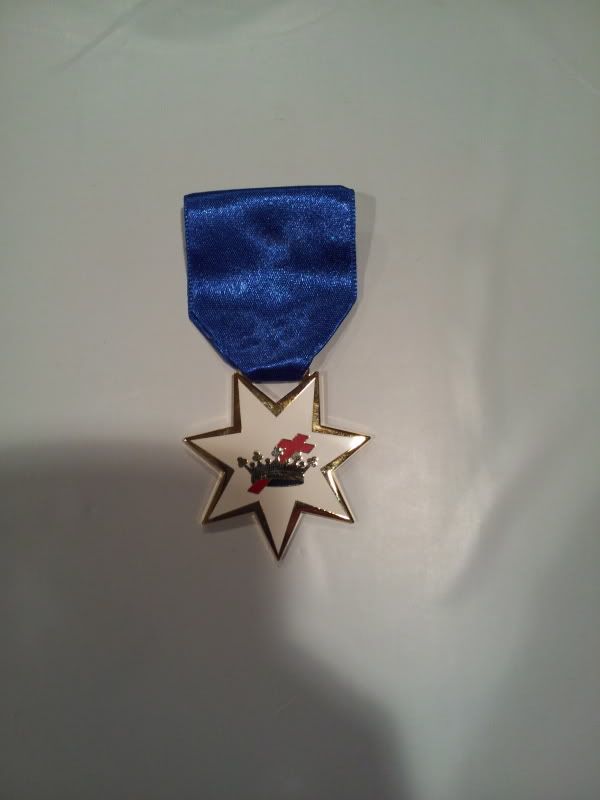
I'd like to thank all of the Companions and Sir Knights who attended this historic meeting. We had a good meeting with several things to discuss as well as the Official Visit of the Right Eminent Grand Commander of Idaho. I was surprised when the Grand Commander awarded me the Order of the White Star, the highest award in Idaho Templary, and I was appointed as the Commandery's Education Officer, designated by the white and black rope on my left shoulder.

A close-up

Monday, September 10, 2012

Associate Bethel Guardian

This evening was the first meeting for the newly installed Honored Queen of Bethel No.29, Job's Daughters International. Prior to the meeting, the Guardian Council was installed. I was installed as Associate Bethel Guardian, which is the Masonic connection to the Bethel and male Guardian.  I assist in the duties of the Guardian and one of my more important duties is to verify the petitioner's Masonic affiliation. The Vice Associate Grand Guardian of the Grand Bethel of Idaho is a good friend and he said to me the other day, "Remember, T-L-C.  Tote. Lug. Carry. Those are your biggest duties."  I just laughed.

I have been with this Bethel since 2009 and have enjoyed their company and I was ecstatic when the previous Bethel Guardian told me I had been chosen to be the Associate Bethel Guardian. I think this will be a fun year as this Bethel has a great group of young ladies who I get to mentor and watch grow.


Sunday, September 9, 2012

The Crown and the Cross

The Crown and the Cross is a familiar symbol in Christianity and is a peculiar logo of the Knights Templar Order within the York Rite of Freemasonry. As the Knights Templar is founded upon Christian principles so to are our symbols.

To point out the obvious, this symbol is the combination or uniting of two separate symbols - the crown and the cross. United this symbol has its own unique history and meaning, but separately each symbol has a much larger history and symbolic interpretation.

Be thou faithful unto death, and I will give thee a crown of life.
Revelations 2:10

Blessed is the man that endureth temptation: for when he is tried, he shall receive the crown of life, which the Lord hath promised to them that love him.
James 1:12

Together they represent the reward awaiting in Heaven that the Faithful will receive after the suffering and trials of this life on Earth; the cross secures and the crown assures. Some have interpreted it to stand for the meaning of the life, ministry, message, and glory of our Blessed Redeemer, our Savior, Jesus Christ.

The Crown, by itself, has traditionally been a symbol of authority and sovereignty, whether it is governance over a society/community or over oneself. Head coverings, like crowns, are also seen as a symbol of victory like you would see with the wreath or garland. As I talked about in Symbols of Royal Arch Masonry - Part 1:
Symbolically we can see through its circular shape it denotes perfection, which Heaven is seen as, and eternal life, and while wearing it we unite the spiritual world with this material world where the sovereign can receive divine inspiration to justly rule.
In the Masonic Templar Orders, there are many crosses used, but we will only talk of a few and discuss the general symbolism. For the Sir Knights of the Templar Orders and Christians, the cross reminds us of the crucifixion of Jesus Christ, but is much older than the Christian religion. First, let's look at what a cross is.

The Cross is simplistic in shape, usually two intersecting beams, a vertical one intersecting a horizontal one.  These may vary upon the religious denomination. There are basically four forms from which most other crosses stem. They are:
The Latin Cross (crux immissa) is a type of the cross in which the vertical beam sticks above the crossbeam.

The Greek Cross (crux immissa quadrata) is similar to the Latin Cross except that all four arms are of equal length. It is said this is the most ancient of the cross symbols used.

St. Andrew's Cross (crux decussata) is in the form of a diagonal cross (like the letter X). This cross also resembles the Greek letter Chi which is represented as 'X' which is one of the symbols Constantine saw in a dream which led him to victory against Maxentius, and which led Constantine to his legendary conversion to Christianity.

The Tau Cross (crux commissa) is a cross named after the Greek letter it resembles.
There are several variations of these crosses, particularly the first two, that are commonly seen in the Templar Order. The first common one, the Latin Cross infused with rays of light emanating from the intersection is a badge of a Commander and Past Commander, and the Latin Cross in this manner is also referred to as the Passion Cross. The second is the Templar Cross which is a variant of the Greek Cross. The Templar Cross (Cross Formée/Patée) is created from four equilateral triangles whose apexes meet at a common center. In our Order, the Templar Cross is used to designate a Grand Commandery officer and a Past Grand Commander. There are many other crosses seen in the Chivalric Orders of Masonry, but we will come to those in a later article.

It is important to note that neither the Latin nor Passion Cross was used as a Christian symbol until around the 7th century.  Prior to this, the lamb and fish were the most common Christian symbols. This style of the cross has been seen throughout history in such places as Africa, the Far East, Assyria, Phoenicia, India, Persia, Mesopotamia, Scandinavia, and Mesoamerica/Pre-Columbian America. To these ancient cultures, the cross represented the Sun or has been a symbol of Earth and nature with the number Four representing the Cardinal directions, the changing seasons, the four winds, the quarters of the moon, and the alchemical elements. Like the crown does, the cross may also emblematically represent the union of Heaven and Earth. The number four also reminds us of the Four Evangelists and their Gospels. By it are we reminded of time and the delineation of seasons, as it was on the Fourth Day that God put lights in the firmament to separate light from darkness, to mark days, and to outline the passing of seasons and time.

There have been many older cultures that have taken the cross as an emblem. One that comes to mind the quickest is the Egyptian Ankh (sometimes referred to as the Handled Cross, the Egyptian Cross, the Key of the Nile, or Crux Ansata) which is basically a Tau Cross with an inverted tear shape on its top.  It is said to represent Isis and Osiris in their sexual union. In other cultures, the cross represents the four directions in which the Sun shines. In Scandinavia, the Tau Cross symbolizes the fabled hammer of the god Thor.

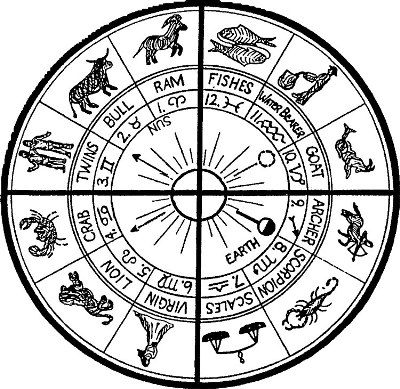
As I stated above, the cross can be seen to represent the four elements which at its intersection symbolize the 5th element, Ether or quintessence, in Alchemy. With such crosses like the Templar Cross, you can also see a liberal representation that the four equilateral triangles symbolize the 12 Signs of the Zodiac.  The Greek Cross has been applied with a circular diagram of the Zodiac to indicate the solstices and equinoxes. The Greek Cross within a circle has appeared all over the Paleolithic world as a symbol of the Sun

It is amazing to see how the most simple symbols can have such an astonishing history and mean so much to so many different beliefs and opinions.  Combined they seem to stack and compound each other. Separately their history and interpretations span the Ages. Combined they can represent so much dear to the followers of that humble Carpenter who sacrificed so much 2,000-years ago.

References

1. The Crown. (2010). Retrieved from Tarot Symbolism: http://tarotreadingpsychic.com/tarot-symbolism-the-crown/

2. BOSTONWILL. (n.d.). Gravestone Art. Retrieved from Symbol & Meaning: http://bostonwill.tripod.com/id5.html

3. Christian Symbols Illustrated Glossary: Cross & Crown. (n.d.). Retrieved from About.com: http://christianity.about.com/od/symbolspictures/ig/Christian-Symbols-Glossary/The-Cross-and-Crown.htm

4. Cross. (n.d.). Retrieved from Wikipedia: http://en.wikipedia.org/wiki/Cross

5. Crosses. (n.d.). Retrieved from MasonicDictionary.com: http://www.masonicdictionary.com/crosses.html

6. The Cross: An Overview. (2011). Retrieved from Campbell M Gold: http://campbellmgold.com/archive_esoteric/cross.pdf

7. Pastor Leyrer (2011, April 17). The Cross and the Crown. Retrieved from St. John's Evangelical Lutheran Church: http://www.sjtosa.org/groups/sermons/2011/04.17.11.htm

8. Maltese Cross. (n.d.). Retrieved from Wikipedia: http://en.wikipedia.org/wiki/Maltese_cross

9. Marshall, Jr., G. L. (2010, January). The Crosses of Templary. Retrieved from Knights Templar magazine: http://issuu.com/gektusa/docs/0110

10. Moon, S. (2007, April 26). The Origin of the Cross Symbol Used in Christianity. Retrieved from Yahoo Voices: http://voices.yahoo.com/the-origin-cross-symbol-used-christianity-307109.html?cat=34

11. Newell, B. E. (2012, April 2). Symbols of Royal Arch Masonry - Part 1. Retrieved from Traveling Templar: http://www.travelingtemplar.com/2012/04/symbols-of-royal-arch-masonry-part-1.html

12. Newell, B. E. (2012, June 8). Symbols of Royal Arch Masonry - Part 2. Retrieved from Traveling Templar: http://www.travelingtemplar.com/2012/06/symbols-of-royal-arch-masonry-part-2.html

Thursday, September 6, 2012

Birthday and Anniversary

Well, today marks my 28th year on this Earth. I'm not sure how it worked out, but my one class today was canceled due to my Professor being out of town, and then my family came over for a Lasagna dinner and cake.  My mom is an amazing cook. My parents got me an awesome present, the Dragon NaturallySpeaking, speech-to-text, software.  This will help me with my book writing, and with the blog, immensely!

Today also marks the day, almost down to the minute (with the time change) when I left Iraq last year. It has been an interesting year for all aspects of my life, and I am glad to be home among my loved ones. I look forward to the rest of 2012 and what the next year of my life will bring my way.

Emerald Tablet

By Kate Chambers

Hermes set down seven steps to transform 
From the 'lead' of Self, the 'gold' of Spirit is born. 
Step one, CALCINATION, the Spirit awakes 
What is life about? Questions you make. 
Step two, DISSOLUTION, the Psyche stirs 
Remorse abounds, realization occurs. 
Step three, SEPARATION. Release! Let go! 
Use your willpower now and still your Ego. 
Step four, CONJUNCTION. Empowering! Behold! 
Intuition now grows and realities unfold. 
Step five, FERMENTATION, time to contemplate 
Prepare to receive, focus and concentrate. 
Step six, DISTILLATION, intuition perfected 
Contact is made, knowledge is now projected. 
Step seven, COAGULATION, you are one with all 
Thoughts become actions, you have made the call. 
Four steps below, three above, we see 
Hermes gives us his tablet of Spirit Alchemy.

Saturday, August 25, 2012

The Grand Encampment and the Rectified Scottish Rite

Well, it seems I have not paid as much attention to the news and Masonic blogosphere lately as I thought.  I was perusing the Masons of Texas forum when a Brother had pointed out from Brother Chris Hodapp's blog, Freemasons for Dummies, that the Grand Priory of the Reformed and Rectified Rite of the United States of America (CBCS) had been approved by the members of the Grand Encampment as a legitimate appendant order of the Grand Encampment. I wonder if this will reconcile the recent tension between the Grand Encampment and a few Grand Lodges within the US.

From Bro. Hodapp's blog:
One of the first items of business was a resolution declaring those who take membership in un-recognized orders after the date of adoption, upon their membership being known would be issued a letter giving them 30 days to submit a letter of withdrawal from the Order, or they would be issued a permanent demit from Templary under the Grand Encampment. It passed with only two negative votes out of 364. A second resolution adopted the Grand Priory as an official appendant order of the Grand Encampment. It passed with only 10-12 negative votes. Pierre Noel in his remarks pointed out that he was here to honor the good relationship his Priory had with the GEKT.
I did some digging around and found another article written on the Rutgers University Masonic Alumni blog where they discuss the installation of David Goodwin was installed as the national leader by Bill Koon and two other dignitaries of this order.


Updated: 08/27/2012

Tuesday, August 21, 2012

Sovereign Order of Knights Preceptor

Founded on February 22nd, 1977, the Sovereign Order of Knights Preceptor is an organization for Past and Present Commanders of Constituent and Subordinate Commanderies of the Grand Encampment of Knights Templar of the United States of America.

This is another invitation-only order within the American York Rite. To be eligible to be elected and invited, one must be a Sir Knight in good standing and a present or past Commander of a regular and duly constituted Commandery of Knights Templar under the auspice of the Grand Encampment. It should be noted that some Chapters of the Order will wait for a candidate to be a Past Commander before they will ballot on them.

A Chapter is comprised of the following officers: Preceptor, Deputy Preceptor, Master of Templars, Seneschal, Prelate, Treasurer, Recorder, Marshal, Warden of Regalia, Registrar, and Sentinel. The Grand Chapter which is at the national level is presided over by the same officers with the honorific title 'Grand' attached to it. The Grand Chapter of the Order of Knights Preceptor meets annually at the time and place of the Annual Meeting of the Grand Council of Allied Masonic Degrees of the United States of America.

The Insignia of the Order is a cross with a shield at its intersection with a red cross emblazoned upon it (figure on the right). The members of the Order wear the Insignia on a yellow ribbon, officers of a Chapter of the Order wear the Insignia on a black ribbon, the Preceptor of a Chapter of the Order wears the Insignia on a green ribbon, a Past Preceptor of a Chapter of the Order wears the Insignia on a red ribbon, the Officers of the Grand Chapter wear the Insignia on a black and white ribbon, the Sovereign Grand Preceptor of the Grand Chapter wears the Insignia of the Order on a green and white ribbon, and Past Sovereign Grand Preceptors of the Grand Chapter wears the Insignia of the Order on a purple ribbon.

The founding Sovereign Grand Preceptor, Thurman C. Pace, Jr., wrote the following history:
Upon completion of my term as Commander of Trinity Commandery No. 17, K.T., in 1966, I was disappointed that the Grand Commandery of New Jersey didn’t have an organization that recognized Past Commanders. The Grand Royal Arch Chapter had the “Orders of Anointed High Priests,” and the Grand Council of Royal and Select Masters had the “Council of T.I.M.s” which in some jurisdictions is referred to as the “Order of the Silver Trowel.”

One of the objectives I had upon being installed as the Grand Commander of the Grand Commandery of Knights Templar of the State of New Jersey on March 6, 1976, was to establish an organization for those who were serving as Commanders or had previously served as Commanders of their Commanderies. Being fully aware of my inability to write ritual, I requested my best friend, Wallace M. Gage, a Past Grand Commander of New Jersey and an outstanding writer, to write the ritual for what is now known as “The Sovereign Order of Knights Preceptor”. The Grand Chapter of the Sovereign Order of Knights Preceptor was formed on February 22, 1977, at a meeting held in Westfield, New Jersey, at which time the Constitution, Laws, and Ritual for the Order were adopted.

The purpose and objective of the Order was to promote the cause of Chivalric Masonry through a dedication of Templar Leadership to its principles, and to further the knowledge of its history, background, customs, usage, and traditions.

At the aforementioned meeting of the Grand Chapter, a charter was granted to New Jersey Chapter, Order of Knights Preceptor, with yours truly as its first Preceptor.

The Order was conferred for the first time on Friday, March 4 1977, during the 117th Stated Conclave of the Grand Commandery of New Jersey, held at the Howard Johnson Regency Hotel in Atlantic City, New Jersey. Conferral of the Order was carried out by the charter officers of the New Jersey Chapter as follows:
Preceptor: Thurman C. Pace, Jr., Grand Commander
Master of Templars: Theodore F. Voelter, Past Department Commander
Seneschal: W. Percy Edwards, Past Grand Commander
Marshal: Wallace M. Gage, Past Grand Commander
Prelate: Gordon J. Brenner, Past Grand Commander
Sentinel: Robert W. Gibson, Hon. Past Grand Commander
The Charter class of 139 included 86 from New Jersey, 8 from Connecticut, 5 from the District of Columbia, 8 from Massachusetts and Rhode Island, 5 from New York, 3 from Pennsylvania, 7 from Virginia, 2 from Vermont, 5 from Maine, 8 from Maryland, 1 from Alabama, and 1 from Arkansas. The class Exemplar was Sir Knight Kenneth Culver Johnson, Right Eminent Grand Generalissimo of the Grand Encampment or Knights Templar of the U.S.A. Also in the class was Sir Knight John B. Cottrell, Right Eminent Deputy Grand Master. Ironically, Sir Knight Cottrell died two months later and within weeks Sir Knight Johnson suffered a severe stroke.

Over the years, Charters were issued to the following states: Maine, Virginia (1984), Pennsylvania, New York, Kentucky (1985), Texas (August 15, 1994), California (April 29, 2000), and Maryland, bringing our total number of Chapters to 9. I am in correspondence with Tennessee relative to issuing them a Charter.

I have served for over a quarter of a century as Sovereign Grand Preceptor of the Grand Chapter of the Sovereign Order of Knights Preceptor.

Since July 9, 2003, when this history was written, Charters have been issued to: Sovereign Grand Preceptors Chapter on March 27, 2004; Idaho Chapter on October 14, 2004; and the Charter of California Chapter was withdrawn on April 12, 2005; bringing the total number of Chapters to 10.

Friday, August 17, 2012

Officers of the 66th Triennium

Well, I checked out the Grand Encampment website and it has been updated with some new information, mostly regarding the new officers.  I did not see anything updating the Constitution of the Grand Encampment or any edicts on the future of the Rectified Scottish Rite.

As for the officers of the 66th Triennium, Sir Knight David D Goodwin is now the Most Eminent Grand Master of the Grand Encampment of Knights Templar of the United States of America.
David Dixon Goodwin was born on August 15, 1949, in Johnson City, New York, to the late Mary Isabel and John Walter Goodwin. He was raised in Binghamton, NY, and confirmed in Trinity Memorial Episcopal Church. He attended the Binghamton Public Schools and graduated from Binghamton Central High School in 1967. He attended Broome Community College and graduated from Union University, Albany (NY) College of Pharmacy in 1972 with a B.S. in Pharmacy.

Following his graduation he was employed by CVS Pharmacy in several locations. He was the owner of four retail pharmacies in the Binghamton area from 1977-1988. He was employed as a pharmacist at Arnot Ogden Medical Center in Elmira, NY, from 1988 until his retirement in 2010. His memberships have included local, state, and national pharmaceutical societies as well as health related community organizations, and the Endicott Rotary Club. He is a commissioned Notary Public in the State of NY.  

He married Marci Lynn Sternberg on July 15, 1979. They have two daughters, Jennifer and Samantha. They currently reside in Vestal, NY.  

Right Worshipful Brother Goodwin was raised a Master Mason in Binghamton Lodge No.177, F&AM, Binghamton, NY, in September of 1977. He served through the line as was elected Master in 1982. The following year he was elected Secretary, a position he held until 1999. He was named Mason of the Year by his Lodge in 1988. He has served as Secretary-Treasurer of the Broome-Chenango District Masters Council, District Masonic Brotherhood Fund Chairman, and as a member of the Grand Lodge Committee on Related Organizations. He served as a director and president of the Masonic Youth Foundation of New York. He was commissioned as the Grand Representative of the Grand Lodge of Austria near the Grand Lodge of New York in September of 2000.  

Right Excellent Companion Goodwin was a member of Binghamton Chapter No.139, Royal Arch Masons, having served as High Priest and as Secretary for several years. He is now a member of Western Broome Chapter No.332. He served the Grand Chapter of New York as an Assistant Grand Lecturer, District Deputy Grand High Priest, and a Custodian of the Work. He was awarded the Distinguished Service Medal in Bronze by the General Grand Chapter of Royal Arch Masons International in 2011.  

Right Illustrious Companion Goodwin was a member of Binghamton Council No.24, Cryptic Masons where he served as Illustrious Master and treasurer. He is now a member of Ahwaga Council No.30 following a merger. He is a member of St. George Council, Order of Anointed Kings of New York, where he served as the Thrice Illustrious Master. He was commissioned by the Grand Council of Delaware as their Grand Representative near the Grand Council of New York.  

Sir Knight Goodwin was Knighted in Malta Commandery No.21, Knights Templar, stationed at Binghamton, now in Endicott, NY, where he served as Commander in 1988 and recorder for many years. He was Captain of the Zone Drill Team for ten years. He holds plural memberships in The Empire State Commandery No.83, NY, St. George Commandery No.76, Ohio, St. Bernard Commandery No.41, CO, Blaney Commandery No.5, IL, and Anchorage Commandery No.2, AK. He is a member of the Sovereign Order of Knights Preceptor, the Knight Crusaders of the Cross, and Past Commander Associations in many jurisdictions. He holds Honorary Memberships in many Commanderies, Grand Commanderies, and Grand York Rite Bodies across the country.  

He served the Grand Commandery of New York as a Zone Commander, Grand Representative of the Grand Commandery of Kentucky near New York, and was elected Grand Warder in 1991. He served through the line and was elected and installed as the 149th Grand Commander at the 186th Annual Conclave at Suffern, NY, on September 18, 1999. Sir Knight James Morris Ward, Most Eminent Grand Master of the Grand Encampment of Knights Templar of the United States of America awarded him the rank and dignity of Knight Commander of the Temple in 1998.  

He was appointed Right Eminent Department Commander of the Northeastern Department by Sir Knight William Jackson Jones, Most Eminent Grand Master at the 61st Triennial Conclave in Nashville, TN in 2000. He was elected to the Line of the Grand Encampment as Right Eminent Grand Captain General at the 62nd Triennial Conclave in August 2003 in St. Louis, MO, and invested with the Knight Grand Cross of the Temple. He was elected as a Trustee of the Knights Templar Eye Foundation, Inc. He was elected Right Eminent Grand Generalissimo at the 63rd Triennial Conclave in August 2006 in Houston, TX where he was also elected Vice President of the Knights Templar Eye Foundation, Inc. He was advanced to Deputy Grand Master upon the resignation of SK Richard Burditt Baldwin, Most Eminent Grand Master in August of 2007, and reelected Deputy Grand Master at the 64th Triennial Conclave in Roanoke, VA in August of 2009.  

Illustrious Brother Goodwin is a member and past officer of Otseningo Bodies, Valley of Binghamton, NY, Ancient Accepted Scottish Rite, Northern Masonic Jurisdiction, USA. He was coroneted a Sovereign Grand Inspector General, 33°, Honorary Member of the Supreme Council, in Boston, MA in 2002. He is a dual member in the Valley of Toledo, OH.  

He was awarded the Honorary Legion of Honor from DeMolay International and is a member and Past Dean of the Central New York Preceptory, LOH. He was elected a Deputy Member of the International Supreme Council in Seattle, WA in 2006 and an Active Member in Louisville, KY in 2012. He served DeMolay International as its Grand First Preceptor 2008-9.  

He was a Charter Member of the Southern Tier York Rite College No.126 and served as Governor. He was awarded the Order of the Purple Cross in 1993 from the York Rite Sovereign College of North America.   

He holds memberships in Christian Conclave, Red Cross of Constantine, Past Sovereign; Charlemagne Conclave (hon), OH; Crusade Priory No.57, Knights of the York Cross of Honor, holds KYGCH, 1 quadrant; Gen. Henry Knox Council No.139, Allied Masonic Degrees, Past Sovereign Master, Red Branch of Eri; Charles Smith Council No.324, AMD; The Grand Council of Allied Masonic Degrees of the United States of America, line officer; Royal Order of Scotland; Star of Bethlehem Tabernacle, No.V, Holy Royal Arch Knight Templar Priests, created a Past Preceptor; Good Shepherd Tabernacle, No XXX (hon); Grand College of America, HRAKTP, line officer; Celtic Council No. XXV, Knight Masons; Societas Rosicruciana in Civitatibus Foederatis, Long Island College, SRICF, IX°, The High Council SRICF, Junior Deputy Supreme Magus, KGC; Grand College of Rites of the USA, Grand Chancellor, 2009; Kalurah Shriners; Aahmes Grotto, MOVPER; Lafayette Chapter No.340, Order of the Eastern Star; Pilgrim Chapel No.11 and Novum Eboracum Chapel No.51, St. Thomas of Acon, and Trinity Church Assemblage of the Operatives. He was a Masonic Supervisor of Endicott Triangle No.43, Organization of Triangles, Inc., a Masonic youth organization for girls in New York for many years.
Something I was surprised to see is that the former Department Commander for the Northwest, Sir Knight Michael Johnson, was elected as Grand Captain General of the Grand Encampment. In his place, Sir Knight Steve Guffy has taken over as the Northwest Department Commander. The list of officers is as follows:
Right Eminent Deputy Grand Master: Sir Knight Duane L. Vaught

Right Eminent Grand Generalissimo: Sir Knight Jeffrey N. Nelson

Right Eminent Grand Captain General: Sir Knight Michael Burke Johnson

Right Eminent Grand Treasurer: Sir Knight James McCrorry Willson

Right Eminent Grand Recorder: Sir Knight Lawrence E. Tucker

Right Eminent Grand Prelate: Reverend and Sir Knight William D. Hartman
The Department Commanders appointed for this Triennium are as follows:
Northeastern Deparment: Sir Knight Thomas Tsirimokos

Mid-Atlantic Department: Sir Knight Jeffrey Burcham

Southeastern Department: Sir Knight Howard T. Burgess

East Central Department: Sir Knight Larry Brown

North Central Department: Sir Knight Lauren Handeland

South Central Department: Sir Knight T. Michael Fegan

Northwestern Department: Sir Knight Steven Guffy

Southwestern Department: Sir Knight David Kussman

Far-East Department: Sir Knight Evaristo Leviste

Europe Department: Sir Knight Emilio Attina

Subordinates Department: Sir Knight Edward Trosin
As soon as I find out any more relevant information I will have it posted. Particularly the Constitution may take some time as they have to revise it according to what legislation passed.  For any news on the Rectified Scottish Rite, I'm sure we'll see an edict come forth from the Most Eminent Grand Master concerning this issue.