Today was one of those days when I was going through my computer when I found this paper that I wrote for a International Relations Seminar on Civil War and Terrorism that I took in 2014. I chose to focus on a group related to the Kurds as I was deployed to Kirkuk, Iraq, in 2004-2005 and my unit interacted with the Kurdish people.
Introduction
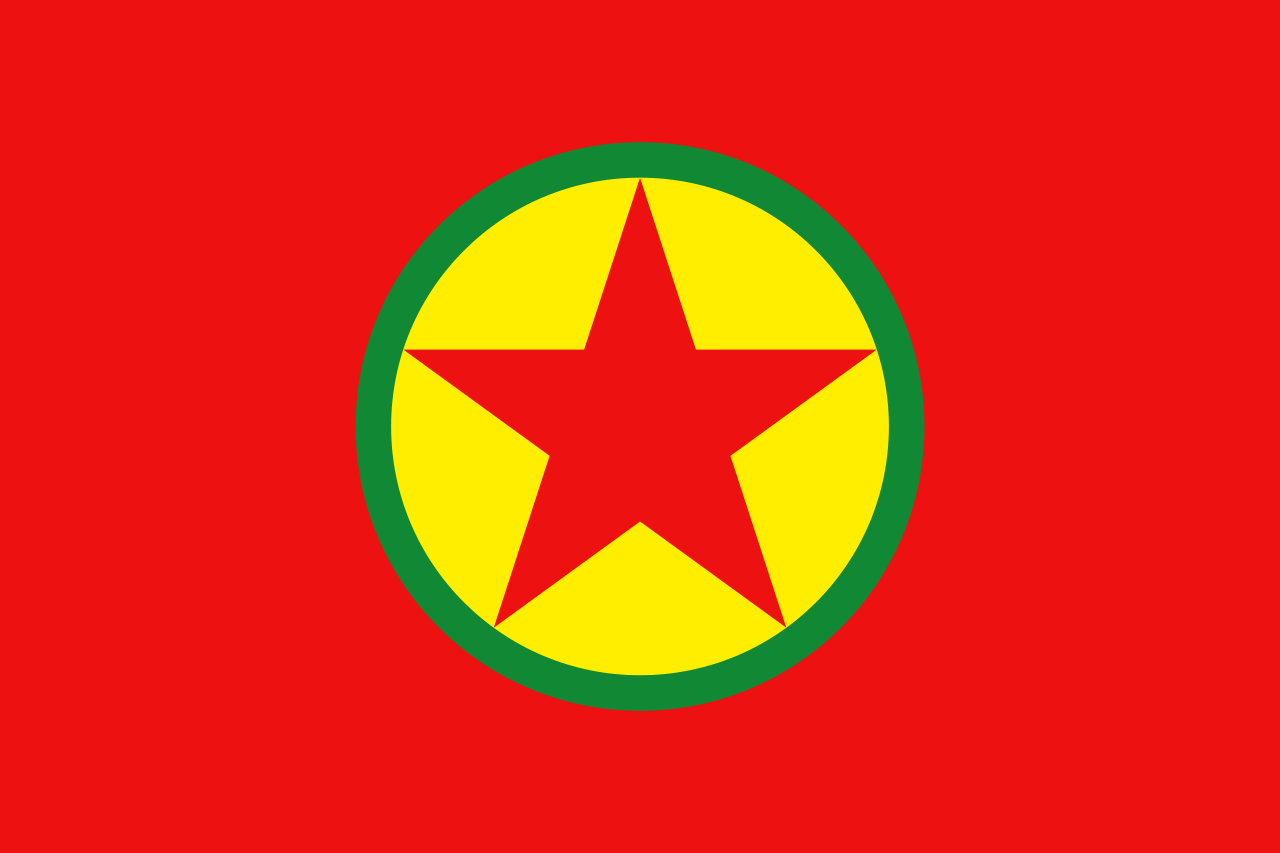
This paper will cover the pre-history and events leading to the establishment of the PKK, their grievances, their methods of attacks or tactics, methods of recruitment and mobilization, motivations, government responses to their actions, their successes and failures, interventions, and prospects for either peace or further violence in the future. The PKK is an interesting case to study as it shines a light on a unique situation of a people without a state. This group is a key to stability in the region. They have affected relations between the United States and Turkey, the United States and Iraq, Turkey and Syria, Turkey, and the European Union. Without an end to the fighting, the Kurdish people will only be further oppressed and alienated which only embolden the PKK to commit further acts of violence in response. Neither side trusts each other and this case may require a neutral, independent 3rd party to intervene and bring both parties to concessions, and ensure that both parties stick to the agreements, punishing those who attempt to break the peace and cause further conflict.
When the Ottoman Empire was defeated by the Allied powers during WWI, its dominion was shattered and turned into several sovereign states. One such zone, which never came into fruition, was the zone designated as an autonomous region for the Kurdish people. The Turkish government since the fall of the Ottomans has endeavored to remove from existence the Kurds by forcing them to assimilate to include the banning of their language, culture, and their names for geographical areas. Their justification is that Kurds are not real and that they are really just “Mountain Turks” (Gunter 2000). These oppressive acts continued until the late 1970s when Abdullah Öcalan established the PKK who didn’t start using violence until the mid-80s, but that information is contested. The 1980s was a violent time in Turkey, going through a military coup which only further brutalized the Kurdish people. The PKK began to use violence as a tool to coerce the government to accommodate their demands for independence.
The PKK has been a force of instability in the region has caused around 30,000 to 40,000 deaths, many of whom were civilians not military targets (Bruno 2007). The PKK is also not recognized by the Patriotic Union of Kurdistan (PUK) or the Kurdish Democratic Party (KDP) who are seen as two legitimate political entities that are also striving for Kurdish independence (Kutschera 1994). The actions of the PKK are viewed as counterproductive and injure the legitimacy of the cause. The PKK see themselves as protectors of the Kurdish people, but have used indiscriminate attacks that have left many innocent lives ravaged and discriminate attacks that have targeted Kurdish persons. This also has a toll of the economy of Turkey as it spends around 20% of its national budget on defense which pays for a well-armed Turkish Army, half of whom are stated in and around Kurdistan (Menon 1995).
The Kurdish region, often called “Kurdistan” lies upon the southeast part of Turkey, northeast corner of Syria, northern Iraq, and northwestern Iran. This region was originally supposed to be given to the people after the fall of the Ottoman Empire, but the Treaty of Sevres was never ratified and that promise was never fulfilled to the Kurdish people (Zalman 2007). Had the treaty been enforced it would have taken away 2.5-million square kilometers of land from Turkey. Kurdistan is extremely rich in oil as about 10% of the total oil resources of the Middle East are here (Menon 1995). The Kurds are a distinct ethnic group found in the Middle East with their own language, but most of them are Sunni Muslims. In Turkey, the Kurds make up around 15-20% of the population; in Iraq, 23% of the total population (Zalman 2007); in Iran, around 13% of the population; and around 12.7% of the population in Syria (Menon 1995).
Grievances
During the days of the Ottoman Empire, the Kurds were left relatively alone and given autonomy, but after WWI the Turkish leader, Mustafa Kemal Ataturk, refused to allow the Kurds to have independence and implemented policies that attempted to quell their culture, language, and any notion of self-determination by banning anything that was Kurdish (Pike 2013). When the people protested they were treated with further oppression, massacres, destruction of entire villages, deportation, forced assimilation, torture, imprisonment, police and military intimidation, and Turkish “colonization” of Kurdish lands (Menon 1995). At present, it is legal to speak Kurdish in Turkey, but celebrations and expressions of Kurdish culture are still restricted by the Turkish government (Bruno 2007). Turkey was able to secure an agreement with Iraq and Iran for them not to recognize Kurdish independence. The struggle for independence was squashed for a time (Washington Post 1999), but this forced assimilation only planted the seeds for the emergence of a Kurdish nationalistic movement in the region (Zalman 2007).
The political environment combined with the repressive acts of the government created a unique situation for the creation of the PKK. Turkey, being a Democracy, acted in a brutal manner towards an ethnic group who was better off under an autocratic government (the Ottomans). The Kurds were alienated from their own culture and forced into a life they didn’t want. Those Kurds who attended a university were exposed to other ideologies. Seeing Turkey’s form of government as failing to protect and represent the people’s desires many saw other ideologies are more desirable. It is no surprise then to see the followers of the PKK follow Marxist doctrine. In the 1970s communism was starting to decline, but was still working in China and was also starting to spread to some of the smaller countries where insurgent groups were adopting it as their ideology (an example being the Tamil Tigers in Sri Lanka or the MLR in Finland).
Pre-Formation and Early History
The Kurds trace their origins back to the Medes, an ancient people who lived in western Iran and southeast Turkey, who founded an empire after they defeated the Assyrians in the 7th century BC (Menon 1995). They themselves were defeated by the Persian Empire and never rose again. The Kurds themselves exercised independence under the authority of the Ottoman Empire, but after they were defeated and partitioned, the Kurdish region was split among multiple states. The brutality of the Turkish government kept the Kurds at bay for decades, but in the 1950s and 1960s, Kurds started forming clubs as well as establishing a political party known as the Kurdistan Democratic Party of Turkey, or KDPT (Kutschera 1994). The response was a massacre of students and the imprisonment, assassination, or exile of the leaders of KDPT. The Workers' Party of Turkey, or TIP, emerged and started distributing a journal that was in the Kurdish language. The Turkish government implemented assimilation camps where Kurds were forced to send their children. With the 1970s only came further oppression and instability in the state as there was a military coup in March of 1971. The government proceeded to use the prisons and schools as indoctrination centers, propagating anti-Kurdish and pro-Turkish material.
More clubs continued to emerge through the 1970s; one of them was started by students led by Abdullah Öcalan. This one was not solely about Kurdish grievances, but was also about supporting Marxist ideals (Amini 2010). This group wasn’t formalized until 1978, when the agenda was set and which was influenced by the writings of Mao as well (Zalman 2007). Öcalan wished to cause a revolution that would free the Kurdish people and establish a Kurdish state (START 2014). Öcalan was the son of a poor peasant and studied political science at Ankara University where he was introduced to communist ideals (Menon 1995). The group was composed of two different wings, a political wing, and an armed wing, with smaller branches or cells below. This group would not start its campaign of violence until 1984 (Amini 2010). The early 1980s marked another time of political upheaval as yet another military coup occurred in September of 1980 (Kutschera 1994). Once it started using violence it was primarily located in rural areas and often against military targets, but by the 1990s they started employing terrorist tactics and had moved into more urban areas where a greater population could be effected (Pike 2013).
The PKK was dealt a harsh blow in 1999 when the leader, Abdullah Öcalan, was captured and is now currently serving a life sentence (Australian National Security 2013). Originally he was sentenced to death, but there was enough commotion from the international community that the Turkish government commuted it to life in prison. In his absence, a council was formed to run the operations of the group. In his absence, there seems to be a power struggle between the leaders of the Executive Council and those in the armed or military wing of the group.
Goals
The goal of the PKK is to establish an “independent, communist, ethnically pure Kurdish state” by taking land from Turkey, Iraq, Iran, and Syria (Onay 2008). Some of the other objectives changed as the political environment in Turkey changed (Australian National Security 2013): such as the Turkish government giving Kurds voting rights. The leaders who took over after Öcalan was arrested have added his release as to their objectives (PKK 2011). Since his capture though, Öcalan has called for peaceful change and has asked the PKK to abandon violent and terrorist tactics, and seek concessions through political means, but this was most likely coerced by the Turkish government. In January 2000, the group did make attempts to move towards achieving their goals through political means (Pike 2004). This would change in 2004 when the PKK abandoned a ceasefire and returned to using violence rather than peaceful means. In 2010 concessions were attempted in Oslo between Turkey and the PKK, but failed and conflict between the two groups resumed. This led to 2-years of large scale violence (Pike 2013). In March of 2013, Öcalan again pleaded for his followers to use peaceful methods and to withdraw from Turkey (BBC 2013).
Motivations
The PKK is primarily voted by nationalistic ideals and the drive to be allowed to be an independent state. They motivate their members by using community support, particularly as they call for martyrdom. On the PKK website, it states, “We commemorate all the martyrs of the revolution with respect and gratitude and promise that we are going to crown the freedom struggle with victory in their memory.” (Pike 2004) The repressive actions of the Turkish government have, for the most part, unified the Kurdish people, although not all agree on the means on how to accomplish their independence. The PKK demonizes the governments, particularly the Turkish, and their collaborators in the brutal treatment of the Kurdish people which justifies any means necessary to defeat them. The group exploits emotional, communal, religious, and secular sentiments to gain popularity and gain new recruits (Australian National Security 2013). Although we see this isn’t fully working as the PKK is said to be down to around 5,000 members, falling from around 50,000 members at its height (Bruno 2007).
Operations and Mobilization Strategies
The PKK operates primarily in Turkey, Iraq, Syria, and Europe (Amini 2010). Most of its targets reside in Turkey, but is known to attack targets in Iraq. The PKK would use the states surrounding Turkey as a safe haven and spots for mobilization before crossing the Turkish border. The No-Fly Zones established by the United States and Turkey provided protection from the Iraqi military during the days of the Saddam regime (Cagaptay and Unver 2007). The PKK recruits most of its members from southeast Turkey where Kurds are most oppressed by the Turkish government, but gains members from Kurds found in Iraq, Syria, Iran, and the Kurdish diaspora in Europe (Australian National Security 2013).
Support
The PKK receives support from a large Kurdish diaspora present in Europe (France, Germany, Greece, Austria, etc) (Amini 2010). It also gains funding from criminal activity such as drug trafficking, human smuggling, extortion, money laundering, prostitution, and “voluntary” tax collection (Australian National Security 2013). The PKK is also said to receive support from a network of local news agencies, television stations, radio stations, newspaper companies, and publishing companies found throughout Europe (Onay 2008). For a time it also received support, usually just political, from Syria, but in the late 1990s this changed and Syria was coerced into withdrawing support from them (Zalman 2007). When the PKK was able to operate within Syria they used it as places for training camps as they faced less danger training in Syria than attempting the same in Turkey or even Iraq.
Tactics of the PKK
The PKK did not start using violence until 1984, but since then have used guerilla and terrorist tactics, inspired by the writings of Mao, in an attempt to achieve their goals (Zalman 2007). Some of their activities have included kidnappings, bombings of tourist sites like hotels, suicide bombings, placing of landmines, arson, vandalism, sabotage, and ambushes against military targets in Iraq and Turkey, often striking over the border then retreating back to the other country for safe haven (Australian National Security 2013). They have also been known to attack local officials and villagers who are opposed to their operations (Amini 2010). They may also attack the family of officials and village leaders to coerce them to comply and support the PKK (Onay 2008). Looking at the database compiled by the Chicago Project on Security and Terrorism, 11 suicide attacks have been carried out by the PKK and in 6 of the attacks the gender was known and we find that the PKK was just as likely to use women as men, although this analysis is skewed by the fact that gender information on the other 5 cases is missing which could either accept or reject this speculation (Pape 2014). Some do speculate though that most of the suicide bombings were employed by women, but no corroborating data is provided (Ministry of Foreign Affairs 2011).
While some of the PKK’s attacks have caused collateral damage and may have been indiscriminate, most of their attacks are targeted at specific individuals or groups whom they see as a threat, enemy, or collaborator (Zalman 2007). Many of these attacks seem to do a few things: 1) cause as much damage on the populace that the government feels pressured into giving in to the PKK’s demands, 2) provoke military repression against the populace that the community loses its faith in the legitimacy of the government and military, and 3) to intimidate and coerce the populace, particularly the Kurds, into supporting its cause and the means to achieve it.
Success and Failures
The PKK has been fighting the Turkish government for 30-years and has employed a vast array of tactics to coerce the government to accommodate them, but little concessions have been given by Turkey. In 2009, reforms were emplaced aimed at giving the Kurdish people more rights in Turkey (Amini 2010). This wasn’t done because of the actions of the PKK, but most likely originated from pressures put on by the international community, particularly the European Union. Since 1987 Turkey has attempted to join the European Union, but has been denied membership some reasons have been Turkey’s glaring human rights abuses, particularly against the Kurdish people (BBC 2013). Membership has dropped dramatically; roughly 90%. The motivational and mobilization policies have not kept a steady stream of new recruits. The PKK attempted to reinvent itself, by adopting softer policies and changing its name, but is still considered by most states to be a terrorist organization (Bruno 2007). The final point in all of this is that no Kurdistan exists, either as an independent state or a recognized autonomous region.
Government Responses
As noted above, the Turkish government has given some political and economic concessions to the Kurdish people such as the National Unity Project (Amini 2010), but in response to the actions of the PKK, the Turkish government has employed oppressive acts against the PKK and the Kurdish people in general. The Turkish government eventually grew tired of the cross border attacks and started crossing into Iraq to attack the PKK. Iraq, to include Kurdish leaders of the PUK and KDP, have disavowed the PKK and refused to give them safe haven or support (Amini 2010). European states have arrested and punished criminal elements tied with the PKK and have also listed the PKK as a terrorist organization. The PKK is also listed by the United States and NATO as a terrorist organization. The United States has had a long relationship with Turkey and, with the Iraqi conflict, has strong ties with the government of Iraq. The United States has also been supportive of the Kurdish people, but has opposed the terrorist activity of the PKK.
All states use repression and in this case, we have seen negative and positive effects. While the indiscriminate violence created the landscape for the emergence of the PKK. Its oppressive nature of the Kurdish people has only solidified the people in their desires for an independent state free from the grip of the Turkish regime. It has made some notable positive steps by making political and economic reforms in an attempt to distinguish the fire that has enabled the PKK.
Until 1999, Syria had given support to the PKK, but gave it up under the pressure of the Turkish government. Turkey and Syria had been at odds with each other for decades which stemmed from border and water rights disputes. It is over this friction between the two that most likely influenced Syria to give aid to the PKK.
Current State of Affairs
As of today the PKK still exists, but in March of 2013, the imprisoned leader, Abdullah Öcalan, asked for the PKK to cease operations and withdraw from Turkey. Little can be found on the organization for events occurring in later 2013 and in 2014. According to CNN, PKK leaders have threatened to resume operation in Turkey as they feel Turkey is using the entities in Syria to conduct a proxy war against Kurds in that state (Coles 2013). From the press releases on the PKK websites, they continue to condemn Turkey for a variety of reasons, but have not openly committed any attacks in 2014. Öcalan remains in jail, but many are moving that he be given better facilities and treatment. As it sits right now, the PKK is holding to its promise of a cease-fire, but with the current conflict in Syria and Iraq, instability could cause a reemergence of the PKK in Turkey.
Prospects for the Future
The PKK seems to be looking for reasons to resume fighting has lost much of its support. Turkey has given some concessions, but in the event that they make any strong repressive moves against the Kurdish people, it may give the PKK the needed support and justifications to resume fighting in Turkey.
While Abdullah Öcalan is considered the de facto leader of the PKK, there appears to be a conflict between the two branches, political and armed/military. It was the leaders of the Executive Council, who took over after Öcalan’s arrest, that made attempts with peace, but it was the hardliners and leaders of the military wing who reinstated the use of violence in 2004. If the Turkish government wants to end or at least cripple the PKK, they need to accommodate the Kurdish people more by giving them more rights and freedoms, particularly with cultural expressions. Doing so would remove or limit further support of the PKK as it would remove the grievances and give legitimacy to the governance of the Republic of Turkey, at least over that of what is offered by the PKK. The Turkish government can also use Öcalan as propaganda and give him better accommodations in prison which would also give his messages of peace further legitimacy which may keep in check most of his followers in the PKK. There must also be multilateral operations to stem the criminal activity in Europe that funds much of the PKK.
It is likely the PKK will again try to turn into a political party, but this may be rejected by the Turkish government which could cause some escalation of violence. They may also try to become a political party in the Kurdish region of northern Iraq and seek to compete with the PUK and KDP, which could cause instability in that area of Iraq. Though they banned them in the past, the Turkish governments could win over the Kurdish populace by allowing the KDP and/or the PUK to be allowed as legitimate political parties within Turkey. This would give the Kurdish people hope for political change in their favor and address any current or future grievances that may arise.
Conclusion
For 30-years the Turkish-PKK conflict has caused the deaths of 30,000-40,000 people, instability in the region, and which has resulted in Turkey’s reputation being tarnished in the eyes of the international community and losing legitimacy among a large portion of its population. Both sides have committed human rights violations in an attempt to accomplish their goals. In its conflict with the PKK, the Turkish government has also harmed its economy by putting so much of the budget to the military to quell this terrorist organization (Gunter 2000). The Kurds number in the millions and are “people without a home”. Their promised land was taken from them and in return, they were brutalized for decades. Their culture, heritage, language, and identity were treated as a crime. The PKK appears as an extreme example of the nationalistic mentality that has emerged as a result of the repressive behavior of the Turkish government. Since his capture, the symbolic leader, Abdullah Öcalan, has called for peace between the two, but not lasting peace has occurred. Even now there is a ceasefire in place, but this is no indication of future events. Recent events in Syria could cause the reemergence of conflict between the PKK and Turkey, and in general, the instability caused by this conflict is the biggest challenge facing Turkey and its future.
Regardless, neither side trusts each other and this case will require a neutral, independent 3rd party to intervene and bring both parties to concessions and ensure that both parties stick to the agreements, punishing those who attempt to break the peace and cause further conflict. The PKK was strong enough to inflict serious damage on Turkey, but hasn’t been strong enough to win the concessions it strived to at its birth. Stephen Gent (2008) and Patrick Regan (2009) both point out that a state will only intervene when outcomes will be favorable and when the non-state actor is strong enough or evenly matched in their capabilities with the government. Regan does state in his book that diplomacy and mediation are a type of intervention that is more effective than military intervention. An organization like the United Nations would be an appropriate mediator and arbiter for the necessary accords to end this bloody conflict. Without such intervention, the PKK-Turkish conflict may be static now, but there is no certainty for lasting peace and further conflict could easily be stirred up again.
References
1. Amini, Shiler. 2010. “The PKK and the US State Department’s Terror Report.” August 13. http://kurdistancommentary.wordpress.com/2010/08/13/the-pkk-and-the-us-state-departments-terror-report/ (June 20, 2014).
2. BBC. 2013. “Profile: The PKK.” March 21. http://www.bbc.com/news/world-europe-20971100 (July 3, 2014).
3. Bruno, Greg. 2007. “Inside the Kurdistan Workers Party (PKK).” October 19. http://www.cfr.org/turkey/inside-kurdistan-workers-party-pkk/p14576 (June 20, 2014).
4. Cagaptay, Soner and H. Akin Unver. 2007. “Iraqi Kurds and the Turkish-Iraqi Memorandum against the PKK.” August 21. http://www.washingtoninstitute.org/policy-analysis/view/iraqi-kurds-and-the-turkish-iraqi-memorandum-against-the-pkk (June 20, 2014).
5. Coles, Isabel. 2013. “Kurdish rebels threaten new fight in Turkey as Syria clashes intensify.” October 22. http://www.reuters.com/article/2013/10/22/us-turkey-kurds-pkk-idUSBRE99L06820131022 (July 9, 2014).
6. Gent, Stephen E. 2008. “Going in When It Counts: Military Intervention and the Outcome of Civil Conflicts.” International Studies Quarterly 52 (December): 713-735.
7. Gunter, Michael M. 2000. “The Continuing Kurdish Problem in Turkey after Öcalan's Capture.” Third World Quarterly 21 (October): 849-869.
8. Kutschera, Chris. 1994. “Mad Dreams of Independence: The Kurds of Turkey and the PKK.” Middle East Report 189 (July-August): 12-15.
9. Menon, Meena. 1995. “Kurds in Turkey: Fighting for Survival.” Economic and Political Weekly 30 (April): 668-669.
10. Onay, Abdulkadir. 2008. “PKK Criminal Networks and Fronts in Europe.” February 21. http://www.tc-america.org/files/news/pdf/PKK_Criminal_Network_in_Europe.pdf (June 30, 2014).
11. Pape. Robert. 2014. “Suicide Attack Database.” Chicago Project on Security and Terrorism. http://cpost.uchicago.edu/ (June 24, 2014).
12. Pike, John. 2004. “Kurdistan Worker’s Party (PKK).” May 21. http://fas.org/irp/world/para/pkk.htm (June 20, 2014).
13. Pike, Joh. 2013. “Kurdistan Workers' Party (PKK).” August 9. http://www.globalsecurity.org/military/world/para/pkk.htm (June 20, 2014).
14. PKK Executive Committee. 2011. “34th anniversary of Kurdistan Workers Party.” November 26. http://www.pkkonline.com/en/index.php?sys=article&artID=175 (July 5, 2014).
15. Regan, Patrick. 2009. Sixteen Million One. Boulder: Paradigm Publishers
16. START. “Kurdistan Workers' Party (PKK).” http://www.start.umd.edu/tops/terrorist_organization_profile.asp?id=63 (July 1, 2014).
17. Zalman, Amy. 2007. “Kurdistan Workers Party (PKK).” http://terrorism.about.com/od/groupsleader1/p/PKK.htm (June 21, 2014).
18. 1999. “Who are the Kurds?” February. http://www.washingtonpost.com/wp-srv/inatl/daily/feb99/kurdprofile.htm (June 22, 2014).
19. 2011. “PKK/Kongra-Gel.” http://www.mfa.gov.tr/pkk_kongra-gel.en.mfa (June 30, 2014).
20. 2013. “Kurdistan Workers Party (PKK).” http://www.nationalsecurity.gov.au/Listedterroristorganisations/Pages/KurdistanWorkersPartyPKK.aspx (July 1, 2014)


_(14579114747).jpg)