Wednesday, January 8, 2014

Introduction to Rosicrucianism

The term "Rosicrucianism" refers to a philosophical secret society founded in medieval Germany by the legendary founder Christian Rosenkreutz. The term derives from the Latin words "rosa" and "crucis" which meant "rose cross". The doctrine of Rosicrucianism is based upon three published documents: Fama Fraternitatis, Confessio Fraternitatis, and The Chymical Wedding of Christian Christian Rosenkreutz. These documents recount the life, travels, and death of Christian Rosenkreutz hereafter referred to as "C.R.C.". While the author was anonymous they are attributed to Johann Valentin Andreae, a German theologian. The philosophy of Rosicrucianism is built on ancient truths that have been concealed for centuries that deal with nature, the universe, and spiritual enlightenment. Rosicrucians are also devoted to the study of these ancient truths and philosophies and spreading this light among the public. The most common symbol of Rosicrucianism is the Rosy Cross.

Christian Rosenkreutz

According to these documents, C.R.C. was born in 1378 and lived for 106-years. When he was 5-years old, his family was murdered, but he was secreted away and taken to a monastery or cloister where he was raised and educated (learning Greek and Latin). As he grew up he, along with some monks, decided to devote their lives to gaining enlightenment and headed out on an adventure to the Middle East, under the pretense of visiting the Holy Sepulcher. The journey proved perilous and soon two of his companions died, leaving C.R.C. alone. He headed for Damascus, an intellectual refuge from the invading Mongols, and, on arrival, learned Arabic and immersed himself in all the wealth of knowledge contained in that city from mathematics and astronomy to Sufism and other forms of ancient mysticism. He left and is said to have visited Damcar, whose location is unknown today, but afterward then entered Egypt before going to Fez for several years.

It was in Fez that he learned divination and the secrets of Nature. His ultimate goal was to spread the information he had gained from his travels. He returned to Europe by first going to Spain. He attempted to pass on this information, but he would be disappointed as his words fell on deaf ears. The scholars and theologians of the time were reluctant to neither receive any new kinds of ideas nor believe any suggestion that their beliefs were flawed. He came to the understanding that he must slowly push this information to the public and leave plans that future generations may continue his work. 


He returned to Germany around 1407, established a secret group that existed centuries without being known, and initiated a select few (believed to have been no more than 8-members).

Each initiate was learned in the medicinal arts and swore an oath to heal the sick without payment; wear no special clothing, but wear the clothing and adopt the customs of the land they were in; to maintain a secret fellowship for 100-years; use "RC" as their seal; and had to find a replacement before he died. These followers of C.R.C. would meet annually and, if they could not attend, had to justify their absence. These obligations contain important lessons of humility, generosity and charity, temperance, selflessness, modesty, chastity, and prudence.


The Tomb of C.R.C.

Around 1484 C.R.C. passed away and the only ones who knew where he was buried were the two followers who stayed with him after the initiation, and this secret they would take to their graves. Some wonder if this was kept secret as to prevent grave desecration by those who may consider the Rosicrucians heretics.

According to the Fama Fraternitatis, the burial site was to be discovered after 120-years. The burial chamber was a vault with 7-sides that were each 5-ft wide and 8-ft tall. Each wall was divided into 10-squares with figures and sentences to be explained to the initiates. Each wall had a door that contained many different items from historical documents, instructions, and other devices.


The ceiling was arched and the room was lit by some kind of artificial source. In the middle of the floor was an altar with a brass plate with the inscription "A.C.R.C. Hoc universi compendium unius mihi sepulchrum feci" which is thought to mean "Altar of Christian Rosenkreutz By this compendium of the universe I have made a living tomb." In the center were 4-figures surrounded by circles and with the following inscriptions:

1. Nequaquam vacuum: By no means void
2. Legis Iugum: The Yoke of Law
3. Libertas Evangelii: The Gospel of Freedom
4. Dei Gloria Intacta: The Glory of God is untouched
The altar had to be pushed aside to find the body of C.R.C. which appeared to be perfectly preserved. The discovery of his tomb is thought to coincide with the public announcement of the order's existence.

Influence

In the beginning, the Rosicrucian manifestos did not cause much of a stir, but with the 17th century it started to cause a buzz as the continent was ravaged by war and this secret group was said to exist to transform and enlighten, a glimmer of hope in some dark times. Due to the secrecy and absence of any public appearance, many denounced the documents as a hoax while others stood up in defense of the principles discussed in the manifestos. Real or not, these documents caught the imagination of intellectuals and esotericists across Europe.


Many documents and groups would be influenced by the Rosicrucian manifestos, and inspire many famous figures of the Enlightenment Era like Robert Fludd, RenĂ© Descartes, John Dee, Francis Bacon, and Elias Ashmole. Rosicrucianism declined a bit during the 18th century, but would new Rosicrucian-based societies started to appear again in the mid-19th century such as the Masonic Rosicrucian Order known in the United States as "Societas Rosicruciana in Civitatibus Foederatis".

Symbol

The most common symbol of the Rosicrucians is the Rosy Cross, a cross with a rose attached at its center. This symbol is to remind one of the ancient mysteries through the study of nature, alchemy, astrology, philosophy, theology, and so on. Let's look at each symbol individually.


As discussed in earlier articles, the cross is a very ancient symbol. While it may vary in shape it is essentially a combination of two intersecting beams, a vertical one crossing a horizontal one. Before its use by Christians, the cross represented the Sun or has been a symbol of Earth and nature with the number four representing the Cardinal directions, the changing seasons, the four winds, the quarters of the moon, and the alchemical elements. The cross may also emblematically represent the union of Heaven and Earth. For the Christian, the number four (4) also reminds us of the Four Evangelists and their Gospels. By it are we reminded of time and the delineation of seasons, as it was on the Fourth Day that God put lights in the firmament to separate light from darkness, to mark days, and to outline the passing of seasons and time. The cross can be seen to represent the four elements which at its intersection symbolize the 5th element, Ether or quintessence, in Alchemy.


Of all the flowers, the rose is a singular example of a natural form that has been included in the symbolism of many cultures, spiritual traditions and folklore throughout the centuries.
- Linda Iles

The rose is also a symbol that has been used since time immemorial. The rose has many interpretations such as purity, life, death, love, beauty, but the most notable interpretation of the rose in this context is that it represents secrecy. The phrase "sub rosa" is Latin for "under the rose" used to denote secrecy or confidentiality. When assembled, if it was to be understood that anything said in the meeting was to never be repeated elsewhere, the Romans would hang roses from, or paint them on, the ceiling above the table - "sub rosa". The use of the rose as a symbol for secrecy goes back to ancient Greek and Egyptian mythology, where the rose was also a symbol for the god Horus (son of Isis). Although Horus was the sky god, represented by a man with a falcon for a head, he was sometimes represented as a child. In Egyptian artwork, the child was often represented by a naked child with his finger on his mouth as if sucking on it, to denote youth, but the Greeks misunderstood this gesture to mean "secrecy". The Greek's translated the name of Horus to which they now have the Harpocrates, the god of silence. It was adapted in Greek lore that Aphrodite gave her son, Eros (or Cupid), a rose. He in turn gave this rose to Harpocrates, god of silence, as a bribe to make sure that the indiscretions of the gods and goddesses were kept "under wraps", concealed. Harpocrates was often represented as a chubby infant with a finger to his mouth. For Christians, the rose symbolized Jesus Christ, the Blessed Redeemer and Savior. The rose is also associated with the Virgin Mary as well as the martyrdom, passion/charity, and resurrection of Christ. The red rose, specifically, is symbolic of the blood of Jesus as it is said that a rose bush grew from the site of Christ's death. With the rose's beauty, it is also contrasted its thorns, we're also reminded of the Crown of Thorns the Savior wore, and thus we see the rose become the ultimate symbol of Christ's sacrifice. With a 5-petaled rose, we also see the symbolism of the passions of the Blessed Redeemer and the wounds he suffered upon the cross.

The Manifestos

As mentioned above, the Rosicrucian Manifestos were written in the early 17th century and published in Germany. They make known the existence of a secret order known as the "Brotherhood of the Rose Cross".

Fama Fraternitatis was the first document. It was published in 1614 and discusses the life, travels, and death of "Father C.R.", who is also called "C.R.C." and will in another manifesto be known as Christian Rosenkreutz. It also discusses the Rosicrucian agreement or obligation that was discussed above as well as the discovery of the tomb of C.R.C.

The Confessio Fraternitatis came second and it was published in 1615. This manifesto talks of the secret order and its desire to transform Europe and bring it to a golden age of enlightenment. This manifesto is a completion of the first and in a way defends and justifies it.

The Chymical Wedding of Christian Rosenkreutz came last and was published in 1616. This document varies greatly from the first two in style and the subject. It is an allegorical story divided into "Seven Days" and tells us about Christian Rosenkreutz, who was invited to go a wonderful castle full of miracles so he can assist in the "Chymical Wedding" of the king and queen which is believed to have taken place around Easter. Many believe that "chymical" is spelled using a "y" so as to refer to alchemy.

There are similarities between the stories of this manifesto and those found in the Holy Bible. There are also nine Lords who are said to be the nine (9) books of the New Testament: I Peter, II Peter, James, Jude, I John, II John, III John, the Gospel of John, and Revelations.

This manifesto has many anti-Catholic sentiments in it. In one way we see this is with the four paths. C.R.C. sits down to rest under some tall cedars where to one of them was attached a tablet that spoke of four paths:
The first is short but dangerous, and one which will lead you into rocky places, through which it will scarcely be possible to pass.
The second is longer, and takes you circuitously; it is plain and easy, if by the help of the Magnet you turn neither to left nor right.
The third is that truly royal way which through various pleasures and pageants of our King, affords you a joyful journey; but this so far has scarcely been allotted to one in a thousand.
By the fourth no man shall reach the place, because it is a consuming way, practicable only for incorruptible bodies.
The first path speaks of rocky places and reminds one of Saint Peter, "the rock" upon which the Catholic Church is founded. The second path is thought to be referring to the Gospel of John as C.R.C believed that was the only one of the gospels that is historically plausible. The third path is thought to refer to Peter, James, Jude, and John. The fourth path is the letters of Saint Paul.

The manifestos communicated the idea that Christians didn't need to be under a Pope nor afraid to study the arts and sciences. These documents and its members sought to be protected from suspicion and paranoia so that they could study in peace and not be labeled heretics by those who dwelled in intellectual darkness.

Conclusion

This was but a very brief introduction to this philosophical and often misunderstood belief system. We may never really know if Christian Rosenkreutz was real or allegorical, nor is really relevant as he did not invent the doctrines he followed, but cultivated and perpetuated those things which he discovered in his legendary travels. These documents which immortalized this figure came about during the Age of Enlightenment and had a profound effect on many historical figures, some of whom were tied with the Masonic fraternity and we see some kind of influence in some of the degrees and bodies of Masonry.

References

1. Christian Rosenkreuz. (n.d.). Retrieved from Wikipedia: http://en.wikipedia.org/wiki/Christian_Rosenkreuz

2. Jantz, P. (2002, February 4). Rosicrucianism. Retrieved from Grand Lodge of British Columbia and Yukon: http://freemasonry.bcy.ca/texts/rosicrucians.html

3. Merton, R. (n.d.). Christian Rosenkreutz. Retrieved from Alchemy Lab: http://www.alchemylab.com/christian_rosenkreutz.htm

4. Rosicrucian. (n.d.). Retrieved from Merriam-Webster Dictionary: http://www.merriam-webster.com/dictionary/rosicrucian

5. Rosicrucianism. (n.d.). Retrieved from Wikipedia: http://en.wikipedia.org/wiki/Rosicrucianism

6. Rosicrucians. (n.d.). Retrieved from Catholic Encyclopedia: http://www.newadvent.org/cathen/13193b.htm

7. The Rosicrucian Manifestos. (2000). Retrieved from The Hermetic Library: http://hermetic.com/norton/pdf/Rosicrucian.pdf

8. Newell, B. E. (2012, April 27). The Rose. Retrieved from Traveling Templar blog: http://www.travelingtemplar.com/2012/04/rose.html

9. Rosicrucian. (n.d.). Retrieved from Encyclopedia Britannica: http://www.britannica.com/EBchecked/topic/510019/Rosicrucian


10. The words engraved on the Altar on the Tomb of C.R.C. (n.d.). Retrieved from Rosacroce: http://rosacroce.myblog.it/files/The%20words%20engraved%20on%20the%20Altar%20into%20the%20C.R.C%20Tomb.pdf

11. Chymical Wedding of Christian Rosenkreutz. (n.d.). Retrieved from Wikipedia: http://en.wikipedia.org/wiki/Chymical_Wedding_of_Christian_Rosenkreutz

12. Confessio Fraternitatis. (n.d.). Retrieved from Wikipedia: http://en.wikipedia.org/wiki/Confessio_Fraternitatis

13. Ede, M. (2010, February 5). What is a Rosicrucian? Retrieved from Connecticut College, SRICF: http://www.yorkrite.org/papers/EDERosicrucianPaper.pdf

14. Fama Fraternitatis. (n.d.). Retrieved from Wikipedia: http://en.wikipedia.org/wiki/Fama_Fraternitatis

15. Herd, R. (2008, February 2). The Initiatic Experience. Retrieved from The Sanctum Sanctorum blog: http://thesanctumsanctorum.blogspot.com/2008/02/initiatic-experience-by-wb-robert-herd.html

16. Miner, R. W. (2007, November 26). On the Masonic Societas Rosicruciana in Civitatibus Foederatis. Retrieved from Nebraska College, SRICF: http://masonic.benemerito.net/msricf/papers/miner/miner-on_the_mscrif.pdf 

17. Newell, B. E. (2012, September 9). The Crown and the Cross. Retrieved from Traveling Templar blog: http://www.travelingtemplar.com/2012/09/the-crown-and-cross.html


18. Rosicrucian Manifestos. (n.d.). Retrieved from Wikipedia: http://en.wikipedia.org/wiki/Rosicrucian_Manifestos

19. Worrel, T. D. (n.d.). A Brief Study of the Rose Cross Symbol. Retrieved from California College, SRICF: http://www.sricf-ca.org/paper3.htm


20. Rosicrucian. (n.d.). Retrieved from Online Etymology Dictionary: http://www.etymonline.com/index.php?term=Rosicrucian

Wednesday, January 1, 2014

Top 10 Events in York Rite History

History is a passion of mine and I love all that I do on this blog. I wanted to change things up so in November I created a poll to see what my audience thought were the Top 10 Events that have affected the York Rite of Freemasonry. Out of the options available, here were the results of the Top 10:
  • The Regius Poem/Halliwell Manuscript
  • Formation of the first Grand Lodge
  • The First Recorded Conferral of Early Knights Templar
  • Thomas Smith-Webb's Monitor
  • Formation of the UGLE
  • Combining of the Royal Master and Select Master degrees
  • The Morgan Affair
  • Formation of the General Grand Chapter 
  • Formation of the Grand Encampment 
  • Formation of the first Grand Council
Let us look at each of these events briefly and what has caused them to stand out in history as a major, defining event.


The Regius Poem/Halliwell Manuscript

This manuscript is admitted to be the oldest genuine record of Craft of Masonry known today. It is said to have been written between the late 14th century and the mid-15th century. The text is poetic and begins with the history of the Craft, starting with Euclid’s invention of geometry in ancient Egypt. In it can also be found rules of conduct for Master Masons.


The manuscript was recorded in various personal inventories as it changed hands until it came into possession of the Royal Library, which was donated to the British Museum in 1757 by King George II to form the nucleus of the present British Library. The significance of the document as relating to Freemasonry was not realized until it was featured in an article on Freemasonry by James Halliwell in 1840. The text of the document states that Freemasonry was brought to England during the reign of King Athelstan from 924 to 939. It is from this assembly at York which is where the American Masonic term "York Rite" derives its name from.


Formation of the first Grand Lodge

The story of the first Grand Lodge is pretty well known. On Saint John the Baptists Day in 1717 four London-based Lodges came together at the Goose and Gridiron Tavern
in St. Paul’s churchyard established a Grand Lodge and elected Anthony Sawyer as their Grand Master. The actions of these Brothers have echoed through eternity and affected so much of our history. This was the first effort to centralize the authority over Freemasonry as prior to that, there was none. This body went to work standardizing the ritual and emplacing rules and policies, which we see with the publication of Anderson's Constitution in 1723 and all subsequent editions. One such thing was adopting only certain degrees to be included under the banner of Craft Masonry as all others were seen as detracting. Many of the degrees seen in the appendant bodies were originally controlled by the Lodge or a like entity, and much of American York Rite Masonry traces its origins back to these groups. Many Lodges outside of London and Westminster did not agree with the policies of the newly formed Grand Lodge and trouble started to arise.

Eventually, disagreements erupted over the conferring of the Royal Arch degree, and in 1751 the Fraternity in England would be divided among two opposing Grand Lodges who were referred to as the “Antients” and the “Moderns”. The former considered the Royal Arch degree to be the completion of the Master Mason degree while the latter did not. The Antients would create their own regulations under the name of Ahiman Rezon. This Great Schism affected the chartering American Masonry as you will find when traversing the Union that each Grand Lodge is identified as either "Ancient Free & Accepted Masons" or "Free & Accepted Masons"; those designations are a result of the two Grand Lodges issuing charters in the colonies. The fight for supremacy would continue for 6-decades when finally the two bodies reconciled and united in 1813 under the name of the "United Grand Lodge of England".


The First Recorded Conferral of the Knights Templar degree

The earliest written record available in America mentioning the Knights Templar is to be found in the records of St. Andrew's Royal Arch Chapter. On August 28th, 1769, William Davis received the "four steps" in this chapter and these four steps were called Excellent Master, Super Excellent Master, Royal Arch Masons, and Knights Templar. The earliest written record of a Royal Arch conferral was in 1744 in York, England, but in America, the earliest record of a Royal Arch conferral is in Fredericksburg Lodge in Virginia on December 22, 1753.


There's very little documentation of St. Andrew's Chapter prior to this date, but it stands to reason that this Chapter was formed before August 28th, 1769. It is believed that British troops brought traveling Lodges over who worked these degrees and spread the degrees throughout the colony. William Davis was the first Mason to be recorded as receiving the Knights Templar and would be soon followed by Paul Revere and Joseph Warren. Soon records appear that these early York Rite degrees spread throughout the colonies. For some time Lodges performed the Chapter and other degrees such as the Knights Templar. Soon individual bodies began to form such as Chapters, who took on the role of conferring other degrees which were not the sole province of the Lodges. These degrees would eventually fall under a centralized system with the establishment of the General Grand Chapter, the Grand Encampment, and the first Grand Council with some direction from Thomas Smith-Webb and Jeremy Ladd Cross.


Publication of Thomas Smith-Webb's Monitor

Thomas Smith Webb, who was influenced by the work of William Preston, was the author of Freemason's Monitor or Illustrations of Masonry, which had a very significant impact on the development and evolution of the Masonic rituals, particularly the York Rite degrees and orders, practiced in the United States. On September 14th, 1797, he published this book which was a compendium of William Preston's work as well as his own alterations, additions, and works. This book plays such a significant role that many Grand Lodges in America still follow it today. It is to Thomas Smith-Webb we owe the charges of the degrees and the words regarding many an Emblem, including the Bee-Hive, Pot of Incense, Book of Constitutions, Sword and Naked Heart, All-Seeing Eve, Anchor and Ark, Forty-Seventh Problem, Hour Glass, and Scythe.

This Monitor was divided into 2 sections. The first section surrounded the origin story of Masonry; the opening and closing of the Lodge; the prayers used; management of the Craft; prerequisites for membership; lectures and rituals of the first 3-degrees; miscellaneous ceremonies such as cornerstone dedications; rituals of Mark Master, Past Master, Most Excellent Master, and Royal Arch Masons; and the government and history of Royal Arch and Templar Masonry in the US. The second section deals with the "Ineffable Degrees of Masonry” such as Secret Master, Perfect Master, Intimate Secretary, and several others; several Masonic songs by Webb; and a sketch of the history of Freemasonry in America. This monitor and revised rituals were the basis of most rituals adopted by many American Grand Lodges and the rituals used in the York Rite bodies.


Formation of the United Grand Lodge of England

As discussed above, the "Antients" and the "Moderns" had been in a dispute since 1751. Six decades later the Brethren would reunite and form the United Grand Lodge of England (UGLE).

In 1809 the "Moderns", or Premier Grand Lodge, established a "Lodge of Promulgation". Their goal was to established regularity and return harmony between Scotland, Ireland, and the Antient Grand Lodge. In 1811, both of the British Grand Lodges appointed members of this Committee and they worked over the next 2-years on the Articles of Union. Finally, negotiations were completed.

In January of 1813, the Duke of Sussex became the new Grand Master of the "Moderns" and later that year the Duke of Kent became the new Grand Master of the "Antients". On Saint John the Evangelists Day in 1813, the Brothers of both of these Grand Lodges agreed to establish the UGLE with the Duke of Sussex as the Grand Master. A Lodge of Reconciliation was formed to reconcile the rituals practiced by the "Antients" and "Moderns". The Lodge of Reconciliation demonstrations were not officially recorded, but what is known is that the UGLE adopted the recommendations presented. This union led to a standardized use of rituals, symbols, and regalia. Although not considered a part of Craft Masonry and the first 3-degrees, the Royal Arch degree is intimately tied to Craft Masonry.


Combining of the Royal Master and Select Master degrees

The exact origin of these two Cryptic degrees is highly debated. Albert Mackey, Secretary-General of the Supreme Council, 33°, Ancient & Accepted Scottish Rite of Freemasonry, Southern Jurisdiction, states:
There is abundant evidence in the archives of the supreme Council, that the historical facts detailed in the preceding report are correct. Thirty years ago, a Council of Royal and Select Masons was unknown. The degrees were entirely conferred by Inspectors-General, whose authority for so doing was derived from a patent granted by Supreme Council of the 33°. There are many old Masons now in the Southern and Western as well as in the Northern States received from Bro. Barker, the accredited agent of the Supreme Grand Council, whose seat of government is at Charleston. And indeed we think we may safely say, as the report we have cited clearly implies, that the subordinate councils now existing in the South and West were originally organized by Royal and Select Masters, who received their degrees from, and owed allegiance to, the Supreme Council of Charleston.
Regardless of this debate, it is believed that these degrees were first to be conferred in America around the end of the 18th century and the beginning of the 19th. The exact date that Jeremy Ladd-Cross, considered the father of the Cryptic Rite in America, started teaching both the degrees Royal Master and Select Master in a Council is not known, but there is an excerpt from his diary from March 21, 1818, that Jeremy Ladd Cross conferred both degrees to Companions in Middletown, CT. He spent much of his time in Connecticut and established many Councils here and in October 1818, while at the Grand Chapter meeting, made the recommendation that the following year the Councils meet to form a Grand Council which would be established to govern and regulate the Councils and ritual under its jurisdiction, but this will be further discussed later.


The Morgan Affair

One of the biggest events to affect all of Masonry was the Morgan Affair. Anti-Masonry had been around since 1723 with the establishment of the Gormogons. Towards the end of the 18th century, there was a spike of anti-Masonic sentiment stemming from inflammatory sermons given by Jedidiah Morse. Strong anti-Masonic sentiments would not rise again until the Morgan Affair.

On March 13th, 1826, William Morgan, a supposed Mason, living in Batavia, NY, signed a contract for a book that was to expose the secrets of Freemasonry; some believe that it was out of resentment for his Masonic affiliation being questioned by the Batavian Masons. Morgan's membership in the Lodge was later questioned, but this occurred after he had received the degrees of Royal Arch Masonry.

Prone to drunkenness Morgan bragged about his book and soon everything came to a head in September. He was arrested for theft, but upon making bail was rearrested for failure to pay a debt of $2.68 and upon his release from jail he disappeared by means which were never agreed upon by the "eyewitnesses". Anti-Masons push that he was kidnapped and killed by a band of Masons. Several Masons were arrested and convicted of kidnapping, but there was never proof that he was killed.

Even after his disappearance, his book was still published. All of these circumstances culminated in an uproar of public outrage. Regardless of reality, ALL Freemasons were seen as guilty of the murder of William Morgan. Soon anti-Masonic propaganda spread into all avenues of society to include churches and politics which led Thurlow Weed, a NY politician, to form an anti-Masonic movement in February of 1828, gathering discontented opponents of President Andrew Jackson, known to be a Mason, into the Anti-Masonic political party. In many places in New England and America, Masonry ceased to exist for a number of years, but would come back, stronger. This event still has some effect on Freemasonry today, though many may not realize it.


The Formation of the General Grand Chapter

One of the biggest accomplishments and momentous occasions for Thomas Smith Webb was that he presided over the convention that was held in Boston in October of 1797, which would lead to the formation of the 
the "Grand Royal Arch Chapter of the Northern States of America", which is the oldest national Masonic body in the United States.

The road to this started with St. Andrew's Chapter in Boston and King Cyrus Chapter in Newburyport appointing committees to standardize the ritual between the two which was accomplished. After this reconciliation, the matter of forming a Grand Chapter was started. On August 2nd, 1797, Thomas Smith-Webb, a Companion from Temple Chapter in Albany (NY), was recorded to be in attendance at the Boston Chapter. I cannot find what exactly transpired at the meeting, but the establishment of a national or regional body for the Royal Arch Masons must have been a topic of discussion because on September 11th, 1797, St. Andrew's Chapter passed a motion that the High Priest correspond with Thomas Smith-Webb on the "subject of a union of the Chapters." On the 24th of October of the same year, representatives from three Massachusetts Chapters met in Boston to form a Grand Chapter. This Grand Chapter also sent letters to the Chapters from New Hampshire, Rhode Island, Connecticut, New York, and Vermont asking them to form Grand Chapters of their respective States.

In response to these letters delegates of Chapters from Massachusetts, Rhode Island, Connecticut, and New York met in Hartford (CT) on January 24th, 1798. At this meeting, the Grand Royal Arch Chapter of the Northern States of America was created. Originally Grand Chapters were styled as "Deputy Grand Chapters", but this was changed in 1799. It was here that this body sought to take the name "General Grand Chapter of Royal Arch Masons", but there is no evidence that any action was taken until 1806 when a newer version of the Constitution was adopted.

It was his work of establishing this body that would lead to the establishment of the Grand Encampment of Knights of the United States of America in New York City in 1816.


Formation of the Grand Encampment

As Freemasonry started to grow at the beginning of the 19th century, the Grand Encampment (now called Grand Commandery) of Massachusetts and Rhode Island desired to create a centralized government over the Encampments around the United States.

Soon word began to spread and by 1816 delegates from the Grand Encampments of New York, Massachusetts, and Rhode Island, and Pennsylvania assembled in Philadelphia on June 11th, 1816, for the purpose of joining all the encampments in the United States under one General Grand Encampment. No records of this convention exist, but what is known is that after several days of deliberation the delegates from New England and New York left the convention and it was subsequently dissolved.

The failure of this convention surrounded some points of difference between the delegates of Pennsylvania and the others. The first point of contention surrounded that the Grand Encampment of Pennsylvania considered itself subordinate to the Grand Lodge of Pennsylvania and could have been considered an adjunct body other than a sovereign body. Second, there was an argument over the conferring of Mark Master and Most Excellent Master degrees prior to one receiving the orders of Knighthood; Pennsylvania considered these degrees unnecessary and the other delegates did not. Third, there was a contention as to conferring the Illustrious Order of the Red Cross. Fourth, the delegates from Pennsylvania were unwilling to accept the ritual as revised by Thomas Smith-Webb.

The delegates from New England and New York still focused upon accomplishing their goals agreed to meet in New York City. On June 20th they met and accomplished their goals. On the 21st of June, the General Grand Encampment of the Knights Templar and Appendant Orders for the United States was formed and a Constitution was ratified. Delegates reported back to their respective Grand Encampments for the adoption of that which was accomplished.

Many would believe that Thomas Smith-Webb would have been elected as the first General Grand Master, but it was DeWitt Clinton of New York who was elected to this position. Webb was elected as Clinton's Deputy. This may have been for political reasons, but regardless Templary began to expand until The Morgan Affair and the Civil War when it dwindled, but afterward, it began to grow again to the body we have today. Pennsylvania would join the Grand Encampment in 1854. At the 13th Conclave in 1856, the General Grand Encampment would be known as the Grand Encampment and from this, the Grand Encampment of the states would be known as Grand Commanderies and the constituent bodies would be known as Commanderies.


Formation of the first Grand Council of Select Masters

This event is closely tied with that of the combining of the Royal and Select Master degrees previously discussed. About a year after this combination, Companions from Connecticut Councils met on May 18th, 1819, in Hartford. This convention was called to order by Talcott Wolcott, Illustrious Master of the Hartford Council; and Lymna Law (Grand High Priest of Connecticut) was selected as Chairman and John Gannett as Secretary to preside over the establishment of the Grand Council of Select Masters. The next day a Constitution was presented and adopted outlining the government of the organization, established the powers of the Grand Council, the duties of the Councils, and the regulation by which fees and new charters would be established. In one of its articles, it established that both the degrees of Royal and Select Masters would be covered by the fees of initiation.

The establishment of this independent body started a chain reaction that separated the Cryptic degrees from being controlled by other organizations such as the Royal Arch Chapters. Soon many Grand Councils would be formed and on August 25th, 1880, the General Grand Council of Royal and Select Master of the USA, was established by the 17-Grand Councils who were present at this convention. While it sits in the middle of the degrees conferred in the York Rite, the Cryptic degrees were the last ones to be organized under a sovereign, independent, and centralized body. In many states, particularly those in the West, the Council was the last body to form and up through the 20th century, many Masons were not required to go through the Cryptic degrees before joining the Commandery.

Each of these events had a significant impact on the York Rite of Freemasonry. These are not the only ones, but they are the ones that were voted by my audience. I have enjoyed researching these topics and it has helped me better appreciate the history even more.

References

1. Ancients and Moderns. (n.d.). Retrieved from Encyclopedia of Freemasonry: http://encyclopediaoffreemasonry.com/a/ancients-and-moderns/

2. Newell, B. E. (2012, October 30). The Father of the American Rite. Retrieved from Traveling Templar blog: http://www.travelingtemplar.com/2012/10/the-father-of-american-rite.html

3. The Origin of the Grand Lodge of England. (n.d.). Retrieved from Grand Lodge of Connecticut AF&AM: http://foundation.ctfreemasons.net/index.php/freemasonry-101-the-basics/history/138-the-origin-of-the-grand-lodge-of-england.html 

4. White, K. (n.d.). The Great Dissension (Or Schism). Retrieved from MoF Masonic Library: http://www.masoniclibrary.org.au/index.php?option=com_content&view=article&id=88:the-great-dissension--or-schism-&catid=23:lecture&Itemid=30

5. Condon, R. M. (1918, October). Thomas Smith Webb - Masonic Ritualist. Retrieved from Masonic Dictionary: http://www.masonicdictionary.com/webb2.html

6. Grand Lodge of England. (n.d.). Retrieved from Masonic Sourcebook: http://www.masonicsourcebook.com/grand_lodge_of_england.htm

7. Information. (n.d.). Retrieved from Oklahoma York Rite: http://www.okyorkrite.org/yr-information.htm

8. Newell, B. E. (2013, March 3). The Father of the Cryptic Rite. Retrieved from Traveling Templar blog: http://www.travelingtemplar.com/2013/03/the-father-of-cryptic-rite.html

9. Royal Arch Masonry. (n.d.). Retrieved from Grand York Rite of Utah: http://www.utahyorkrite.org/royal-arch-masonry/

10. Bessel, P. M. (1995, April 18). Cryptic Masonry. Retrieved from Bessel.org: http://bessel.org/cryptic.htm 

11. Cerza, A. (n.d.). Masonic Events in History. Retrieved November 15, 2013, from The Masonic Trowel: http://www.themasonictrowel.com/Articles/History/other_files/masonic_events_history.htm#5 

12. Drummond, J. H., & Robertson, J. R. (1888). The Cryptic Rite: Its Origin and Introduction on this Continent. Toronto: Hunter, Rose, & Co. 

13. History of Freemasonry. (n.d.). Retrieved from United Grand Lodge of England: http://www.ugle.org.uk/what-is-freemasonry/history-of-freemasonry 

14. Newell, B. E. (2013, November 11). A Brief History of Anti-Masonry. Retrieved from Traveling Templar blog: http://www.travelingtemplar.com/2013/11/a-brief-history-of-anti-masonry.html 

15. Premier Grand Lodge of England. (n.d.). Retrieved from Wikipedia: http://en.wikipedia.org/wiki/Premier_Grand_Lodge_of_England 

16. United Grand Lodge of England. (n.d.). Retrieved from Wikipedia: http://en.wikipedia.org/wiki/United_Grand_Lodge_of_England

17. Chronology of the York Rite. (n.d.). Retrieved from The Grand Commandery of Knights Templar of Texas: http://www.texasyorkrite.org/commandery/Education-Articles-Chronology-of-the-York-Rite.php 

18. Cooley, G. W. (1880). Transactions of the Convention of Royal and Select Masters. Detroit. 

19. Grand Royal Arch Chapter History. (1983, December). Retrieved from Grand Royal Arch Chapter of Massachusetts: http://www.gracma.org/history.html 

20. Scully, F. J. (1952). History of the Grand Encampment, Knights Templar of the United States of America. Greenfield, IN: William Mitchell Printing Co.

Tuesday, December 31, 2013

The Year in Review

Well, this year has been a busy one. I served as Eminent Commander for my Commandery of Knights Templar and Worthy Patron of my Eastern Star Chapter. March was a very busy time as I was initiated in the Commemorative Order of St. Thomas of Acon and the Knight Masons in Washington; I also received the appendant orders of the Red Cross of Constantine. The rest of the Spring was school and normal Masonic functions as it was through the Summer and into the Fall. In November I was honored when the Brothers elected me as Worshipful Master of my Lodge and now that I have been installed, I look forward to my year in the East for a second term in this Lodge. I was also initiated into the Royal Order of Scotland in November. It definitely has been a busy year for traveling as I drove around 6,000-miles to attend meetings...and my driving will only increase this next year, but it's worth it.


I have finished yet another year of school, and after working my academic adviser, I am projecting to graduate the Fall of 2014. This last semester I earned a 3.46-GPA which definitely was trying as I took a foreign language course. The Winter Break has been nice and relaxing so far.

Military wise, I changed Platoons and have served them in any way I can. I am also coming to the end of my military career, but that is something to be discussed later.

I look forward to the upcoming year and the changes it will bring my life. Now it's time to go over to a New Year's Eve Party and ring in the New Year with some good friends.

Should old acquaintance be forgot,
and never brought to mind?
Should old acquaintance be forgot,
and old lang syne?

For auld lang syne, my dear,
for auld lang syne,
we'll take a cup of kindness yet,
for auld lang syne.

And surely you’ll buy your pint cup!
and surely I’ll buy mine!
And we'll take a cup o’ kindness yet,
for auld lang syne.

For auld lang syne, my dear,
for auld lang syne,
we'll take a cup of kindness yet,
for auld lang syne.

We two have run about the slopes,
and picked the daisies fine;
But we’ve wandered many a weary foot,
since auld lang syne.

For auld lang syne, my dear,
for auld lang syne,
we'll take a cup of kindness yet,
for auld lang syne.

We two have paddled in the stream,
from morning sun till dine;
But seas between us broad have roared
since auld lang syne.

For auld lang syne, my dear,
for auld lang syne,
we'll take a cup of kindness yet,
for auld lang syne.

And there’s a hand my trusty friend!
And give me a hand o’ thine!
And we’ll take a right good-will draught,
for auld lang syne.

For auld lang syne, my dear,
for auld lang syne,
we'll take a cup of kindness yet,
for auld lang syne.

Friday, December 27, 2013

Saint John the Evangelist's Day

Today we celebrate the Feast of Saint John the Evangelist and in Masonry, we strive to educate ourselves, so let us look at this historical figure. He is also known as the Beloved Disciple or John of Patmos. Saint John, son of Zebedee and Salome, was born in Bethsaida, near the Sea of Galilee. He is brother to James the Greater, another disciple of Christ. Salome is said to be the younger sister of Mary, the mother of Christ, and thus John and James were the cousins of Christ.

He was a fisherman who worked on the 
Lake of Genesareth, or Sea of Galilee, and while mending nets he met Christ during the first year of His ministry and would become a very faithful disciple of the Savior. He is credited with writing the Fourth Gospel, three Epistles, and the Book of Revelations. There is some uncertainty as to whether it was all one person who authored these books and some believe that Saint John may have hired scribes to assist him.

He was the only one of the Twelve who did forsake him during his Crucifixion, but was present at the foot of the Cross as well as observing the agony of Christ in the Garden of Gethsemane. For the love he showed the Blessed Redeemer, he was entrusted to care for Mary after the Ascension of Christ.

After Christ's Ascension, he moved around Asia Minor establishing many churches. Much of his time he was in Jerusalem and then in Ephesus, with some time exiled on Patmos, a Grecian island in the Aegean Sea near Turkey. It is believed that he wrote Revelations during his exile on this island.

Tradition states he was brought to Rome by order of the Emperor, Dometian, who attempted to kill him by throwing him into a cauldron of boiling oil at the Porta Latina (Latin Gate), but came forth uninjured and was banished to the island of Patmos for a year. After the assassination of Dometian, he was allowed to return to Ephesus where he lived to be 94-years old, dying around 100 AD (the 3rd year of Emperor Trajan). Traditions say that in his final years he could no longer walk so he had to be carried by his followers to the church, where he would leave with the words, "Little children, love one another." Over his tomb was erected a church, but after the rise of Islam, it was converted into a mosque.

Saint John the Evangelist is considered the Patron Saint of many things such as against poison, art dealers, authors, bookbinders, booksellers, burns, editors, engravers, painters, paper-makers, printers, publishers, theologians, typesetters, writers, Asia Minor, and many others. He is often symbolized by a cup or chalice, an eagle rising out of a cauldron, a serpent entwined upon a sword, an eagle on a closed book, the scroll of the Apocalypse, or John seated on a tomb with a book, an orb, and a sword.

Maybe it is because he was considered the "Beloved Disciple" that he is honored with a feast day just two days after Christmas Day. To commemorate this Saint, wine is often used as one tradition tells us that he was served poisoned wine by a Priest of Diana (a Roman goddess), but as he put it to his lips the poison rose from the chalice in the shape of a serpent. Another tradition of this story states that the pagan priest denied the divine origin of the apostolic miracles and challenged Saint John to drink a cup of poison to prove he is protected by God, so after making a sign of the cross, Saint John emptied every last drop without injury. The toast given asks for those participating to "Drink the love of Saint John." It is thought that drinking hallowed wine on this day would secure one from all danger of poison throughout the next year. In Germanic areas, there was an old ceremony known as "Johannissegen" (or John's blessing) where a Catholic priest blessed wine brought to him by the parishioners. They would then go home and make a toast similar to that above and which was supposed to bestow health and prosperity.

These days were started around the 6th century, but were not very widespread until the 16th and 17th centuries where Europeans would celebrate with large quantities of wine. The celebration of Saint John in the Masonic system came around the end of the 16th century. The earliest known record of the mention of the Evangelist is in Edinburgh around 1599 and in fact, the Lodge of Scoon and Perth is also referred to as the Lodge of Saint John, but there are earlier mentions of other fraternities using this Saint as early as 1430. During the Great Schism, the Premier Grand Lodge of England favored Saint John the Baptist while the Antients favored the Evangelist. It is interesting to note that the United Grand Lodge of England was established on December 27th, 1813.

Many jurisdictions require that their Lodges install their new officers by December 27th and which marks the beginning of the Lodge year.

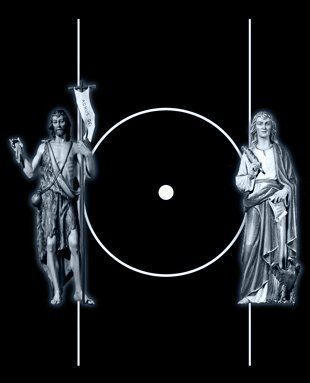
This day also falls around the Winter solstice which marks the shortest day of the year and the end of the solar year. This is in contrast to the Feast Day of Saint John the Baptist which falls on the 24th of June, around the Summer solstice which designates the longest day of the year. If one remembers that the Saints John are connected with the Point within the Circle. The perpendicular parallel lines that support the circle represent the Saints. From this, we see them on opposite sides of a circle, a symbol that represents cycles, just as their Feast days fall upon the two solstices, the two extremes of the sun's appearance during the Earth's rotation. For such reason, these two show us balance and remind us of the lessons taught by Freemasonry.

Lodges today are dedicated to the Holy Saints John and it is sad to see that many Lodges do not hold anything to celebrate this day. Forgetting our past we lose a piece of our heritage. I hope everyone enjoys this day and remembers the man for who we commemorate.

References

1. Chambers, R. (n.d.). December 27th. Retrieved from Chamber's Book of Days: http://www.thebookofdays.com/months/dec/27.htm

2. Feast of St. John. (n.d.). Retrieved from Fish Eaters: http://www.fisheaters.com/customschristmas4.html

3. John the Evangelist. (n.d.). Retrieved from Wikipedia: http://en.wikipedia.org/wiki/John_the_Evangelist

4. Saints John Day. (n.d.). Retrieved from Masonic World: http://www.masonicworld.com/education/files/stjohndays.htm

5. Simser, J. (2012, June 22). Saint John the Evangelists Day. Retrieved from Masonic Thoughts blog: http://masonicthought.blogspot.com/2012/06/st-john-evangelists-day-122709.html

6. St. John. (n.d.). Retrieved from Catholic Culture: http://www.catholicculture.org/culture/liturgicalyear/calendar/day.cfm?date=2012-12-27

7. St. John the Apostle. (2011). Retrieved from Catholic Online: http://www.catholic.org/saints/saint.php?saint_id=228
8. St. John’s Day. (n.d.). Retrieved from Christmas Celebations and New Year's Celebrations: http://christmas-celebrations.org/208-st-johns-day.html

9. St. John's Day. (n.d.). Retrieved from Wikipedia: http://en.wikipedia.org/wiki/St._John's_Day,_Masonic_feast

10. Godfrey, L. L. (n.d.). The Holy Saints John. Retrieved from Grand Lodge of Virginia: http://www.grandlodgeofvirginia.org/education/programs/monthly_talks/The_Holy_Saints_John.pdf

11. Ward, H. L. (n.d.). And Dedicated to the Holy Saints John. Retrieved from Pietre-Stones Review of Freemasonry: http://www.freemasons-freemasonry.com/ward.html

Thursday, December 26, 2013

A Templar Prayer

May the grace of the Holy Spirit be present with us. May Mary, Star of the Sea, lead us to the harbor of salvation. Amen.

Lord, Holy Father, eternal God, omnipotent, omniscient Creator, Bestower, kind Ruler and most tender lover, pious and humble Redeemer; gentle, merciful Savior, Lord! I humbly beseech The and implore Thee that Thou may enlighten me, free me and preserve the brothers of the Temple and all Thy people, troubled as they are.

Thou, O Lord, Who knowest that we are innocent, set us free that we may keep our vows and your commandments in humility, and serve Thee and act according to Thy will. Dispel all those unjust reproaches, far from the truth, heaped upon us by the means of tough adversities, great tribulations and temptations, which we have endured, but can endure no longer.

Omnipotent, eternal God, who hast so loved the blessed John the Evangelist and Apostle, that he reclined upon Thy bosom at the Last Supper, and to whom Thou revealed and showed the Mysteries of Heaven, and to whom, while suspended on the Holy Cross, for the sake of our redemption, Thou commended Thy most Holy Mother and Virgin, and in whose honor (our) Order was created and instituted; through Thy Holy mercifulness, deliver us and preserve us, as Thou knowest that we are innocent of the crimes that we are accused of, so that we may take possession of the works, by which we may be guided to the joys of Paradise, through Christ and the Lord Our God!

Amen.

Wednesday, December 25, 2013

Merry Christmas

To all of my family, friends, Brothers, Companions, and Sir Knights, around the world;


Remember the Reason for the Season. Stay safe and may God be with you.


Sunday, December 22, 2013

Deacons and their Staffs

There is so much symbolism within Freemasonry and often we overlook some of it that is plain sight. Some often have questions, but never really ask as to why we use it. One such question surrounds the use of the staff by the Senior and Junior Deacons. These officers as well as the Stewards and Marshall carry a staff or a similar implement. Some of our ceremonies, regalia, rituals, and symbols can be traced back to ancient days, the medieval days of Operative Masonry, and some through the evolution of our degrees during the early years of Speculative Freemasonry.

The word "deacon" comes from the Greek word "diakonos" meaning servant, attendant, or messenger. This definition is appropriate to these officers as they serve as the messenger of the Worshipful Master and Wardens. The duties may change from jurisdiction to jurisdiction, but a realistic look at their duties is as follows. The Senior Deacon, who sits as the messenger between the Worshipful Master and Senior Warden, introduces and accommodates visitors; conducts and guides new candidates during the rituals; attends at the altar during the opening and closing ceremonies; and takes control of the ballot box. The Junior Deacon, the messenger between the Wardens, attends to all alarms at the door; ensures the security of the Lodge alongside the Tyler; and assists during the rituals (initiation and opening/closing).

In the early years of Speculative Freemasonry, not all Lodges had Deacons and if they did they may not have had the same duties as they do now. In some Lodges the Deacon was the presiding officer while the Wardens often served as the financial officer. During the Great Schism, the rivalry period between the Antients and the Moderns, the former had Deacons while the latter had Stewards (there were some exceptions as there always is). With the formation of the United Grand Lodge of England (UGLE), the Lodge of Promulgation recommended the adoption of both the Deacons and Stewards as they were seen as useful and necessary. Through a succession of the ages we now have two Deacons as we see them today.

Both of the Deacons carry staffs. The name of these implements may change from jurisdiction to jurisdiction. Looking at history, Deacons were associated with columns, but around 1822 the Wardens took over the columns as the symbol of their office while the Deacons were given the staffs. The tops of the staffs have changed and do vary with each jurisdiction. The tops are also the jewels of the office, which today is the sun for the Senior Deacon and moon for the Junior Deacon, both within the Square & Compasses. In the early years of the UGLE, the staffs were topped by pine cones, but this would then change to doves that are also seen as messengers. The dove was also a symbol of peace and harmony, and the Deacons should remember they are officers of peace. One can see this during the initiation when the Senior Deacon is escorting the candidate. The Senior Deacon places himself between the candidate and the Altar, thus protecting the Altar from the uninitiated man, but once the candidate becomes a Master Mason, the Senior Deacon moves to his left side.


The use of staffs by officers is very symbolic and has been used in a variety of cultures. The most obvious use is by the Greek god, Hermes, who was the messenger of the gods, just as the Deacons are the messengers within the Lodge, and who carried the caduceus. This wand was used to ward off evil and to ensure that he was unimpeded in his journey. Carrying a staff is a mark of authority and we see this with the king's scepter, the bishop's or verger's staff, the mace of Parliament, and, Biblically, with the staff of Moses. Now we can't talk about the Deacon's staffs without talking about the rods that are carried by the Stewards of the Lodge as one of the origin theories of these implements surrounds the Stewards of the King in England. These Stewards carried a white rod which was a symbol of their authority appointed by the King. Other officers carried rods such as the usher of the Lord Chamberlain's department who carried a black rod.

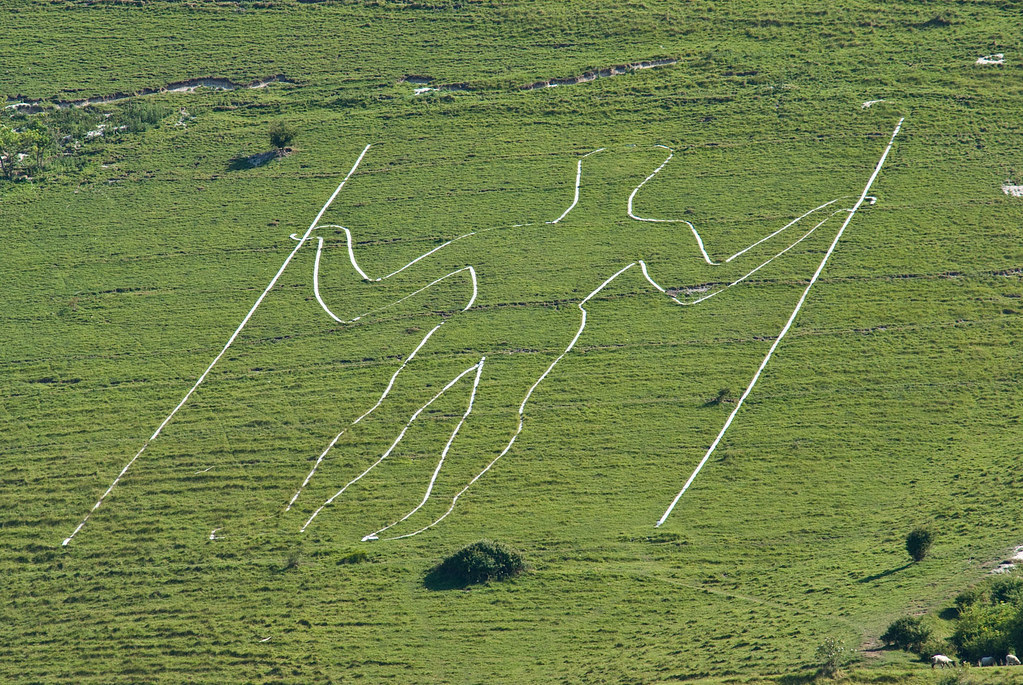
One such theory that caught my eye was from the works of Bro. Bill Douglas. In his 2001 article, he talks about a hillside carving that is located on the south coast of England. In Sussex County near Wilmington is what is known as the "Long Man of Wilmington" which displays a man with arms outstretched and in each hand he holds a staff or "asherah". This figure stands 125-feet tall. The word "asherah" refers to wooden columns or staffs that represented the goddess Asherah. These were 6-feet in length and were carried by attendants of priests and stood as the insignia of their office. The goddess Asherah was the mother of twins named Shachar, the god of dawn, and Shalem, the god of dusk. Thus we see a connection to Masonry as the Deacons carry staff, one with the sun and sits in the East, representing the rising Sun or dawn; and the Junior Deacon with the moon as the jewel of his office to represent the end of the day or dusk.

Bro. Bill also makes a reference to Moses' Tabernacle. We learn in the 1st degree that all Lodges are a representation of King Solomon's Temple which was an exact model for the Tabernacle erected by Moses, which was situated due East and West to commemorate the East wind which assisted in the exodus of the Jews out of the land of Egypt. The tabernacle was not a permanent building, but a tent that was dismantled and erected each time the Jews moved through the Wilderness. Prior to dawn the attendants would go to the chosen site and one of them would place the staff or asherah on the spot. When the sun rose, it would send a shadow towards the western horizon. The second attendant would then place his staff at the other end of the shadow. This line would designate the center line of the tabernacle.

The Deacons serve as proxies for the Worshipful Master and Senior Warden. While the Junior Deacon carries messages to the Junior Warden it really is the Senior Warden who he represents and assists; the Junior Warden has the Stewards to assist him in a variety of roles. The staffs have been decorated to represent the Deacons role in the Lodge as messengers and protectors of peace and harmony. Those who serve as Deacons need to knowledge, vigilant, and steadfast that they may be able to perform their duties with impressive zeal.

References

1. Cameron, D. (2007, October 23). The Deacons. Retrieved from Waterloo Masons: http://www.waterloomasons.com/masonic_education/deacons

2. Deacon. (2013). Retrieved from Online Etymology Dictionary: http://www.etymonline.com/index.php?search=deacon

3. Douglas, B. (2001). Why Do Deacons Carry Wands? Retrieved from Masonic Bulletin, BCY: http://weblites.com/images/011506_2.pdf

4. Halpaus, E. (n.d.). Rods and Columns. Retrieved from Grand Lodge of Minnesota AF&AM: http://www.mn-masons.org/sites/mn-masons.org/files/3983.pdf

5. Hodapp, C. (n.d.). Freemason Lodge Officers. Retrieved from Freemasonry For Dummies: http://www.dummies.com/how-to/content/freemason-lodge-officers.html

6. Walk, C. R. (n.d.). The Masonic Rods and Staffs. Retrieved from Masonic World: http://www.masonicworld.com/education/articles/masonic_rods_and_staffs.htm

Saturday, December 21, 2013

Installed as Worshipful Master

Yesterday was a busy day. The morning started with me attending the Graduating Student Leaders Celebration & Breakfast at Boise State University and then the Winter Commencement ceremony. I was able to watch several of my friends walk and receive their Bachelor's degrees.

Once finished I spent my day getting ready for my Lodge's installation. I was concerned as it started to snow and many of my guests had a distance to come. One of our Brothers cooked a delicious Prime Rib meal that was served by one of the local Bethels.

The Installation was well attended, even with the inclement weather, and I had the honor of being installed by a Brother who served as Master when I was Raised and he was my mentor. Tonight was an amazing night as I am the first Worshipful Master to be recycled in 98-years. My Installing Marshall was the Brother who preceded me in the line my first time around and currently serves as the Deputy Grand Master of the Grand Lodge AF&AM of Idaho. My Installing Chaplain was a good mentor of mine who is a Past Grand Master of Idaho.

I gave my speech and entered into the Presentation stage of the night. This was a definite highlight of the night as my Senior Deacon approached me some weeks before with the idea that he wanted to propose to his girlfriend. I was very excited and agreed to take part in it all. At the end of all the presentations I had the Senior Deacon, the boyfriend, escort his girlfriend to the East where after a small speech I took the staff and allow the Brother to go on bended knee to propose to his girlfriend. She was so surprised as was her family who was in attendance. We ended the night with the opening of a Lodge of Tribute then heading to a local pub to have a few drinks.

I thank all of the Brethren for electing me to this honored station. It is a pleasure to preside over such a great Lodge and with a great corps of officers. I look forward to this next year and what surprises it brings into my life.

My Senior Warden took several pictures and once he has them uploaded I will update this post with them.

Thursday, December 19, 2013

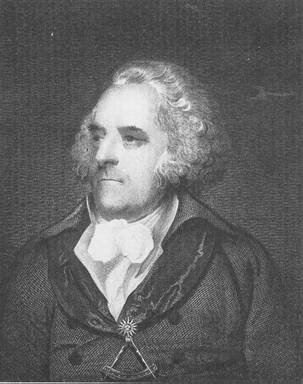
William Preston

While we give credit to Thomas Smith-Webb for his publishing one of the first standardized monitors in the US, we must not forget the efforts of William Preston who had a major influence on Thomas Smith-Webb's work as well many other monitors.

William Preston was born on August 7th, 1742, in Edinburgh, Scotland. At the age of 6, his father had him attend the Royal High School in Edinburgh, where he is said to have studied Latin and Greek. He continued his studies of the classics through college and once he had finished his studies he worked for Thomas Ruddiman, a linguist, and after Thomas' death worked for Walter Ruddiman as a printer.

In 1760, he moved to London and started working as a printer again with William Strahan. During this time, a group of Scottish Masons living in London decided to form a new Lodge. On April 20th, 1763, Lodge No.111, under the jurisdiction of the Antient Grand Lodge, was constituted at the "White Hart" in the Strand. It is thought that Preston was initiated at this time. On November 15th, 1764, this Lodge would change their changed allegiances and Lodge 
No.111 would become Caledonian Lodge No.325 under the "Moderns" or Premier Grand Lodge. This Lodge is still in existence today, but is numbered as No.134 on the present registry of the United Grand Lodge of England.

Preston began an extensive program of masonic research which entailed correspondence with Masons from around the world. Through this, he built a large amount of Masonic knowledge and started organizing lectures attached to the 3-degrees of Freemasonry. He started meeting with friends a few times a week to present and refine his presentations which culminated on May 21st, 1772, where he held a Gala at the Crown and Anchor in the Strand. Here he presented his lectures to several prominent Masons and Grand Lodge officers. The success of this presentation led to the publishing of "Illustrations of Masonry". This publication would serve as the basis for several monitors. His efforts would earn him an appointment as Deputy Grand Secretary.


“To inform myself fully of the general rules of the Society, that I might be able to fulfil my own duty and officially enforce obedience in others.”

Preston was elected, in absentia, in Lodge of Antiquity (one of the founding Lodges of the first Grand Lodge). This Lodge was suffering and declining so they wished Preston to help turn the Lodge around. He was eventually elected as Master of the Lodge and the Lodge did indeed flourish again.

Some members were not pleased with the policies of Preston and eventually, he would be expelled. This resulted from the events of December 27th, 1777, when some members of the Lodge of Antiquity, including Preston, returned from church wearing their Masonic regalia. The incident was reported by some unhappy Brothers and when Preston stated that the Lodge only had to prescribe to the original Constitution of the Premier Grand Lodge, and not any of the subsequent rulings due to its seniority, he and his supporters were expelled in 1779.

It would be 9-years until the dispute was resolved and Preston was brought back into Freemasonry and reinstated to all of his Honors. During his expulsion, his literary contributions reduced. Preston took no part in the unification of the Antients and the Moderns in 1813.

William Preston died on April 1st, 1818, as a result of a long illness, and was buried in St. Paul's Churchyard. He left a sum of money to the Grand Lodge, to provide for the annual delivery of a lecture; the lecturer to be appointed by the Grand Master.

Although his Masonic journey had moments of controversy, he still contributed a great deal to the cultivation of Masonic education. Preston also had a major impact on moving Freemasonry away from the Taverns and the dinner appeal and giving it a deeper appeal for esoteric studies, as well as moving meetings to dedicated Masonic buildings.

References

1. Harvey, A. D. (2012). William Preston and the Prestonian Lecture. Retrieved from The Prestonian Lecture for 2012: http://www.prestonian2012.org.uk/William%20Preston.html

2. Illustrations of Masonry. (n.d.). Retrieved from Pietre-Stones Review of Freemasonry: http://www.freemasons-freemasonry.com/preston_illustrations_masonry.html

3. McLagan, E. J. (1967, July 21). The Great Dissension (Or Schism). Retrieved from MoF Masonic Library: http://www.masoniclibrary.org.au/index.php?option=com_content&view=article&id=88:the-great-dissension--or-schism-&catid=23:lecture&Itemid=30

4. Newell, B. E. (2012, October 30). The Father of the American Rite. Retrieved from Traveling Templar: http://www.travelingtemplar.com/2012/10/the-father-of-american-rite.html

5. William Preston. (n.d.). Retrieved from Masonic Dictionary: http://www.masonicdictionary.com/preston.html

6. William Preston (Freemason). (n.d.). Retrieved December 17, 2013, from Wikipedia: http://en.wikipedia.org/wiki/William_Preston_%28Freemason%29