Showing posts with label Mark Masonry. Show all posts

Wednesday, August 20, 2025

A. E. Waite

Arthur Edward Waite (1857–1942) occupies a unique place in the history of Western esotericism. An American-born poet, mystic, and occult scholar who spent nearly his entire life in England, Waite wrote prolifically on the subjects of mysticism, ceremonial magic, Kabbalah, Rosicrucianism, Freemasonry, and alchemy. He was also the co-creator of the Rider–Waite Tarot deck, the single most influential tarot pack of the modern era. R. A. Gilbert, Waite’s biographer, observed that Waite’s importance lies in the fact that he was “the first to attempt a systematic study of the history of Western occultism.” Waite’s career was marked by his constant search for what he called the “Secret Tradition”, a hidden stream of mystical Christianity preserved within the symbols of esoteric societies and texts.


Early and Personal Life

A. E. Waite was born on October 2, 1857, in Brooklyn, New York, to Charles F. Waite, a Captain in the American merchant marines, and Emma Lovell, daughter of a wealthy London merchant involved in the East India trade. Charles and Emma never married, and Waite and his sister Frederika were thus illegitimate. When Charles died at sea, Emma returned to England with her two children, raising them in poverty on the margins of London society. Rejected by her family, Emma converted to Roman Catholicism when Waite was 6 years old, a decision that would shape his religious outlook for the rest of his life.

Waite, unable to receive a formal education, educated himself and became a voracious reader. He spent two terms at St. Charles’ College at 13 years old before leaving formal schooling. Much of his education came through voracious reading, ranging from cheap novels and romances to medieval and mystical texts. In 1874, the death of his sister deeply shook him, weakening his Catholic faith and setting him on a lifelong quest for spiritual consolation. By age 21, he was studying esotericism in the British Museum Library, exploring Spiritualism, Theosophy, and eventually the works of Éliphas Lévi, whose writings ignited Waite’s enduring fascination with the Hermetic and mystical traditions of the West.

In 1888, Waite married Ada Lakeman, whom he affectionately called “Lucasta,” and they had one daughter, Sybil. Between 1900 and 1909, he supported his family as a manager for the Horlicks company. Lucasta’s death in 1924 was a personal blow; in 1933, he remarried Mary Broadbent Schofield, with whom he spent his final years in Kent.


Writer and Scholar

Waite’s literary output was vast. He authored, translated, or edited works on alchemy, Kabbalah, Rosicrucianism, and ceremonial magic, in addition to devotional poetry and mystical theology. His ‘The Builders’ became a popular Masonic classic, distributed widely in America, and in 1916 he was honored by the Grand Lodge of Iowa with the rank of Past Senior Grand Warden.

His book ‘Devil-Worship in France’ (1896) was particularly influential, as it exposed the notorious Taxil Hoax, which had alleged Masonic involvement in Satanism. Waite’s careful analysis demonstrated the fraudulent nature of the claims and earned him the gratitude of both Masonic and occult leaders like William Wynn Westcott. While non-Masonic reviewers thought Waite had perhaps overstated the case, the work effectively put an end to popular interest in “Masonic Satanism.”


The Hermetic Order of the Golden Dawn

Waite joined the Hermetic Order of the Golden Dawn in 1891, entering the Second Order in 1899. He was involved with the Order until 1914, save for a break between 1893 and 1896 when he became disenfranchised with the activities of some of his superiors in the order. He founded his own branch, the Independent and Rectified Order of the Golden Dawn, in 1903, but dissolved it in 1914.

Waite’s approach to esotericism emphasized mysticism and Christian spirituality, a contrast to figures like Aleister Crowley and W. B. Yeats who favored ceremonial magic and practical occultism. Crowley, in particular, mocked Waite in print, calling him “Dead Waite” and lampooning him in ‘Moonchild.’ Yet Gilbert and other scholars argue that Crowley’s animosity stemmed from Waite’s insistence that true magic pointed beyond occultism toward mystical union with the divine.

“Crowley’s hostility centred on his awareness that Waite had perceived the true nature of magic and pointed to another way — that of the mystic. Unwilling to accept what he knew inwardly to be true; Crowley turned to verbiage and venom, at the same time belittling himself and ensuring that future generations of occultists should know of Waite and be curious.” 

- R.A. Gilbert


Masonic Career

A.E. Waite was initiated as an Entered Apprentice on September 19, 1901, in Runymede Lodge No. 2430 at Wraysbury in Buckinghamshire. As a courtesy to Runymede Lodge, Waite was raised as a Master Mason on February 10, 1902, in St. Marylebone Lodge No. 1305 in London. He would serve as Worshipful Master of Runymede Lodge in 1910. He was admitted to the Grade of Zelator in Metropolitan College of the SRIA on April 10, 1902. He would later serve as Exponent of this College in 1913. He was exalted into the Holy Royal Arch in Metropolitan Chapter No. 1507 on May 1, 1902. A week later, he was installed as a Knight Templar in King Edward VII Preceptory.

His most treasured initiation came in February 1903, when he traveled to Geneva to receive the Rectified Scottish Rite and the grade of Chevalier Bienfaisant de la Cité Sainte (CBCS). Waite regarded the Rectified Scottish Rite as the purest expression of the mystical Christian “Secret Tradition.”

“The ceremony throughout was read or recited, the rituals not being committed to memory as in English Masonry. The effect was in reality much better, but it is possible that the ritual lends itself especially to this kind of delivery as it was more narrative and exhortatory than are the Craft degrees. I wish in any case to record that as regards both grades the rites could have scarcely been simpler, more impressive or worked with more smoothness and dignity.”

In 1905, he was initiated into Mark Masonry, which he saw as a purer form of Craft Masonry, not the ‘muddled Deism of Anderson's Constitution.’ In 1930, he was still actively promoting the Mark when he became a founder and first Master of Tower Hamlets Mark Lodge No. 892. He was a founding member of Sancta Maria Preceptory of Knights Templar in 1906 and served as Preceptor in 1909 before serving as Registrar from 1910 to 1940. He received the Chevalier-Profès (Professed Knight) and Chevalier-Grand Profès (Grand Professed Knight) by correspondence in 1907; he did not make a second visit to Geneva. He was perfected (initiated) in the Orpheus Chapter Rose Croix No. 79 in 1909, becoming its Sovereign in 1915, and, from 1918 onwards, he was its Recorder.In 1914, Waite resigned from the SRIA after failing in his bid to be elected as Celebrant of Metropolitan College.

After 1920, his association with Craft Masonry faded, although he remained a member of his mother lodge until his death. By this time, he was a member of virtually every rite that was worked in England, and he had played an active role in many of them, including the Holy Royal Arch, the Knights Templar, the Knights of Malta, the Swedenborgian Rite, the Red Cross of Constantine, and the Secret Monitor.

Despite his wide involvement in Masonic bodies, Waite was often critical of mainstream Freemasonry, which he felt had lost its spiritual depth in favor of worldly ceremony and social respectability. By the 1920s, he had largely withdrawn from active Masonic life, though he remained affiliated until his death.


Martinism and Tarot

One of the lesser-known but crucial influences on Waite’s spiritual development was Martinism, the mystical Christian philosophy derived from Louis Claude de Saint-Martin (“the Unknown Philosopher”) and later systematized by Gérard Encausse (“Papus”). Waite encountered Martinism in the late 19th century, shortly after his exposure to Lévi. Whether Waite formally joined Papus’s Martinist Order remains uncertain, but his writings and ritual work demonstrate a deep assimilation of Martinist themes.

At the core of Martinism lies the doctrine of humanity’s fall from divine unity and the possibility of reintegration with God through inner purification and the cultivation of divine wisdom. Waite absorbed this theology and wove it into his broader search for the “Secret Tradition.” His Fellowship of the Rosy Cross reflected Martinist emphases on mystical ascent, Christian esotericism, and the symbolic use of ritual to awaken the soul to divine realities.


Fellowship of the Rosy Cross

In 1914, he resigned from the Hermetic Order of the Golden Dawn and the SRIA, which coincided with the decline of his Independent & Rectified Rite of the Golden Dawn. He directed all of his energies to the rituals and creation of the Fellowship of the Rosy Cross (FRC), a Christian Order structured in a series of grades that represented a symbolical ascent of the Kabbalistic Tree of Life. The Fellowship of the Rosy Cross was founded on July 9, 1915, with the consecration of Salvator Mundi Temple at De Keyser's Hotel on Victoria Embankment, London. Waite’s Order was supposed to be Christian and mystical, rather than pagan and magical, and it synthesized elements from Freemasonry, Kabbalah, alchemy, Martinism, and Tarot in its rituals. Unlike the Golden Dawn, the FRC rejected magical practices in favor of contemplative mysticism and sacramental ritual. For Waite, the FRC represented the culmination of his lifelong quest to reconstruct the “Secret Tradition” as a living spiritual path.


The Tarot

Waite is best known for his involvement with the Rider–Waite Tarot deck, first published in 1910 and illustrated by his fellow member of the Hermetic Order of the Golden Dawn, Pamela Colman Smith. He also authored the deck’s companion volume, ‘The Key to the Tarot’, which was republished in expanded form in 1911 as ‘The Pictorial Key to the Tarot’. Unlike many of his contemporaries, Waite viewed the Tarot as a book of spiritual doctrine. The Rider–Waite deck embodies this vision: its imagery is infused with Christian mysticism, Rosicrucian allegory, and echoes of Martinist philosophy. The Fool’s journey, in Waite’s interpretation, is not merely a tale of chance or fate but a spiritual pilgrimage toward divine union. By fully illustrating all 78 cards (when most decks at the time depicted only the 22 Major Arcana), Waite and Smith introduced narrative and symbolic coherence to the entire Tarot, encouraging its use not simply for divination, but as a meditation on the stages of the soul’s return to God. Although Waite authored dozens of works, it is the Rider–Waite Tarot and its companion volume that secured his enduring fame. The deck revolutionized Tarot practice and has since become the foundation upon which nearly every modern Tarot deck is built, ensuring Waite’s lasting influence on the esoteric tradition.


Death and Legacy

Waite spent his final years in Bishopsbourne, Kent, where he died on May 19, 1942, at the age of 84. He was buried in the local churchyard. While often mocked by contemporaries such as Crowley and even caricatured by H. P. Lovecraft, Waite’s reputation has grown steadily among scholars of esotericism. His insistence on the distinction between occultism and mysticism, his rejection of sensationalism, and his quest for the “Secret Tradition” have left a lasting legacy. As Fort Newton remarked in 1916, Waite “warns us against the dark alleys that lead nowhere, and the false lights that lure to ruin.”


References

1. A.E. Waite. (n.d.). Retrieved from Wikipedia: https://en.wikipedia.org/wiki/A._E._Waite 

2. Arthur Edward Waite. (n.d.). Retrieved from The Province of Greater London for the Societas Rosicruciana in Anglia: https://srialondon.org/arthur-edward-waite/ 

3. Arthur Edward Waite. (n.d.). Retrieved from Grand Lodge of British Columbia & Yukon: https://freemasonry.bcy.ca/biography/esoterica/waite_a/waite_a.html 

4. Arthur Edward Waite — The Man Behind the Modern Tarot. (n.d.). Retrieved from Mister Tarot: https://www.mistertarot.com/arthur-edward-waite%E2%80%94designer-of-the-modern-tarot/ 

5. Gilbert, R. A. (1986). The Masonic Career of A. E. Waite. Retrieved from Skirrit: https://skirret.com/papers/waite/masonic_career.html 

6. Higgins, S. (2013, December 11). A. E. Waite and the Occult. Retrieved from The Oddest Inkling: https://theoddestinkling.wordpress.com/2013/12/11/a-e-waite-and-the-occult/ 

7. Steele, E. C. (2015, October 2). Arthur Edward Waite is Born. Retrieved from MasonryToday: https://www.masonrytoday.com/index.php?new_month=10&new_day=2&new_year=2015

Friday, October 13, 2023

William Wynn Westcott

Born on December 17, 1848, in Leamington, Warwickshire, England, William Wynn Westcott was the only child of Dr. Peter Westcott, but would be raised by his half-uncle (who was also a doctor) after his parents died before William was 10 years old. William was educated and attended University College in London where he earned a Bachelor of Medicine. After his education left London and worked with his half-uncle at his medical practice.

William was involved with his community and served in many capacities and appointments such as Factory Surgeon, Public Vaccinator, Medical Officer of Health, and Quartermaster to a Battalion of Volunteers.

On February 18, 1873, he was married to Elizabeth Burnett. Together they had four children and moved back to London in 1879. From 1879 to 1881, he seemed to have taken a sabbatical where he studied Kabalistic, Hermetic, Alchemical, and Rosicrucian philosophy and teachings.

In 1881, he was appointed Deputy Coroner for Central Middlesex and Central London. In 1894, he was appointed Coroner for Northeast London; he served in this position until 1918. In 1918, he moved to South Africa.

William Wynn Westcott was initiated into Parret and Axe Lodge No. 814 in Crewkerne (England) on October 24, 1871. Little is known about his advancement, but he served as the Lodge's Master in 1877. He was also a member of Quatuor Coronati Lodge No. 2076, the premier Lodge of Research in the world, and served as its Worshipful Master in 1893. He would also serve as Provincial Assistant Grand Director of Ceremonies in Somerset and be awarded the rank of Past Junior Grand Deacon by the United Grand Lodge of England. 

In Capitular Masonry, he was exalted into the Chapter of Brotherly Love No. 329 on April 30, 1873, and served as the First Principal (equivalent to Excellent High Priest in the United States) in 1889. He would go on to be a Past Grand Standard Bearer of the Supreme Grand Chapter of Royal Arch Masons of England.

Unlike the US, Mark Masonry is a separate body in England. Westcott was advanced to Mark Masonry in William de Irwin Lodge No. 162 and served as its Master in 1887. He would serve as the Provincial Grand Senior Warden of the Mark Province of Somerset.

He is said to have joined the Order of the Temple or Knights Templar, but the dates are not known nor what offices he held, if any. This claim is disputed.

He joined the Ancient & Accepted Rite in 1875 and was promoted to the 30° in 1878.

He was a member of Rose and Lily Conclave No. 10 of the Red Cross of Constantine.

He was a member of the Royal Order of the Red Branch of Eri where he was instrumental in reviving and reorganizing the order, and served as its Grand Master and its senior Knight Grand Cross.

He was admitted to the Swedenborg Rite in 1876 where he served as Worshipful Master of Emanuel Lodge No. 1 and Junior Warden of Hermes Lodge No. 8 in 1886, District Senior Grand Warden and Supreme Grand Senior Deacon in 1877, Worshipful Master of Pythagorean Lodge of Instruction in 1887, and Supreme Grand Junior Warden and Supreme Grand Secretary in 1891.

Westcott joined the Societas Rosicruciana in Anglia (SRIA) on April 15, 1880, at Metropolitan College. He was admitted to the Grades of the Second Order on December 12, 1881. In 1883 he served as Secretary General of the Society. In 1889, he served as Celebrant of Metropolitan College, and in 1891 he was enthroned as Most Worthy Supreme Magus of the SRIA.

Westcott was targeted by anti-Masons of the age. In 1896, he was listed as the “Chief of English Luciferians” in a French anti-Mason publication called “Mémoires d'une Ex-Palladiste”. This was supposedly written by Ms. Diana Vaughan which of course was a pseudonym used by the hoaxer Leo Taxil.

Westcott was also a member of several non-Masonic esoteric societies like the Hermetic Society and Theosophical Society. The latter organization he advanced to the “inner circle.” But it was with another group that Westcott is highly remembered, the Hermetic Order of the Golden Dawn.

In 1887 Westcott acquired a ciphered manuscript that proved to be a series of initiatory rituals. In working with his fellow Rosicrucian Frater, Samuel Liddell MacGregor Mathers worked the rituals into a workable form. He, Mathers, and Dr. William Robert Woodman (the then Supreme Magus of the SRIA) established the Hermetic Order of the Golden Dawn in February 1888.

Being a public official (the Coroner), he was pressured into retiring from his public life as a member of the Golden Dawn and stepped down from his officer roles. There also seems to have been an internal dispute between him and Mathers who accused Westcott of being a forger and liar. Some speculate that it was Mathers who had informed Westcott's superiors of his involvement in the Golden Dawn to force him out of power. Mathers accuses Westcott of fabricating the documents authenticating the origins of the Golden Dawn. 

William Westcott died of Brights Disease (a kidney disease) on July 30, 1925, in Durban, South Africa. He was predeceased by his wife in 1921, both of his sons (1906 and 1907), and both of his daughters (1918 and 1924). While some of his life may be left in controversy, he was clearly a revered and respected Mason in his time and left a legacy with the Golden Dawn as well. While unknown to most Masons in the US, he was a contemporary of men like AE Waite, John Yarker, Theodore Reuss, and Albert Pike.


References

1. Dr. William Wynn Westcott. (n.d.). Retrieved from The Hermetic Order of the Golden Dawn: https://hermeticgoldendawn.org/biography-dr-william-wynn-westcott/ 

2. Gilbert, R. A. (1987, February 19). William Wynn Westcott and the Esoteric School of Masonic Research. Retrieved from ARS QUATUOR CORONATORUM: https://freemasonry.bcy.ca/aqc/westcott/westcott.html 

3. Parsell, H. V. (n.d.). Dr. William Wynn Westcott: An Appreciation. Retrieved from Societas Rosicruciana in America: https://sria.org/dr-william-wynn-westcott-an-appreciation/ 

4. Westcott, William Wynn. (n.d.). Retrieved from Occult World: https://occult-world.com/westcott-william-wynn/ 

5. William Wynn Westcott. (2016, August 14). Retrieved from Geni: https://www.geni.com/people/William-Westcott/6000000009428109687 

6. William Wynn Westcott and the Esoteric School of Masonic Research: Appendix A. (n.d.). Retrieved from MasterMason: http://www.mastermason.com/luxocculta/appendix4.htm

Saturday, May 28, 2022

Grand Chapter of Saskatchewan

Au revoir to my Canadian Companions who have hosted me for the last 2-days. Thursday afternoon I flew as far as Calgary and then on Friday made it to Saskatoon to attend the Annual Convocation of the Grand Chapter of Royal Arch Masons of Saskatchewan. This jurisdiction falls under the North Central Region, but that Deputy couldn't make it so I was asked to attend.

Friday afternoon kicked off with the Order of High Priesthood conferral, followed by the Ceremonial Opening and Memorial Service of the Grand Chapter. I was honored with introductions along with so many other distinguished guests and for being allowed to take part in the Memorial Service. Friday night was the Grand Banquet where I sat at the head table with the Grand Z (Grand First Principal), Grand H (Grand Second Principal) and his wife, Grand J (Grand 3rd Principal who will be Grand Z during their Centennial), and the Most Worshipful Grand Master of Saskatchewan and his wife. After a delicious meal, I was asked to present the Bronze Medal.

Saturday morning I attended a Red Cross of Constantine Breakfast before the Grand Chapter reopened at 9am and received distinguished guests from sister jurisdictions and concordant bodies. I was honored to represent the General Grand Chapter of Royal Arch Masons International and I gave some comments that were well received. After lunch, the newly elected officers were installed.

The rest of the day I explored Saskatoon, or rather the Paris of the Prairie. It's a nice town and was beautiful to see in late Springtime. Now I'm getting to bed for an early flight home.

Wednesday, March 3, 2021

The Master's Craft

Any Mason involved with ordering Masonic regalia, jewelry, pins, coins, and so on knows that there are a lot of sites and vendors out there. While there are many worthy Brothers running them, I want to highlight one and that is The Master's Craft ran by Bro. John Bridegroom out of Indiana. From the website:

The Masters Craft creates unique Masonic items for the Fraternity at large, when quality, artistry and longevity are desired. The Masters Craft is owned and operated by W. Bro. John Bridegroom, Past Most Illustrious Grand Master of Indiana. Being deeply impressed by the artistry of items in the Masonic Fraternity’s history, we desire to continue that tradition in The Masters Craft. With no intention of being the average retail store, or supplying the mundane artifacts of regular Masonic operations, the focus has been placed more on projects that require a special touch, and an approach that fuses the visual standard of today with the depth and power of the designs of our past. We hope you will our work to be fitting representations of the honors they represent!

Due to the number of Masonic organizations that I am in, I am in possession of a lot of Masonic jewelry and pins...a lot. Quality isn't always the best and sometimes Masonic groups don't always purchase items of the best quality. When I started attending Masonic Week I was introduced to The Master's Craft and Bro. John Bridegroom. John is a very dedicated Brother and has an impressive Masonic curriculum vitae which gives him an insight into the world of Masonic regalia and jewelry. A few years ago, I purchased some Allied Masonic Degree jewels from him and compared them to some others I bought from another vendor. The first thing I noticed was the difference in quality and durability. From that experience, I've started purchasing jewels and pins from him for a few other groups that I'm involved with to include the Societas Rosicruciana in Civitatibus Foederatis.

He has jewels, pins, and coins for the Blue Lodge, Allied Masonic Degrees, Royal Arch, Mark Masonry, Holy Royal Arch Knights Templar Priests, Red Cross of Constantine, the Societas Rosicruciana in Civitatibus Foederatis, Royal Order of Jesters, the Ancient & Accepted Scottish Rite, York Rite College, and can even do custom jobs. I encourage all Masons to check out this website if you are interested in quality.

Saturday, February 13, 2021

Masonic Week 2021

Like many things in the last year, Masonic Week was greatly impacted by the COVID19 pandemic. Most of the meetings went virtual or were canceled entirely.

Originally, Ye Commemorative Order of St. Thomas of Acon was supposed to meet on Thursday, February 11th, but the Grand Master's Council met on January 21, 2021, where Joseph MacIntyre was elected and installed as Most Worthy Grand Master and Brandon Yarbrough was appointed and installed as Most Eminent Grand Prior.

This last Thursday the Provincial Grand Court of the United States of America for the Masonic Order of Athelstan met virtually. This meeting marked the 10th anniversary of the establishment of the Provincial Grand Court of the United States of America.

Yesterday morning, the Grand Council of Knight Masons of the USA met where Martin Trent was elected and installed. Friday evening, the Masonic Society held its annual meeting where Most Worshipful Brother Akram Elias of DC gave a magnificent presentation called "Freemasonry in 2026: A Force for Good, or a Footnote in History?"

I presided over a quick meeting of the officers of the High Council of the Masonic Order of the Bath of the USA where we decided to keep the officers the same for the ensuing year.

This morning, the Philalethes Society held their 93rd annual meeting where Brother Adam Kendall gave a presentation called "History and Tradition: The Material Culture of Freemasonry". Later in the morning, the Grand Council of the Allied Masonic Degrees of the United States of America met. Most Venerable Brother Glen Cook did a great job with presiding over such a large meeting. Among the many visitors and attendees were Brothers from the Grand Councils of Canada, England, France, and the Congo. Congrats to Mohamad Yatim on being elected and installed Sovereign Grand Master and to Aaron Shoemaker on being elected and installed Deputy Grand Master, both for the Grand Council of the United States. The degrees and ceremonies of the AMD usually held at Masonic Week were postponed until next year to include Ye Antiente Order of Corks.

The 89th Annual Grand Ingathering of the Grand College of America of the Holy Royal Arch Knight Templar Priests has been postponed until May where they are planning on meeting in Louisville, KY.

The Annual Meeting of the Grand College of Rites has been Called by the Grand Chancellor as an "Executive Session" where they will meet virtually to elect officers and discuss the agenda for the ensuing Masonic year. This "Executive Session" will only be open to elected and appointed officers; Past Grand Chancellors; and current committee members only.

I can't find information about the Grand Chapter of the Order of Knights Preceptor, the Society of Blue Friars, or the Operatives.


Tuesday, January 1, 2019

Mark Masonry

Introduction

As we are all familiar with, the first of the Capitular or Royal Arch degrees is that of Mark Master. Mark Masonry is one of the oldest degrees in Freemasonry and helps bridge operative and speculative Freemasonry. The use of the mark is quite ancient and, while modernized, is still used today. This presentation will be focusing on the symbolism of the degree of Mark Master, the history of the Mark, and the history of Mark Masonry.

Modern Freemasonry is said to have spawned from Operative Mason Guilds in Great Britain. Operative Masonry emerged in England after the Norman Conquest when the erection of fortresses was necessary. During the medieval period, the largest employer of operative Masons was the Roman Catholic Church who pushed for the erection of cathedrals, abbeys, and monasteries. However, in 1517, a Catholic Priest posted a document to the door of a local church criticizing the Catholic Church and some of its policies. This priest was named Martin Luther and his actions spawned the Reformation. As a result of the Reformation, Protestantism arose and the Roman Catholic Church lost much of its power and influence, and the requirement for the construction of new religious buildings dropped dramatically. The Operative Mason Guilds faced increasing unemployment and led to the admission of non-stone workers into the guilds and the rise of Speculative Freemasonry.


History of the Mark

These Operative Masons employed a practice of engraving symbols upon their work to either designate its placement or that they were the ones who completed the work. This practice has been found to be used as far back as 2500 BC. Marks have been found in Egypt, Greece, Rome, Asia Minor, India, Central and South America, England, France, Germany, Scotland, Spain, Portugal, and throughout the Middle East. Being Freemasons, we obviously focus on the use of the mark within our Craft, but the use of the mark is found among other trades. According to Robert Gould, a well-known Masonic historian:
Merchants, ecclesiastics, and other persons of respectability not entitled to bear arms adopted marks or notes of those trades and professions.
Today this practice of marking one’s work is seen with the placement of corporate and company logos on products. It still has the same purpose as a company or individual is placing their reputation at stake by putting their respective symbol on their work; if they produce sub-standard work then they will suffer the consequences just as our operative descendants faced if they failed to meet the parameters set out by the Master on his trestleboard.

Whether it was the stonemasons in medieval Europe or the workman at the Temple or in the quarries of Solomon, most were illiterate and their mark served a number of practical purposes. 1) It served as one’s signature and helped facilitate the payment of wages for the work rendered. 2) The mark was also said to have been used to indicate the stone’s placement in the building. 3) Marks were used by overseers to mark that the stone had been inspected and approved. This last point is of interest as we’re told each workman possessed their own mark, but in researching it seems that not every Mason was given the honor of having their own mark or pass their work directly to the overseers. Some workmen, such as Entered Apprentices, were not skilled or knowledgeable enough so either someone had to mark the stone for them or had to evaluate their work.

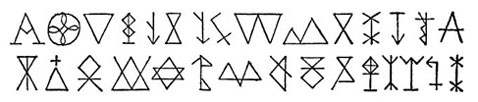
As with the ancient custom, we Mark Masons today choose a mark that is recorded and kept by the Chapter and can never be changed. Today, we use other devices to draw our Mark, which allows us to come up with all sorts of designs, but, in the days of old, marks were primarily a combination of straight lines as they only used the Chisel and the Mallet (two prominent symbols of Mark Masonry).


The Degree of Mark Master

A candidate for this degree is placed in a quarry among the workman who is completing their work and attempting to receive their wages. The quarries used in the erection of King Solomon's Temple were limestone which was nearly pure white in color and can be highly polished. Workman would have been paid on the sixth hour of the sixth day which for the Hebrew calendar was Friday at noon. For the Hebrew people, the day ended at sunset with Saturday being the Sabbath or Holy Day, and a day of rest.

The organization of a Mark Lodge is similar to that of a Blue Lodge, but with some notable changes of adding the Overseers and the loss of the Stewards. However, as the Mark Lodge is under the auspices of the Royal Arch Chapter it is important to show the comparison between those two organizational units:
Mark Lodge.............................................................Royal Arch Chapter
Right Worshipful Master...........................................Excellent High Priest 
Senior Warden.........................................................King 
Junior Warden..........................................................Scribe 
Senior Deacon.........................................................Principal Sojourner 
Junior Deacon..........................................................Royal Arch Captain 
Master Overseer......................................................Master of the Third Veil
Senior Overseer.......................................................Master of the Second Veil 
Junior Overseer.......................................................Master of the First Veil
Marshall...................................................................Captain of the Host
Before discussing the symbolism of Mark Masonry, it is interesting to note that there have been variations in the name and rituals. In researching early Mark Masonry there were two degrees conferred: Mark Man and Mark Master. Mark Man was for Fellowcrafts and Mark Master was reserved for those who had been raised to the Sublime Degree of Master Mason. There also have been a number of degrees that have employed the Mark such as Cain's Mark, Christian Mark, and Traveling Mark. Due to there being no governing body until the end of the 18th century and the beginning of the 19th century, there was no regulation and thus there appear to be variations in the rituals used. From the History of Royal Arch Masonry (1956):
From a manuscript found in 1918, the old York Mark ritual dramatize the story of Daniel interpreting the King's dream is found in Esdras. A Sojourner, whose name is Giblum, had been discovered after diligent search throughout the kingdom. But the king in this instance proved to be Nebuchadnezzar instead of Cyrus, Darius, or Belshazzar in some other rituals.
Today, as Mark Masonry is under the Royal Arch Chapter the color associated with the degree is red. However, when the Mark Lodges were independent the aprons were said to have been white bordered with purple. Under the Ancient & Accepted Rite, the color associated with Mark Masonry was yellow.

The Mark Master Mason degree teaches and explains many valuable lessons such as how to receive the wages talked about in the Blue Lodge, the value of labor, integrity, individual responsibility, and humility. It also teaches one not to judge one by simply on outward appearances, but seek the inner, hidden truth and beauty. In this degree, we are introduced to the Mallet and Chisel, which, alongside the keystone, are prominent symbols of this degree as both of these instruments are essential for preparing stone for the builder's use.

We are taught that through the Mallet we are to correct our irregularities and superfluous habits, and is similar to the Gavel talked about in the 1st degree and can be aligned with the Cardinal Virtue, Temperance. The Chisel is to stone, what education and discipline are to our mind, which reveals the hidden beauty and virtues hidden beneath the surface. It was through these two instruments that our ancient Operative Brethren were able to place their Mark upon their piece of work.

No arch would be complete though with a keystone. A keystone is a wedge-shaped stone placed at the apex of an arch, and is the last piece placed during construction and locks all the stones into position. This keystone gives the arch its strength and ability to bear the weight. The keystone being designed by the Grand Master Hiram Abiff and sculpted by a workman represented by the candidate in Mark Masonry is a symbol of completion, the act of which is performed in the Most Excellent Master degree. The overseers show the dangers of the uninitiated passing judgment on something they lack knowledge about. As a Christian, I see the keystone as an allegory for Christ. From Ephesians 2:20, “Christ Jesus himself being the cornerstone.” Keystone is a synonym of the cornerstone. We as living arches are nothing without God and his Word, our spiritual Keystone.

During the conferral of the degree, the Overseers repeat the phrase “Good Work, True Work, Square Work.” The word “good” can sometimes be subjective and as we see in this degree, what is considered rubbish may not be. What someone determines to be good may be determined by the knowledge and skill they possess. Good Work should be seen as that which is made from the best, most appropriate material. True Work, regardless of its shape, should be precise in its dimensions; not too thick or thin, nor too short or too long. Square Work signifies that the work is not only proportioned in size, but also that the stone will fit into the work of adjacent stones; as we are taught in the Entered Apprentice degree, the stone used for the Temple were fit together with such exact nicety that it had more the appearance of the handiwork of the Supreme Architect of the Universe than human hands.

The Mark degree reveals to a candidate the process of receiving one's wages. Previously mentioned, not everyone was allowed to have a mark so some scholars speculate that only the Mark Masons received the half-shekel discussed in the ritual while the rest would have received other wages; in the Fellowcraft degree, we are told of corn, wine, and oil. To the modern Mark Mason, the parable of labor in this degree represents study and our wages are truth.


The Timeline of Mark Masonry

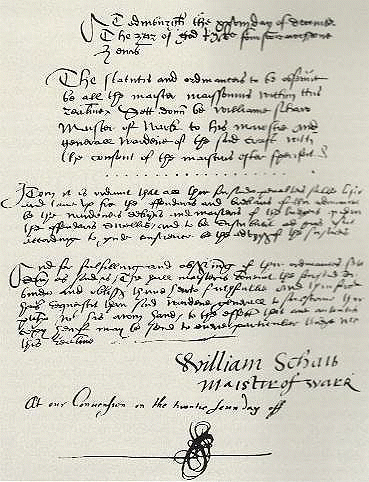
While I will discuss many different dates, the first two are of particular importance. The first date is July 31, 1599, where the Lodge records are signed by the warden and attested to by his mark. However, these records make no mention of a Mark ritual; the ritual seems to have occurred with the emergence of Speculative Masons. If you research enough, this date being one of the earliest records is not surprising because the year prior William Schaw published a set of statutes that required the recording of Mason’s Mark:
“No master or fellow of craft shall be received or admitted without there being present six masters and two entered 'prentices, the warden of the lodge being one of the six, when the day of receiving the new fellow of craft or master shall be duly booked and his mark inserted in the same book, with the names of the six admitters and entered 'prentices, as also the names of the intenders [intendaris-instructors] which shall be chosen for every person so entered in the book of the lodge. Providing always that no man be admitted without an essay and sufficient trial of his skill and worthiness in his vocation and craft.”
The Mark Book of Lodge Aberdeen, in Scotland, is still preserved and whose records go back to 1670. It is interesting to note that of the 49 members that first signed this book, only 10 of them were operative Masons. The speculative Masons were known as “geomatic” and the operative ones were named “domatic”. Geomatic is defined as the branch of science that deals with the collection, analysis, and interpretation of data relating to the earth's surface. Domatic is defined as belonging to a crystallographic class of symmetry of the monoclinic system that is characterized by a dome.

While it doesn’t seem to have directly influenced Mark Masonry in England, there was written in 1462 the Torgau Ordinances that mentions the requirements of having a mark. These ordinances were composed of 112 articles governing the conduct of operative masons in that region of Europe. I want to highlight 9 of them:
25. And if a master or fellow come free of the craft or trade, and demand a mark of a workmaster, to him shall he grant his wish, and he shall give for the service of God that which shall be adjudged of master and fellows. And to master and fellows shall he pledge the mark doubly.
26. No master shall withhold his mark from his apprentice for a further space than [illegible]. days, unless it be that the apprentice has wasted his master's time, he shall then first do his behest before that and the feast.
27. And no master shall show any reluctance to pledge his apprentice's mark, and the several clericals whom he may bid thereto, with a penny wheaten bread of xv. gr., a loaf of xv. gr., meat, and two stoups of wine; and the apprentice shall not bid more than x. fellows, and if he bid more then shall he buy more, that the master suffer not thereby.
30. The master may lend his apprentice a mark to travel during his apprenticeship, if the master have no employment, and must let him travel.
31. No master shall allow his apprentice to pledge his mark, unless he have served his time.
50. The warden shall willingly choose and mark out stones for the fellows and apprentices, and inspect and see that they be well and truly made of the fellows; and if he do not so, and the master discover errors that anything be untrue, then shall he forfeit to the master viij. kr. and the fellow vj. kr.
51. And if a warden mark a stone because it is of no use, then shall he [the workman] lose his wages that he had otherwise earned on that stone, unless it be made of use.
56. And the warden shall mark the under side of the stones of fellows and apprentices, should the fellows and apprentices fail to answer the knocks, and not appear to the right time at breakfast; and if he take not the fines so shall he pay them himself.
72. Whatsoever fellow shall not offer assistance to turn his stone this way or that, to fetch it or to turn it over when necessary, or places his mark thereon as if it were truly made, and that before it shall have been proven, so that it be passed unproven to the store, or improperly finishes his work, he shall stand to forfeit one half pound of wax.
94. If a fellow have not served his time, or have bought his mark and not honestly earned it, or if a hired servant or help establishes himself and teaches to work in stone, with him shall no man take service.
The first recorded instance of conferring a Mark degree happened on September 1, 1769, at Phoenix Royal Arch Chapter which was affiliated with Friendship Lodge No.257 in Portsmouth, England, at George Tavern. The conferral was presided over by Thomas Dunckerley. Thomas Dunckerley was a very well-known and accomplished Mason. He was, at the time of this conferral, a Provincial Grand Master, a Grand Superintendent for Royal Arch Masons in England and would go on to become the first Grand Master of the first Grand Conclave of Knights Templar (a predecessor of the Great Priory of England and Wales that exists today). Some credit him with inventing the Royal Arch degree, but there is debate as there is evidence of its existence a decade before he became a Mason. There is also debate as to whether Dunckerley created the ritual for Mark Masonry, but some argue he did not because of what the minutes of that meeting wherein it is written:
“The Pro. G. M. Thomas Dunckerley, brought the warrants of the chapter and having lately received the ‘Mark’ he made the brethren ‘Mark Masons’ and ‘Mark Masters’."
Mark Masonry began to spread and, like most of early American history, Mark Masonry is thought to have been brought over via merchants and the military. For our Canadian Brothers, the earliest record of it being conferred is 1784 in Nova Scotia. For the newly formed United States, Mark Masonry is said to have taken root in Connecticut, but the dates are debated. Some argue that it was first done in 1791, while others, like Brent Morris, argue that it happened back in 1783. On a side note, when I was researched early Knights Templar, I found that on August 28, 1769, William Davis received the “four steps”, as it was called, that of Excellent, Super Excellent, Royal Arch, and Knights Templar in St. Andrew's Royal Arch Lodge in Massachusetts. It did not include Mark Masonry or at least reference Mark Masonry. Going back to Mark Masonry's timeline, there is a record of it being conferred in New York in 1791 and then in Boston in 1793. Mark degree conferred in Blue Lodges, the Scottish Rite (prior to the formation of the Supreme Councils), Chapters of Royal Arch Masonry, Knights Templar Encampments (now known as Commanderies), and independent Mark Mason Lodges. Through the 18th century, there was little oversight and regulation of Mark Masonry anywhere in the world.

The next significant event was on October 24, 1797, when the General Grand Chapter was formed. Over the next few years, other concordant bodies also started forming formal governing bodies and ritual standardization started to occur across the board. It is interesting to note that the General Grand Chapter issued Mark Lodge Charters up to 1853. After that, this degree was under the authority of the Chapter. In England, Mark Masonry has its own Grand Lodge. In reading through the History of the General Grand Chapter, this practice of chartering Mark Lodges was unique to towns with small populations. The Mark Lodges only had the power to confer the degree and this was done in places where it was impossible to confer any other degrees. There are Mark Lodges still in existence in the US: one is in Utah and I believe there are two Mark Lodges in Pennsylvania.

While in England, Mark Masonry is independent of the Royal Arch, I believe American Mark Masonry was brought under the Chapter through the efforts of Thomas Smith Webb. Considered by many to be the Father of the American Rite, Thomas Smith-Webb authored the book “Freemason's Monitor or Illustrations of Masonry,” which had a very significant impact on the development of the Masonic ritual, particularly the York Rite degrees and orders, in the United States. This book was published on September 14, 1797 (just prior to the formation of the General Grand Chapter), and was said to be a compendium of William Preston's work as well as his own alterations, additions, and works. One of the biggest accomplishments and momentous occasions for Thomas Smith Webb was that he presided over the convention that was held in Boston in October of 1797, which would lead to the formation of the General Grand Chapter of Royal Arch Masons (which is the oldest national Masonic body in the US). At the meeting that was held in Providence, Rhode Island, in January of 1799, he presented a Constitution which was adopted.

Mark Masonry in England is an interesting subject to research:
“After the Union of the two Grand Lodges in England in 1813, the position of the Mark was difficult, because the new UGLE tried to ignore all the further degrees apart from the Royal Arch. However, by now, the Mark was an integral part of Masonry in Scotland, Ireland, and the USA."
While Mark Masonry is a separate body in England, all attempts have been made to bring Mark Masonry under the authority of the UGLE, but all attempts have failed.


Conclusion

It’s easy for us in conferring our degrees in the festival form to rush past the Mark and forget about it, and thus forget about its connection to our operative roots. Some Chapters confer this degree for free on any Master Mason to muster interest in the York Rite. Some jurisdictions open Mark Master Lodges as “table lodges,” which act as a social focus for the local York Rite bodies.

Saturday, August 4, 2018

Mason Marks

By Author Unknown


They're traced in lines on the Parthenon, 
Inscribed by the subtle Greek 
And Roman legions have carved them on 
Walls, roads and arch antique 
Long ere the Goth, with vandal hand, 
Gave scope to his envy dark, 
The Mason craft in many a land 
Has graven its Mason mark.

The obelisk old and the pyramids, 
Around which a mystery clings,- 
The Hieroglyphs on the coffin lids 
Of weird Egyptian kings,

Syria, Carthage and Pompeii, 
Buried and strewn and stark, 
Have marble records that will not die, 
Their primitive Mason mark.

Upon column and frieze and capital, 
In the eye of the chaste volute,- 
On Scotia's curve, or an astrogal, 
Or in triglyp's channel acute,- 
Cut somewhere on the entablature, 
And oft, like a sudden spark, 
Flashing a light on a date obscure, 
Shines many a Mason mark.

These craftsmen old had a genial whim, 
That nothing could ever destroy, 
With a love of their art that naught could dim, 
They toiled with a chronic joy 
Nothing was too complex to essay, 
In aught they dashed to embark 
They triumphed on many an Appian Way, 
Where they'd left their Mason mark.

Crossing the Alps like Hannibal, 
Or skirting the Pyranees, 
On peak and plain, in crypt and cell, 
On foot or on bandaged knees- 
From Tiber to Danube, from Rhine to Seine, 
They needed no letters of marque- 
Their art was their passport in France and Spain, 
And in Britain their Mason mark.

The monolith gray and Druid chair, 
The pillars and towers of Gael, 
In Ogharn occult their age they bear, 
That time can only reveal. 
Live on, old monuments of the past, 
Our beacons through ages dark! 
In primal majesty still you'll last, 
Endeared by each Mason mark.

Thursday, June 16, 2016

Beyond the Craft

While at Masonic Week this last February I purchased several new books. One of them is "Beyond the Craft" by Keith Jackson. Though it focuses more on British Freemasonry, it is still an invaluable book for those interesting in Masonic Rites outside of the Blue Lodge. The book goes into the history, joining qualifications, hierarchy, rituals and teachings and regalia of the Holy Royal Arch, Royal and Select Masters (Cryptic Masonry), Mark Masonry, Royal Ark Mariners, Order of the Secret Monitor, Allied Masonic Degrees, the Ancient & Accepted Rite (Rose Croix), the Red Cross of Constantine, Knight Templar and Knight of Malta, Holy Royal Arch Knights Templar Priests, Royal Order of Scotland, Baldwyn Rite, The Operatives, Societas Rosicruciana in Anglia, the August Order of Light, Royal Order of the Red Branch of Eri, Knight Templar Beneficent of the Holy City (KBCH/CBCS), the Order of the Pilgrim Preceptors, the Masonic Order of Athelstan, the Commemorative Order of St Thomas of Acon, and the Order of the Scarlet Cord.

I highly recommend this book to anyone interested in the various Masonic bodies that compose Freemasonry. Check it out here: http://www.lewismasonic.co.uk/general/beyond-the-craft-6th-edition-.htm

Saturday, November 1, 2014

A Mason's Mark

by Author Unknown


They're traced in lines on the Parthenon, 
Inscribed by the subtle Greek; 
And Roman legions have carved them on 
Walls, roads and arch antique; 
Long ere the Goth, with vandal hand, 
Gave scope to his envy dark, 
The Mason craft in many a land 
Has graven its Mason mark.

The obelisk old and the pyramids, 
Around which a mystery clings,- 
The Hieroglyphs on the coffin lids 
Of weird Egyptian kings, 

Syria, Carthage and Pompeii, 
Buried and strewn and stark, 
Have marble records that will not die, 
Their primitive Mason mark. 

Upon column and frieze and capital, 
In the eye of the chaste volute, - 
On Scotia's curve, or an astrogal, 
Or in triglyp's channel acute,- 
Cut somewhere on the entablature, 
And oft, like a sudden spark, 
Flashing a light on a date obscure, 
Shines many a Mason mark. 

These craftsmen old had a genial whim, 
That nothing could ever destroy, 
With a love of their art that naught could dim, 
They toiled with a chronic joy; 
Nothing was too complex to essay, 
In aught they dashed to embark; 
They triumphed on many an Appian Way, 
Where they'd left their Mason mark. 

Crossing the Alps like Hannibal, 
Or skirting the Pyranees, 
On peak and plain, in crypt and cell, 
On foot or on bandaged knees; - 
From Tiber to Danube, from Rhine to Seine, 
They needed no "letters of marque;" - 
Their art was their passport in France and Spain, 
And in Britain their Mason mark. 

The monolith gray and Druid chair, 
The pillars and towers of Gael, 
In Ogharn occult their age they bear, 
That time can only reveal. 
Live on, old monuments of the past, 
Our beacons through ages dark! 
In primal majesty still you'll last, 
Endeared by each Mason mark.

Saturday, September 21, 2013

Choosing Your Mark

The first of the Capitular or Royal Arch degrees is that of Mark Master. In this degree the candidate represents a Fellow Craft Mason during the construction of King Solomon’s Temple. The work he presents to the Overseers is rejected at first, but later becomes the piece necessary to complete the Temple as seen in the Most Excellent Master degree. It is a common desire of man to wish to leave a lasting record in this world and in this degree candidates are taught the importance of the Mark whereby one can distinguish his work from others and leave a lasting impression as testament of his efforts. Today, candidates choose a Mark of their own, and this Mark is recorded and kept in every Chapter of Royal Arch Masons.


The Mason's Mark should be seen as an equivalent of a signature, particularly when illiteracy was common place. It represents not only the name of the Mason, his character, but, for the operative Mason, it represented his skill and workmanship. By use of the Mark we are demonstrating that we believe our work is of quality to be used in the construction of a building and through such identification would a craftsman receive his wages for his labor. Knowing such things, the use of the Mark gave the craftsman incentive to do their best work before they identified a particular piece by placing their Mark on it. Alongside identifying a particular craftsman marks were used to indicate where a stone would be placed within the structure.

The use of the Mark is very ancient. Marks have been found that date back farther than 5,000 years. Marks have been found on stones in ancient Egypt; castles, churches, and cathedrals in Europe from about the 12th century on; on ancient Greek temples; Roman ruins; and in preserved cities such as Pompeii.

Mark Masonry is one of the oldest degrees in Freemasonry and helps bridge operative and speculative Freemasonry. Some of the earliest Marks found in England date back to the 12th century. Operative Masonry started emerged in England after Norman conquests. In the following centuries it would grow to such a level that required it to be regulated in custom and practices, thus Mason guilds arose. The first regulatory body was the Masons’ Company, formed in London sometime around 1375. This group would later known as the London Masons’ Company and was granted a coat of arms in 1472 during the reign of Edward VI. 

In 1598, William Schaw as Master of Works, named by King James VI of Scotland, published a set of statutes known today as the Schaw Statutes of 1598. These statutes established the duties and structure for Lodges among other things, but, more importantly, it required the recording of the Mason's Mark in a book:
No master or fellow of craft shall be received or admitted without there being present six masters and two entered 'prentices, the warden of the lodge being one of the six, when the day of receiving the new fellow of craft or master shall be duly booked and his mark inserted in the same book, with the names of the six admitters and entered 'prentices, as also the names of the intenders [intendaris-instructors] which shall be chosen for every person so entered in the book of the lodge. Providing always that no man be admitted without an essay and sufficient trial of his skill and worthiness in his vocation and craft.
Within the first half of the 17th century came the appearance of speculative Masons into the operative Mason's Lodge in Scotland. Many of these early Lodges have some existing records that show a combination of names of the Brothers with or without their Marks alongside the signature, but there are also some entries that are just the Marks themselves. Many of these ancient records also speak of men choosing their mark.

From recorded history it is seen that there wasn't much to the ritual of early Mark Masonry, but with the entry of speculative Masons, more elaborate ceremonies were established and enhanced throughout the years becoming more important. In the record books kept from early Lodges, we see entries talking about Mark Masons and Mark Master Masons, and this is still something seen outside of America were a Fellow Craft Mason would receive the Mark Man or Mason and a Master Mason would receive the Mark Master degree. 


The history of Mark Masonry in America is foggy due to lacking records. At various times, it has been conferred by Blue Lodges, the Scottish Rite, Chapters of Royal Arch Masonry, Knights Templar Encampments (now known as Commanderies), and independent Mark Mason Lodges. Eventually this degree would be absorbed and under the authority of Royal Arch Masonry in the 19th century. This was done through the efforts of Thomas Smith-Webb who published in 1798 a Monitor that became very popular and widespread in the US. Today for one to advance to the degree of Royal Arch Mason, one must go through the Mark Master Mason degree; this is true for Masonry in the US, Ireland, and Scotland. In England, Mark Masonry is an independent body known as Grand Lodge of Mark Master Masons of England, Wales and the Dominions and Dependencies of the British Crown which was established in 1856 and oversees around 1,200 Mark Lodges.

The Mark Master Mason degree teaches and explains many valuable lessons such as how to receive the wages talked about in the Blue Lodge, the value of labor, integrity, individual responsibility, and humility. It also teaches one not to judge one by simply on outward appearances, but seek the inner, hidden truth. In this degree we are introduced to the Mallet and Chisel, which, alongside the keystone, are prominent symbols of this degree as both of these instruments are essential preparing stone for the builder's use.

We are taught that through the Mallet we are to correct our irregularities and superfluous habits, and is similar to the Gavel talked about in the 1st degree and can be aligned with the Cardinal Virtue, Temperance. The Chisel is to stone, what education and discipline are to our mind, which reveals the hidden beauty and virtues hidden beneath the surface. It was through these two instruments that our ancient Operative Brethren were able to place their Mark upon their piece of work. Although today, we use other devices to draw our Mark, which allows us to come up with all sorts of designs, Marks of old were primarily a combination of straight lines as they only used the Chisel and the Mallet. Like the old days, once a Mason chooses his Mark it can never be changed.


It has always been man's desire to make his Mark upon the world. With the Mason's Mark, operative Masons proved their work, and, today, while we speculative Masons still choose a Mark, we must show our work by building ourselves and showing the world we are better men for being Masons. What will be your Mark?

References

1. Are you Worthy to Receive your Mark? n.d. http://www.eastangliamark.org.uk/about-the-degrees. 

2. Capitular Degrees of Freemasonry. n.d. http://www.goldenstatechapter.org/pdf/Capitular%20Degrees%20of%20Freemasonry.pdf. 

3. Mark Masonry. n.d. http://utahmarkmasonry.org/mark-masonry/. 

4. Mason's Marks. n.d. http://freemasonry.bcy.ca/aqc/masonmarks/operative.html. 

5. Speidel, Frederick. The York Rite of Freemasonry. Mitchell-Fleming Printing, Inc., 1978. 

6. Turnball, Everett R., and Ray V. Denslow. A History of Royal Arch Masonry. Vol. 1. 2 vols. Highland Springs, VA: Anchor Communications, 1956. 

7. Wallace, George M. The Mason's Mark. n.d. http://www.masonicworld.com/education/articles/the-masons-mark.htm. 

8. Woolmer, George. A History of Mark Masonry. n.d. http://www.themasonictrowel.com/books/mark_history_by_George_Woolmer/files/origins_operatives_and_mark_masonry.htm.