Saturday, March 9, 2013

Initiated into the Knight Masons

Well, today I was initiated into the Order of Knight Masons of the USA. The Order of Knight Masons is often referred to as the Green Degrees of Freemasonry.

There are currently no Knight Mason Councils in Idaho so I was invited to join Clontarf Council No.69 which is in Washington. Originally I was going to ride with the Brother who had nominated me, but he got sick so I decided to drive by myself up to Olympia. Most of the trip was fine until I was around The Dalles (about an hour East of Portland) when my battery light came on. I stopped by an O'Reilly's Auto shop and got a new battery. I thought all was well and good, but a few hours later when I was just South of Olympia the battery light came back on and my engine started acting funny so I pulled over. I tried to take off, but then my truck wouldn't shift up in gears so I pulled back over and shut off my engine. When I tried to turn it back on it acted like the battery was dead; I think the entire time it was a bad alternator. I was tired and irritated so I gave up and called for Roadside Assistance who towed me to my hotel. Part of me thinks I should have flown up to Seattle and taken a rental car down to Olympia.

This morning came too soon and one of the local Brothers and member of the Knight Masons came and picked me up. While preparations were being made for the ceremony and lunch, I sat around with the other four candidates present.

After lunch the degrees started where I was initiated into the 3-degrees, that of Knight of the Sword (communicated), Knight of the East, and Knight of the East & West. As I talked about in my post on the Knight Masons, these degrees surround the character Zerubbabel.


I'd like to thank the Excellent Chief and his officers for conferring these degrees on me. I enjoyed the ceremony and the fellowship. Now it's time for some dinner and to get my truck fixed.

Monday, March 4, 2013

Happy Sesquicentennial Idaho

Today marks the 150th anniversary of the creation of Idaho.

State leaders such as Governor C.L. "Butch" Otter are conducting a public ceremony right now at the Capitol building. This ceremony will kick off a year-long celebration for the Gem state.

According to State Historian Keith Peterson, President Lincoln signed the Act of Congress creating the Idaho territory after gold had been found and Congress wanted to use the gold to pay for costs associated with the Civil War. Idaho would be a territory for 27-years until President Benjamin Harrison signed the Congressional act establishing Idaho as the 43rd State on July 3rd, 1890. Both Lincoln and Harrison are commemorated in Idaho; Lincoln County and Harrison Boulevard in Boise.

Sunday, March 3, 2013

The Father of the Cryptic Rite

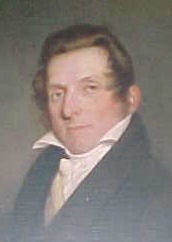
Jeremy Ladd-Cross is not as well-known as Thomas Smith-Webb, but played such a role in the combining and expansion of the Cryptic degrees that he is commonly referred to as the Father of the Cryptic Rite.

Cross was born in Haverhill, NH, on June 27th, 1783. As a boy, he moved to Portsmouth to become an apprentice to a journeyman hatter. Although he traveled quite a bit, he became a Mason in Portsmouth at St. John's Lodge in 1807. On November 1, 1813, he received from the Grand Lodge of New Hampshire a certificate qualifying him as a Lecturer in Masonic ritual. In this Lodge, he would serve as Junior Deacon before demitting.

On March 15, 1815, Cross was exalted as a Royal Arch mason in St. Albans, VT, which added to his repertoire of the degree he could teach and lecture on. Lecturers were known sometimes as degree peddlers as they would accumulate as many degrees as they could and in turn, would confer them freely. According to the General Grand Council, "Thus, one of the possible ways Cross obtained the Royal Master Degree was on August 5, 1815, when he was in Hopkinton, NH visiting the newly organized Tyrian Council of Royal Masters, which had received the degree from Benjamin Gleason, who had probably received the degree from Thomas Lowndes in New York City." Degree peddling though was an accepted practice in the 19th century and is one of the principal reasons Freemasonry expanded as the nation expanded in that time.

In 1816, he would move to Providence, RI, where he would become associated with Webb and later a pupil of Webb. Even though he did not have a formal education, he was known for his amazing memory and would become a great lecturer, particularly on Webb's work which is based on William Preston. Webb is most known by his famous monitor where he formed a uniform ritual that most jurisdictions practice today.

While traveling through Baltimore, he received the degree of Select Master from Philip Eckel who he had previously met in New York at a meeting of the General Grand Chapter of Royal Arch Masons. With this conferral, he then had the authority of conferring all the Capitular degrees as the Cryptic degrees were then usually controlled by the Chapter of Royal Arch Masons. After departing Maryland he leaves a trail of appearances in Pennsylvania, Tennessee, Kentucky, Ohio, Indiana, Mississippi, and Louisiana. By the Spring of 1817 though he was back in Baltimore and received from Eckel the authority to charter and officially organize Councils of Select Master. It was in New Haven, Connecticut, that he would affiliate with Hiram Lodge No.1 and later serve as Illustrious Master for Harmony Council for 8-years. He would then travel and establish Councils throughout New England while visiting the various states. It was thought that Cross stayed many years in Connecticut since this state was a beacon for Masonry during the time when Masonry lost favor in the fallout of the Morgan Affair.

The exact date that he started teaching both the degrees Royal Master and Select Master in a Council is not known, but there is an excerpt from his diary from March 21, 1818, that he conferred both degrees to Companions in Middletown, CT. He spent much of his time in Connecticut and established many Councils here and in October 1818, while at the Grand Chapter meeting, made the recommendation that the following year the Councils meet to form a Grand Council which would be established to govern and regulate the Councils and ritual under its jurisdiction. In Templar circles, 1818 was also an important year for Cross. In September he had visited Providence, was 'healed' in St. Johns Commandery and received the Order of Red Cross. In October he affiliated with Washington Commandery at a meeting in New London.

On May 18, 1819, twenty-two Companions met in Hartford, CT. The convention was called to order by Companion Talcott Wolcott, Illustrious Master of the Hartford Council, and Lyman Law (Grand High Priest of Connecticut) was selected as Chairman and John Gannett as Secretary to preside over the establishment of the Grand Council of Select Masters. The next day a Constitution was presented and adopted outlining the government of the organization, established the powers of the Grand Council, the duties of the Councils, and the regulation by which fees and new charters would be established. In one of its articles, it established that both the degrees of Royal and Select Masters would be covered by the fees of initiation. It should be noted that Cross was not recorded to be present at this assembly.

In his travels around September 1819, Cross came upon John Snow of Baltimore who he empowered to further establish Councils of Royal and Select Masters in Ohio, Kentucky, Indiana, and Illinois. Snow and Cross stayed good friends, and Cross wrote Snow asking him of his opinion on many Masonic matters. Aside from Snow, John Barker was another pupil of Cross, who moved to Charleston, SC, and further disseminated the Cryptic degrees in the South.

Cross is also noted for publishing, what he called the first True Masonic Chart as well as the Templar Chart in 1821. These charts did not print any secrets, but rather highlighted particular Biblical passages, symbols, and portions of the Lectures. This chart was extremely popular and used by Grand Lodges to ensure the constituent Lodges practiced a uniform ritual in a time that ritual work was chaotic. He became so busy with his charts and other Masonic furniture that he gave up most of his lecturing. He would eventually move north to New York then back to Haverhill where he would pass away as a bachelor on January 26, 1860. His gravestone memorializes him as a "Right Worshipful Grand Lecturer" and features an emblem of the 33rd degree of the Scottish Rite. It is not known exactly where he received the degrees of the Ancient and Accepted Scottish Rite, but it is believed to have occurred while in Connecticut and he was acknowledged by the Consistory in New Orleans.

References

1. Case, J. R. (1958). Jeremy Ladd Cross. Retrieved from Phoenix Masonry: http://www.phoenixmasonry.org/jeremy_ladd_cross.htm

2. Eppler, R. A. (2010). The Origin of the Cryptic Degrees - Part IV. (General Grand Council, Cryptic Masons International) Retrieved from The Cryptic Freemason: http://www.ggccmi.org/NewsletterArchive/2010-Winter-CFM-Web.pdf

3. Eppler, R. A. (2011). The Origin of the Cryptic Degrees - Part V. (General Grand Council, Cryptic Masons International) Retrieved from The Cryptic Freemason: http://www.ggccmi.org/NewsletterArchive/2011-Spring-CFM-Web.pdf

4. Snow, R. D. (1984, October 12). Notes On Jeremy Ladd Cross. Retrieved from New England Lodge No.4 of Ohio: http://www.newengland4.org/Documents/Jeremy%20Ladd%20Cross2.pdf

Saturday, March 2, 2013

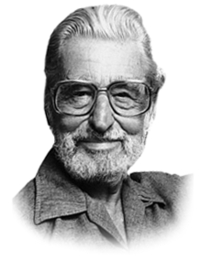
Happy Birthday Dr. Seuss

Today marks the birth of one of the greatest creative minds and one of my all-time favorite authors, Dr. Seuss.

He published 46 children's books that were characterized by extremely imaginative characters, rhymes, and the use of an anapestic meter (characterized by two short syllables followed by a long one). Some of the most well-known of these books are Green Eggs and Ham, The Cat in the Hat, One Fish Two Fish Red Fish Blue Fish, Horton Hears a Who!, How the Grinch Stole Christmas, and, my favorite, Oh, the Places You'll Go.


Born on this day in 1904, Theodor Seuss Geisel would become to be known as a beloved American writer, poet, and cartoonist. He was mostly known for his children's books written under the pseudonym "Dr. Seuss"; he also used the names Theo LeSieg, Rosetta Stone. He was born in Springfield, Massachusetts, to Theodor Robert Geisel and Henrietta (Seuss) Geisel. It was a street his grandparents lived on in his hometown that inspired the name for his first children's book And to Think That I Saw It on Mulberry Street! After graduating from Springfield Central High School he attended Dartmouth College. In college, he joined the Sigma Phi Epsilon (ΣΦΕ) and the humor magazine Dartmouth Jack-O-Lantern (he'd eventually become editor-in-chief). It was during his collegiate career that he started to use the pseudonym "Seuss" as he was forced to quit his extracurricular activities after caught drinking in his room during Prohibition.

After graduating from Dartmouth he attended Oxford University in England, where he intended to earn a Doctorate of Philosophy in English literature with the intent of employment as a professor afterward. It was here that he would meet his future wife, Helen who would encourage him to draw and write. They married in 1927 and they would return to the United States without his earning his intended degree. Once home he began submitting humorous articles and illustrations to Judge, Life, Vanity Fair, and Liberty publications. It was in 1927 that he started using the pseudonym "Dr. Theophrastus Seuss" which would be shortened to "Dr. Seuss" in 1928.

He became famous for his advertisements for Flit (a common insecticide at that time) where he used the slogan "Quick, Henry, the Flit!" He drew advertisements for General Electric, NBC, Holly Sugar, Ford, Standard Oil, and many other companies through which he was able to support himself and his wife through the Great Depression.

In 1937 while on an ocean voyage to Europe, he wrote his first book, And to Think That I Saw It on Mulberry Street!, which would be rejected several times. The number varies as to how many times it is rejected, but it somewhere around 25-30.

As the United States entered World War II Geisel turned his attention to political cartoons where he drew over 400 cartoons in two years for the left-leaning NYC daily newspaper, PM. Later a book would be published called Dr. Seuss Goes to War which contained many more cartoons, most of which denounced Hitler, Mussolini, and American isolationists. His cartoons were strongly supportive of FDR and his handling of the war. In 1942 he would start to work for the US government to support the war effort; first with the Treasury Department and then he would commission as Captain for the US Army where he was placed in charge of the Animation Department of the 1st Motion Picture Unit.

After World War II ended, he moved to La Jolla, California, and returned to writing children's books. Over the next decade, he'd write If I Ran the Zoo, Horton Hears a Who!, If I Ran the Circus, The Cat in the Hat, How the Grinch Stole Christmas, and Green Eggs and Ham.

Many things inspired and influenced the writings of Dr. Seuss. He credits his mother for his ability and desire to create rhymes as she would soothe her children to sleep by chanting the rhymes she remembered from her youth. Another such inspiration was the May 1954 Life magazine article, Why Johnny Can’t Read, which discussed the illiteracy among school children and stated that children were not learning to read because the books were so boring. A friend and publisher of Seuss challenged him to write a book using less than 250 words that could be recognized by 1st graders. Seuss met the challenge and published a book using only 236 words which would become to be known as The Cat in the Hat. This book was described as follows:
It retained the drawing style, verse rhythms, and all the imaginative power of Geisel's earlier works, but because of its simplified vocabulary, it could be read by beginning readers.
In 1960, Bennett Cerf, co-founder of Random House publishing, bet Seuss that he could not write a book using "fifty or fewer distinct words." Cerf lost the bet when Seuss came out with the famous book Green Eggs and Ham.

Fun fact, Dr. Seuss is credited with the first recorded instance of the word “nerd” in If I Ran the Zoo, published in 1950.

From the emotional troubles from battling health problems, losing loved ones, and other trials in her life, Helen sadly committed suicide on October 23rd, 1967. Seuss would remarry a woman by the name of Audrey, but they would never have kids; he is quoted as saying "You have 'em, I'll entertain 'em."

Dr. Seuss died of throat cancer on September 24th, 1991, at his home in La Jolla at the age of 87.

"I miss him terribly—there will never be another Dr. Seuss."
Janet Schulman, Random House


Dr. Seuss is still remembered and memorialized with honors even after his death. The University of California, San Diego's University Library building was renamed "Geisel Library" on December 1st, 1995. In 2002, the Dr. Seuss National Memorial Sculpture Garden was opened in his hometown which features sculptures of Dr. Seuss and many of his famous characters. On December 15th, 2008, Dr. Seuss was inducted into the California Hall of Fame by Governor Schwarzenegger. On April 4, 2012, Dartmouth Medical School renamed itself the Audrey and Theodor Geisel School of Medicine in honor of their many years of generosity to the college. His honors also include a Star on the Hollywood Walk of Fame, an Oscar, two Academy Awards, two Emmy Awards, a Peabody, the Laura Ingalls Wilder Medal, the Pulitzer Prize, and honorary Doctorate of Humane Letters from Dartmouth.

Dr. Seuss wrote not only to get kids to write, but inspire them to think and imagine. I leave you with some of my favorite quotes of Dr. Seuss

"Today you are you, that is truer than true. There is no one alive who is Youer than You."

“You're off to Great Places! Today is your day! Your mountain is waiting, So... get on your way!”

References

1. All About Dr. Seuss. (n.d.). Retrieved from Dr. Seuss National Memorial: http://www.catinthehat.org/history.htm

2. Biography. (n.d.). Retrieved from The Art of Dr. Seuss: http://www.drseussart.com/biography.html


3. Dr. Seuss. (n.d.). Retrieved from Wikipedia: http://en.wikipedia.org/wiki/Dr._Seuss


4. Dr. Seuss Facts. (n.d.). Retrieved from Best Book For Kids: http://www.best-books-for-kids.com/dr-seuss-facts.html

5. Evans, J. R. (2012, Feburary 27). 10 Surprising Facts About Dr. Seuss You May Not Know. Retrieved from Cafe Mom: http://thestir.cafemom.com/toddler/133668/10_surprising_facts_about_dr

6. Hiskey, D. (2011, May 24). Dr. Seuss Wrote “Green Eggs and Ham” on a Bet that He Couldn’t Write a Book with 50 or Fewer Words. Retrieved from Today I Found Out: http://www.todayifoundout.com/index.php/2011/05/dr-seuss-wrote-green-eggs-and-ham-on-a-bet-that-he-couldnt-write-a-book-with-50-or-fewer-words/

7. Landin, K. (n.d.). 15 Things You Probably Didn’t Know About Dr. Seuss. Retrieved from The FW: http://thefw.com/things-you-didnt-know-about-dr-seuss/

Friday, March 1, 2013

March Masonic Madness

This month is going to be a busy, busy month for me in Masonry! Outside of my normal Lodge, Scottish Rite, York Rite, and Eastern Star schedule I have some extra activities and travels.

On the first weekend, I will attend my monthly Army National Guard drill and I have gone back to my original Military Occupational Specialty (MOS), and will be jumping right into the fire of an Intelligence Exercise.

On the 9th I will be traveling to Olympia, WA, to receive the Orders of the Knight Masons. The next weekend I travel up to Kennewick, WA, to receive the Order of the Holy Sepulcher and Order of Saint John the Evangelist in the Red Cross of Constantine.

From the 18th through the 20th, the Supreme Grand Guardians and their entourage will be coming to Boise. My Bethel will be one of those hosting them and I am very excited to meet them.

On the 23rd, I will preside for the first time over the conferring of the Chivalric Orders for new Sir Knights. The next day my Commandery is holding its annual Easter Observance. Lastly, on the 30th I will be back up to Federal Way, Washington, to be initiated into the Commemorative Order of Saint Thomas of Acon.

This month will be fun, but I'm going to be busy.

Thursday, February 28, 2013

The Last Day of Pope Benedict XVI

Whether you are Catholic or not, this day is a historic day. Today marks the last day for Pope Benedict XVI as he has resigned (something not seen in 600-years).

Nicole Winfield, a reporter for AP, has reported the following:
CASTEL GANDOLFO, Italy (AP) — Pope Benedict XVI has greeted the faithful for the last time as pope, telling well-wishers gathered at the Vatican's vacation retreat that he is beginning the final stage of his life as a "simple pilgrim," hours before he becomes the first pontiff in 600 years to resign.  

Benedict arrived at Castel Gandolfo after an emotional sendoff from the Vatican, where his closest aide wept by his side as he bade farewell to Vatican officials gathered in the courtyard of the Apostolic Palace, Swiss Guards standing by at attention.

Bells tolled as he left the Vatican by helicopter and did a fly-by around St. Peter's Square. They tolled anew as he arrived in Castel Gandolfo, where the central piazza was jammed with people eager to capture the historic moment.
Once he arrived at Gandolfo, he addressed the crowd:
Dear friends, I'm happy to be with you, surrounded by the beauty of creation and your well-wishes which do me such good. Thank you for your friendship, and your affection. You know this day is different for me than the preceding ones: I am no longer the Supreme Pontiff of the Catholic Church, or I will be until 8 o'clock this evening and then no more.
I am simply a pilgrim beginning the last leg of his pilgrimage on this Earth. But I would still ... thank you ... I would still with my heart, with my love, with my prayers, with my reflection, and with all my inner strength, like to work for the common good and the good of the church and of humanity. I feel very supported by your sympathy.
Let us go forward with the Lord for the good of the church and the world. Thank you, I now wholeheartedly impart my blessing. Blessed be God Almighty, Father, Son and Holy Spirit. Good night! Thank you all!"
He turned and went inside the villa, never to be seen again as Pope.

At 2:00PM (Eastern time) the Papacy will be officially vacant and two Swiss Guards that ceremonially watch over the summer villa will march away and not return until the new Pope takes possession of the hilltop residence. At this time his Papal ring, the Ring of the Fisherman, will be destroyed in a solemn ceremony, which for this resigned Pope will symbolize the end of his authority as the Vicar of Jesus Christ, Successor of the Prince of the Apostles, Supreme Pontiff of the Universal Church, Primate of Italy, Archbishop and Metropolitan of the Roman Province, Sovereign of the State of Vatican City, Servant of the Servants of God, and Bishop of Rome. During this leaderless time (sede vacante), the Camerlengo serves as acting head of State of the Vatican City. He is not, however, currently responsible for the government of the Catholic Church during this time; the College of Cardinals has limited authority over the government of the church during the Papal vacancy.

Benedict will stay at Gandolfo until April when renovations should be completed on a convent in the Vatican that will be his new home.

One of Benedict's last acts was to give the College of Cardinals authority to meet sooner than March 15th, which would have been required under the old rules. It is thought that we could see the next Pope before mid-month. Well, may God guide these men to select the proper man to lead the Catholic Church out of this tumultuous time.

Templar Charities

At the beginning of this month, the 2nd to be precise, my Commandery held its annual Groundhog's Day Breakfast which is used to help raise money for two of the Templar charities, the Knights Templar Eye Foundation and Knights Templar Holy Land Pilgrimage. The former is probably the more well-known of the two, but the latter has a unique service to those who serve in the worthy profession of a minister.

Knights Templar Holy Land Pilgrimage

The mission of this charity is "to send ordained Christian ministers on a Biblical study and historical and cultural immersion experience who would not have the opportunity otherwise." It is hoped that this will strengthen their ministry as they are provided with a chance to walk around the Holy Land where Christ walked and take part in intensive study programs

The committee that governs this organizes and supervises the planning and execution of the overall program and the groups of ministers' travel.

Sir Knights from the local Commanderies submit nominations for a local minister to the Committee on Holy Land Pilgrimage of the Grand Commandery of their State. The State Committee reviews the nomination and selects the number of ministers they willing to send over based on funds available. Local Commanderies can choose to pay 100% of the costs and fully sponsor a minister. These selected nominations and 100% sponsored are then sent up to the Grand Encampment's Holy Land Pilgrimage Committee and this committee is responsible for the full funding of the ministers' travel.

The travel usually occurs between February and March, and the last 11-days; two of the days are travel days.

Costs vary from year to year, but the price is announced each Spring by the Committee. The costs cover the round trip flight from NYC to Tel Aviv, fuel surcharges, airport taxes, 9-nights' accommodations, 8-breakfasts, 7-lunches, 8-dinners, program expenses, and some other basic fees. They do not cover personal incidents, souvenirs, and travel from the home state to NYC. Usually, the local Commandery will cover these costs, but the Grand Commandery can also choose to cover if they have the funds. It is important to note that the NYC-Tel Aviv travel costs are covered by the Grand Commandery and not the Grand Encampment.

For more information please check out the Holy Land Pilgrimage website.

Knights Templar Eye Foundation (KTEF)

The most notable charity of the Knights Templar is the Eye Foundation which seeks "to improve vision through research, education, and supporting access to care.”

According to the Foundation:
The Knights Templar Eye Foundation is committed to support research that can help launch the careers of clinical or basic researchers committed to the prevention and cure of potentially blinding diseases in infants and children. We support clinical or basic research on conditions that can or may eventually be treated or prevented. Examples include but are not limited to amblyopia, congenital cataract, congenital glaucoma, retinopathy of prematurity, ocular malformations, congenital nystagmus, and other hereditary eye diseases such as retinal dystrophies or retinoblastoma.
The KTEF is committed to preserving sight and preventing blindness since its creation in 1955. Historically funding went to direct patient care as well as research and education, but with the recent passage of the Affordable Healthcare Act, the mission and direction of the KTEF changed to solely funding research and education efforts.

The KTEF was founded by Sir Knight Walter Allen DeLamater from New York. A veteran of the First World War he was known to be involved in many diverse fields of interest, but would eventually choose Templary to be his life's great work. In the military, he would become the only person in his Regiment's history to rise from Private to Major General and served his country with commendable courage on many different fronts of war and conflict. After his time overseas he returned to civil service in New York where he served in several important assignments.

DeLamater was initiated into Halterman Lodge No.412 in Middletown, NY, on July 26th, 1917. He was considered a very talented Mason and was knighted in Yonkers Commandery No.47 on March 17th, 1921 where he rose quickly through the ranks. He served as Grand Commander in 1934 and was elected to the Grand Encampment in 1937. At the 1946 Grand Conclave, the Sir Knights heard the story of DeLamater's vision he had received while awaiting an operation to fix a blood clot that was causing him paralysis and other problems for a number of years. In the vision, he said that angels spoke to him and said that he must heal the blind as Jesus did and then made a miraculous recovery from what was seen as a near-death experience.

He sought out to fulfill his divine mission and prior to the 1952 Triennium (where he was Deputy Grand Master), he began his campaign. He launched a brilliant campaign promoting Knights Templar Eye Hospitals in connection with existing hospitals throughout the US. During the meeting, there were many heated debates and arguments that were noted to have lasted into the hallways after the meetings had finished. After was all said and done, they rejected the phrase "Eye Hospitals" and adopted "Eye Foundation". After clarifications, resolutions, and amendments this proposal finally was passed with a 3/4 vote.

According to the Edmund Ball in A History of the Founding of the Knights Templar Eye Foundation:
From the very beginning, a Medical Advisory Council consisting of able and dedicated ophthalmologists from all over the country guided the Foundation. For a good many years funds for research were granted somewhat promiscuously on recommendations from knowledgeable Sir Knights but without particular focus. This would be corrected a number of years later when the distinguished Dr. Alfred Edward Maumanee, Jr., Director of the Wilmer Eye Institute at Johns Hopkins University in Baltimore, established a Scientific Advisory Committee in 1985, consisting of five distinguished ophthalmologists from over the United States. This committee screens all the proposals for grants for research and pediatric ophthalmology.
To accomplish their goals, the KTEF annually announces its call for research grant applications. Applicants may see Career-Starter Research Grant, Competitive Renewal Grant, or a Training Mentors for Developing Countries (TMDC) Fellowship. The received applications are screened by the Scientific Advisory Committee who then recommend to the Board of Trustees which requests should be granted and awarded. From its beginning to August 2012, the Foundation has reported that it has spent $137,000,000 on research, patient care, and education.

Wednesday, February 27, 2013

Persian Decree Coming to America

While on the Masons of Texas website I noticed a thread talking about an ancient proclamation, known as the Cyrus Cylinder, is coming to America. This ancient declaration is an ancient clay cylinder, now broken into several fragments, which is written in an Akkadian cuneiform script that was discovered in the ruins of Babylon in 1879.

I clicked the link and read the following story:
The Cyrus Cylinder is a small unprepossessing barrel-shaped clay cylinder inscribed in enigmatic-looking cuneiform, and yet is one of the most iconic objects in the unparalleled world collection housed at the British Museum.

It is an object with many meanings and provides a link to a past that we all share and to a key moment in history that has shaped the world around us.

As such it is an object of international significance and is about to start a tour of five major U.S. museums, debuting at the Smithsonian's Arthur M. Sackler Gallery in Washington in March 2013. The tour is supported by the Iran Heritage Foundation.

The Cylinder was buried under the walls of Babylon around 539 B.C. after the Persian king Cyrus had captured the city. It describes how Cyrus was able to defeat the Babylonian king Nabonidus with the aid of the Babylonian god Marduk, who had run out of patience with Nabonidus and his shortcomings.

Once he had entered the city, Cyrus did not burn it to the ground (as usually happened with conquered cities at this period) but he freed the population from forced labor obligations, sent back to various shrines statues of gods, and allowed the people who had been brought to Babylon by the Babylonian kings to return to their homes. By this act, he was effectively allowing people to pursue unmolested their own religious practices.

After it had been buried, the cylinder lay undisturbed for more than 2,400 years until it was dug up in 1879 by a British Museum excavation led by Hormuzd Rassam. When the Babylonian cuneiform was translated, it was immediately realized that the cylinder had a very special significance.

Here was corroboration of one of the best-known stories in the Hebrew Bible, the liberation by Cyrus of the Jews deported to Babylon by Nebuchadnezzar and their return to Jerusalem to build the Second Temple. Although the Jews are not mentioned by name in the cylinder, they clearly must have been among the people allowed to return home at this time, with their temple goods.

The cylinder also confirmed existing impressions of Cyrus. In the Hebrew Bible he is variously described as the Lord's Shepherd and the Messiah, no doubt largely because of his favorable treatment of the Jews.

Not only did he allow them to return to Jerusalem, but he also restituted the temple treasures seized by Nebuchadnezzar and provided royal funds to pay for the rebuilding of the temple.

In consequence, Cyrus has been favorably viewed by many Jewish writers, not least in the context of the foundation of the state of Israel. But it is not only in the Bible that Cyrus was revered. The Greek author Xenophon made him the subject of a political romance that seeks to establish the principles of good government, and his book "Cyropaedia" (the Education of Cyrus) is even said to have been consulted by Alexander the Great.

I wish I lived on the East Coast so I could go and see this exhibition. The story of King Cyrus and his decrees are central in Royal Arch Masonry as this degree surrounds the story of the Jews's return to Jerusalem and the rebuilding of the Second Temple.

Here are is an image of the cylinder with a plaque:


Monday, February 18, 2013

Eusebius

For Knight Companions, the title for members, of the Masonic and Military Order of the Red Cross of Constantine and the Appendant Orders of the Holy Sepulcher and of St John the Evangelist, or simply Red Cross of Constantine, Eusebius is an important character as he is noted for writing on the early Christian history as well as being a participant in the First Council of Nicaea.

He was also referred to as Eusebius Pamphili, since he was close friends with Pamphilus of Caesarea, and was Bishop of Caesarea Maritima. Caesarea Maritima, or also known as Caesarea Palestinae, today is a national park along the Israeli coastline roughly between Tel Aviv and Haifa, but in ancient times it was a city and harbor built by King Herod around 25 BC. It has also been known as Caesarea of Straton, Caesarea of Palestine, Caesarea Palaestinae, Colonia Prima Flavia Augusta Caesariensis, Herodian Caesarea, Horvat Qesari, Kaisariyeh, Kessaria, Migdal Shorshon, Qaisariya, Qaisariyeh, Qaysariyah, Qesari, Qisri, Qisrin, Strato's Tower, Straton's Caesarea, Straton's Tower, and Turris Stratonis. Caesarea Maritima was named in the honor of Augustus Caesar. The city became the Seat of the Roman Prefect soon after its founding. This city is the location of the 1961 discovery of the Pilate Stone, the only archaeological item that mentions the Roman prefect Pontius Pilate, by whose order Jesus Christ was crucified. According to the Acts of the Apostles, Caesarea was first introduced to Christianity when Peter the Apostle baptized Cornelius the Centurion, his household, and his soldiers.

Through the collections of Origen of Alexandria and Pamphilus of Caesarea the theological school of Caesarea won a reputation for having the most extensive ecclesiastical library of the time containing more than 30,000 manuscripts. It suffered some damage by the hands of the Roman Emperor, but after the Christianization of the Empire it was restored by the Bishops of Caesarea and existed until the conquest of the Muslims.

Eusebius was born around 263 AD and would become a noted Roman historian and debater of Christian theology. He would become Bishop of Caesarea in 314 AD. His noted works include Demonstrations of the Gospel, Preparations for the Gospel, On Discrepancies between the Gospels, the Ecclesiastical History, On the Life of Pamphilus, and The Chronicle and On the Martyrs. For his efforts he would be referred to as the "Father of Church History".

Little is known about the actual life of Eusebius, but what we do know comes to us from the writings of his ecclesiastical successor, Acacius, who wrote Life of Eusebius, a work that has since been lost. This work may have been lost because Eusebius was on the losing side of the arguments over Arianism. It is presumed is that he was born and lived in Caesarea. He was baptized and instructed in the city by Agapius, the current Bishop of Caesarea, who would later make him a presbyter or minister.

Eusebius was influenced by Origen of Alexandria and Pamphilus of Caesarea whose primary aim was to promote sacred learning. Eusebius helped expand Pamphilus' school and library which would attract many theologians such as St. Jerome. Eusebius continued Pamphilus' work even after he was imprisoned around 307 AD. Towards the end of the 3rd century, Eusebius began writing Historia Ecclesiastica or Ecclesiastical History which was a 10-volume narrative history of Christianity from the Apostolic Age to the time of Eusebius. It was written in Koine Greek, and survives also in Latin, Syriac and Armenian manuscripts. This would have been a daunting task since no one had ever written such a history prior to this, there is no single collection of key documents, no books profiling key figures, no chronology of major events, or even a fixed system of dates. According to tradition he said:

"I feel inadequate to do it justice as the first to venture on such an undertaking, a traveler on a lonely and untrodden path, but I pray that God may guide me and the power of the Lord assist me, for I have not found even the footprints of any predecessors on this path, only traces in which some have left various accounts of the times in which they lived."

Some theologians and scholars have called into question the validity of Eusebius' writings as they were less about facts and more about the rhetoric and propaganda of the time.

Eusebius succeeded Agapius as Bishop of Caesarea around 314 AD. As Eusebius was a learned man and famous for his writings on early Christian history he was invited the Emperor Constantine to attend the First Council of Nicaea in 325 AD. It was here that the argument over Arianism and the theology of Origen grew to a head. The biggest opponent was Eustathius of Antioch. At a synod (an assembly of clergy) in Antioch, Eustathius was deposed and Eusebius prevailed, but soon another opponent would surface under the name of Athanasius of Alexandria. Two more synods would be convened summoning Athanasius, but he refused to attend and rather went to Constantinople to bring his cause to the Emperor. As a result Athanasius was exiled since Eusebius was still in Emperor's favor. Eventually Arius would be censured and eventually Arianism would be rejected. Eusebius was reluctant to sign the agreement of the Nicaean Council, but he preferred to support unity and peace within the Church since he was not an Arian himself, but rather he opposed anti-Arianism.

After Constantine died around 337 AD, Eusebius wrote the 4-volume book Vita Constantini, or Life of Constantine, which is considered an important historical work because of eye witness accounts and the use of primary sources.

Eusebius died around 339 AD; he would have been around 76-years old.

References

1. Eusebius of Caesarea. (2008, August 08). Retrieved from Christianity Today: http://www.christianitytoday.com/ch/131christians/scholarsandscientists/eusebius.html

2. (n.d.). Acts 10:1. In Holy Bible, King James Version. 

3. Caesarea Maritima. (n.d.). Retrieved from Wikipedia: http://en.wikipedia.org/wiki/Caesarea_Maritima
4. Caesarea Maritima. (n.d.). Retrieved from Bible Places: http://www.bibleplaces.com/caesarea.htm

5. Church History (Eusebius). (n.d.). Retrieved from Wikipedia: http://en.wikipedia.org/wiki/Church_History_%28Eusebius%29
6. Eusebius of Caesarea. (n.d.). Retrieved from Wikipedia: http://en.wikipedia.org/wiki/Eusebius_of_Caesarea

7. Eusebius of Caesarea. (n.d.). Retrieved from Encyclopedia Britannica: http://www.britannica.com/EBchecked/topic/196614/Eusebius-of-Caesarea

8. Eusebius of Caesarea. (n.d.). Retrieved from Free Dictionary: http://www.thefreedictionary.com/Eusebius+of+Caesarea

9. Eusebius of Caesarea. (n.d.). Retrieved from Merriam Webster dictionary: http://www.merriam-webster.com/dictionary/eusebius%20of%20caesarea

10. Eusebius of Caesarea. (n.d.). Retrieved from Biography Base: http://www.biographybase.com/biography/Eusebius_of_Caesarea.html

11. Gill, N. S. (n.d.). The Third Century Historian Eusebius of Caesarea. Retrieved from About.com: http://ancienthistory.about.com/od/historians/g/Eusebius.htm

Thursday, February 14, 2013

Saint Valentine

The famous Day of Love has arrived and some will be celebrating it with their love and some will celebrate it as a day of "single awareness", but how many know the history and legends of this day and the Saint behind it?

Valentine's Day began as a liturgical celebration of one or more early Christian saints named Valentine or Valentinius who by all stories is said to be a sympathetic hero and the stories display him in a romantic light. The history and legends of St. Valentine are clouded in the fogs of history. The most popular myths surround men who stood up against the persecution of the Roman Emperor Claudius II (also known as Claudius Gothicus). The story of Valentine of Rome is one that states he assisted the persecuted and when captured refused to turn away from his Christian faith. Another popular is of Valentine of Turni and the myth is that the Emperor had forbidden Christians and soldiers from getting married, and Valentine defied this order for which reasons he was arrested and placed in prison. It is also said he tried to convert the Emperor over to Christianity and for such insolence he was beaten with clubs before being beheaded which was said to have occurred on February 14th, in either 269 or 270.

With both of these stories, it is said that he was in correspondence with the daughter of Asterius, a jailer. One states that at one point he had restored her vision and others state that on the eve of his execution he signed his letter "From your Valentine".

Pope Gelasius I established on February 14 as the Feast of St. Valentine in 496. Some speculate that this celebration was established to better assist in the Christianization of pagans as they celebrated Lupercalia, a holiday that took place in February and was centered around fertility and purification; it was a month of romance and it is said this is when birds begin to mate and it is plausible that this inspired the phrase "love birds". Lupercalia was a fertility festival dedicated to Faunus, the Roman god of agriculture (and is equivalent to the Greek god Pan), as well as to the Roman founders Romulus and Remus.

This day didn't become the "day of love" until around the 14th and 15th centuries when you see the writings of Geoffrey Chaucer. The day then started to evolve where lovers would express their love by sending cards, presenting flowers, or giving confectionaries which would become to be known as "Valentines". The oldest known valentine still in existence today was a poem written in 1415 by Charles, Duke of Orleans, to his wife while he was imprisoned in the Tower of London following his capture at the Battle of Agincourt. The practice of anonymous card giving didn't come about until the late 18th and early 19th century when printing technology was evolving rapidly enough to produce greeting cards and mail them to one another. It was in the 1840s that mass-produced Valentines began to be sold in the US by Esther A. Howland who became to be known as the "Mother of the Valentine". Valentine gifts continued to evolve and they spread to the US and eventually became much commercialized.

The U.S. Greeting Card Association estimates that approximately 190 million valentines are sent each year in the US. Half of those valentines are given to family members other than husband or wife, usually to children. When you include the valentine-exchange cards made in school activities the figure goes up to 1 billion, and teachers become the people receiving the most valentines and women purchase approximately 85% of all Valentines. With the creation of the Internet and its wide use, it is estimated that 15-million "e-Valentines" were sent in 2010. Valentine’s Day is the second biggest holiday for greeting cards with Christmas being the first. Valentine's Day is celebrated in the US, Canada, Mexico, the UK, France, and Australia.

Today Saint Valentine is considered to be the Patron Saint of affianced couples, beekeepers, engaged couples, epilepsy, fainting, greetings, happy marriages, love, lovers, plague, travelers, young people. He is represented in pictures with birds and roses.

References

1. St. Valentine, Famed Romantic and Religious Martyr. (2012, February 14). Retrieved from Time: Newsfeed: http://newsfeed.time.com/2012/02/14/saint-valentine-famed-romantic-and-religious-martyr/

2. Saint Valentine. (n.d.). Retrieved from Wikipedia: http://en.wikipedia.org/wiki/Saint_Valentine

3. St. Valentine. (n.d.). Retrieved from Catholic Online: http://www.catholic.org/saints/saint.php?saint_id=159

4. Valentine's Day. (n.d.). Retrieved from Wikipedia: http://en.wikipedia.org/wiki/Valentine's_Day

5. Valentine's Day. (n.d.). Retrieved from History Channel: http://www.history.com/topics/valentines-day

6. Valentine's Day History. (n.d.). Retrieved from Infoplease: http://www.infoplease.com/spot/valentinesdayhistory.html