Monday, November 11, 2013

Veterans Day

I know our lives are busy and full, but I ask everyone to stop for a moment and thank a Veteran for their service. To those who have departed this Earth, to those who have served, and to my Brothers and Sisters of the Armed Forces, I thank you for all that you have done.


Saturday, November 9, 2013

Initiated into the Royal Order of Scotland

Today I was honored to be initiated into the Royal Order of Scotland. I flew up on Thursday so I could relax and visit some friends in Seattle on Friday. Friday night I had lunch with an Oregon Brother and his wife then went to another Brother's room and drank Scotch well past midnight. I am definitely looking forward to this next year. 

Saturday came with an early morning swim then I headed to the registration table to meet up with some Brothers from Oregon and Washington. The initiation commenced and all I can say is "WOW!" The Provincial Grand Lodge officers did an amazing job with the conferring of the ritual. It was an honor to go through this not only for the lessons imparted, but as this was the last meeting prior to the transitional meeting where Ed Fowler, Provincial Grand Master of the USA, turns over the reigns to Bro. James Winzenreid. There were in attendance many Brothers who are very active in one way or another in the Craft and the exemplar of our class was first the Most Worshipful Grand Master of the Grand Lodge F&AM of Washington as well as a Brother from the Lebanese Consulate for the 2nd degree (Knights of the Rosy Cross).

After the ceremony had finished, several of us adjourned to my room and enjoyed some Scotch...and by a few I mean I had to have the hotel bring more glasses to my room. The banquet was an enjoyable time that had delicious food and great speakers. I did enjoy the weekend as I finally got to meet Matt Dupee, Grand Master General of the Convent General of the Knights of the York Cross of Honor as well as the Sovereign Grand Master of the Grand Council of the Allied Masonic Degrees. I also met Ed Fowler, Provincial Grand Master of the Provincial Grand Lodge of the Royal Order of Scotland; Rev. William Hartman, Grand Chaplain of the Provincial Grand Lodge and Grand Prelate of the Grand Encampment; Bryce Hildreth, Provincial Grand Master of Provincial Grand Court of the USA, Masonic Order of Athelstan.


Now it's time to relax for a bit before I take off tomorrow back to Idaho.

Friday, November 8, 2013

Elected as Worshipful Master

Well, I was just informed that I was elected as Worshipful Master for my Lodge. I am excited to serve the Lodge again as Master, and I have under me a great team of elected and appointed officers. I am looking forward to my year in the East and the direction my Lodge is and has been going.

This is the first time since 1916 that my Lodge has recycled a Worshipful Master. I'd like to thank the Brethren for their vote of confidence in me to elect me again to this honored station. I couldn't be there as I am in Seattle for another Masonic meeting, but I thank my Brothers Jimmy and Terry for passing on my acceptance and my appointments to the Lodge in my absence.


Saturday, October 19, 2013

Eastern Star and York Rite

It's been a busy last few days of Masonry. On Wednesday my Eastern Star Chapter had its Official Visit by the Worthy Grand Matron and Worthy Grand Patron of Idaho. The day started with the School of Instruction where the Grand Matron gives advice and tips to the performance of our rituals. We then exemplified the Initiation ritual and as Worthy Patron of my Chapter, I have a very large part. Everyone did a fantastic job. We had a nice dinner before going into the meeting where the sidelines were filled with guests from all over the State.


After finishing up with class on Thursday, I headed to the Red Lion in downtown Boise to attend the Wine and Cheese Social that kicked off the 2013 Northwest Regional York Rite Conference. It was a good night to run into some of my Companions I haven't seen in several months to several years. Afterward several of us met up at a Companion's room to enjoy some good Scotch. The camaraderie was amazing as we talked about anything and everything with a good group of men; even the Most Puissant General Grand Masters of Cryptic Masons International stopped in for a bit. Friday I attended the Grand Encampment's Breakout Session and enjoyed some of the presentations by the Most Eminent Grand Master and his officers (I refer more to this in a post towards the end of the year).

After the Breakout Sessions were finished for the day, we had some time before the Social Hour and Banquet started so I hung out with some of the Twin Falls Companions. When it came time for the Banquet I had the pleasure of bringing a good friend and Brother who was in town from Portland for the Boise State Homecoming game that is today. Larry Weaver, the Most Puissant General Grand Master, initiated a new member into the Order of the Secret Vault. I, along with several others, were honored with a medallion for our completion of the 3rd Year of the Emerging Leader program. For our 4th Year we must propose and complete a project a body of the York Rite at one of the jurisdictional levels.

The Medallion for completing the 3rd Year of the Emerging Leader Program

It has been a busy last week or so, and more is to come in the next coming weeks, but now it's time for some Boise State football! GO BRONCOS!!

Monday, October 14, 2013

Burial Site of King Hiram

King Hiram of Tyre is a significant character in Craft Masonry. He is introduced into Masonry as a friend and ally of King Solomon who assists the latter in building the famous House of God in Jerusalem. What isn't as widely known is that he was also an ally of King David, Solomon's father, and assisted him in the building of his palace in Jerusalem. The city of Tyre is an ancient Phoenician seaport and is located in what is now known as Lebanon and is currently known as Sur. It was from Lebanon the famous cedar found in both David's palace and King Solomon's temple came from. Aside from supplies, King Hiram was known for supplying artisans, woodsmen, carpenters, stonemasons, and other such workers to assist in the building of various famous edifices as Tyre was a well-known center for architects and artificers.

King Hiram was a Phoenician king who reigned from around 980 to 947 BC (although this date may vary by 10-years). He is said to have lived to be 53-years of age, but reigned only 34 of them have taken the throne after his father Abibaal passed and was succeeded by his son Baal-Eser. Although there exists some confusion from Biblical text as the timelines don't quite match up as Solomon and David deal with a "King Hiram" for a time of around 54-years. Some speculate that there may be two King Hirams, but with available evidence, it is only speculation and guessing, and that is a topic for another time as the irregularities are hard to overlook.

During King Hiram's reign, the city of Tyre grew to become an important Phoenician city, particularly for trade; this could have been partly due to the alliance with Solomon and David who gave Hiram access to major trade routes to Egypt, the Arabian peninsula, and Mesopotamia. 

Though many contributions of his life are recorded, there is hardly any information accounting for his death. The only surviving record of his death is the sarcophagus in which he was interred. The tomb of King Hiram is located a couple minute's drive Southeast of Tyre in the village of Hanaway. It is a colossal limestone sarcophagus built upon a high pedestal. I had no idea this monument even existed until I saw a mention of it on Facebook and decided to research the little bit of information there is on the tomb.


Reference

1. Blank, W. (2002, November 24). King Hiram of Tyre. Retrieved from Daily Bible Study: http://www.keyway.ca/htm2002/20021124.htm

2. Hiram. (n.d.). Retrieved from Encyclopedia Britannica: http://www.britannica.com/EBchecked/topic/266762/Hiram

3. 
Kefel, H. (n.d.). Phoenician King of Tyre. Retrieved from King Hiram: http://www.kinghiram.com


4. King Hiram I. (n.d.). Retrieved from Wikipedia: http://en.wikipedia.org/wiki/King_Hiram_I 

5. Macbride, A. S. (n.d.). The Four Hirams of Tyre. Retrieved from Masonic Dictionary: http://www.masonicdictionary.com/hiramt.html

Sunday, October 13, 2013

Knight Masons in Portland

Well, what a long day or rather long last two days. Friday afternoon, I and two other Brothers drove out to Portland to attend Clontarf Council No.69's meeting yesterday. At the meeting we held elections and the new Excellent Chief appointed me as Sentinel of the Council.

The big reason for attending though was I got to see my friend Ron be initiated into the Council and I got to play a small part in the conferral so overall it was a great day. It was also good to see so many of my Oregonian and Washingtonian Brothers which I see on rare occasions like this, but several of them I will see this next weekend at the Northwest Regional York Rite Conference that is being held in Boise.


Tuesday, October 1, 2013

I Am a Mark Master

From the Grand Chapter of Illinois website:
By J. Bradley Koehler
I skilfully worked the stone, it was hard, rough, and cold. 
Then taken from me and thrown, only square work I was told. 
I felt so useless and ashamed, the Overseers were on guard. 
They sent me whence I came, in quarries where I laboured hard. 
The weeks end came about, and I went to collect my pay. 
"Impostor", the others shout, and I was abruptly taken away. 
The Craftsmen began to protest, then they all started to roil. 
An end was put to the unrest, and then all returned to toil. 
Others would watch to see, as I continued on my piece. 
When their eyes were on me, my drudgery would increase. 
Arrival of inspection day, hearing the words, true work. 
Then listen to hear them say, after another glance, good work. 
Facing the men behind cages, this time was not a disaster. 
Taught to collect my wages, now, I am a Mark Master.

Sunday, September 29, 2013

The Operatives

Officially known as the "Worshipful Society of Free Masons, Rough Masons, Wallers, Slaters, Paviors, Plaisterers and Bricklayers", the Operatives is an invitational body dedicated to the preservation of the history and workings of operative masonry. The legend of Operative Masonry goes back to the Assemblage held by King Athelstan back in 926 AD and by the 20th century only a few Operative Lodges still existed in England, and many feared the lessons and rituals would fall from human memory. On May 21st, 1913, the Channel Row Assemblage (now known as Bedford House) was reconstituted and this date is considered the founding date of the Operatives.
“Speculative masons are happy to trace their origins to the practices of the ancient stone masons, but many then tend to forget all about them.”
This organization exists to perpetuate a memorial of the practices of operative Free Masons existing prior to modern speculative Freemasonry. To be considered eligible for invitation into this body, one must be a Master Mason, Mark Master Mason, and a Companion of Royal Arch Masonry. 

It is governed by 3 Grand Masters in England, but there are also Deputy Grand Master Masons (also referred to as the Senior Passed Master of a Region) who govern Regions such as the USA. The base organization is called an Assemblage and is governed by a Deputy Master Mason. There are nearly 3,000 members and over 100 Assemblages around the world in countries such as England, Wales, France, Belgium, Canada, Spain, Australia, New Zealand, and the USA.

The regalia for this order are minimal and consist of a blue cord/collarette from which hangs the badge that designates the grade of the member; the badge changes as the member progresses through the grades. In addition to this, members wear distinctive ties.

Rather than degrees as seen in the Ancient Craft Masonry, members progress through grades. Like Lodge, there is a separate ceremony and furniture array for each degree in the Assemblage. In addition to one's grade, an ashlar is used to indicate the progress of a member, or rather "workman while in the quarries". There are 7-grades in the Operatives and progression through them is based on one's performance in the various offices held as well as the percentage of one's attendance in each office. The seven grades are: 
I° - Indentured Apprentice
II° - Fellow of the Craft
III° - Fitter and Marker
IV° - Setter Erector
V° - Intendent, Overseer, Super Intendent and Warden.
VI° - Passed Master (not Past Master)
VII° - The three Grand Master Masons (in addition to those appointed to that grade “Honoris Causa”) 
The first 4-grades are conferred in an Assemblage of Lodges, but there are separate Assemblages for the higher grades. To advance to the "Chair", to be the presiding officer, one must have progressed to the VI° or above, and one must have an attendance rate of 70% and preside over a Craft and Mark Mason Lodge.

Up until last year, I had never heard of such a group, but, regardless, I find this group rather interesting not only for their mission but also their rank structure; they don't have any Grand ranks or Past ranks, but rather the grades designate one's standing within the organization. One can also see a correlation between the work done in the Operatives and the rituals seen in Cryptic Masonry.

References

1. Introduction. (n.d.). Retrieved from The Operatives: http://www.operatives.org.uk/upload/operatives.pdf 

2. Pushee, D. (n.d.). Region of the USA. Retrieved from The Operatives: http://www.operatives-usa.org

3. Falconer, D. (n.d.). The Operatives. Retrieved from Pietre-Stones: http://www.freemasons-freemasonry.com/donoperatives.html

Saturday, September 21, 2013

Choosing Your Mark

The first of the Capitular or Royal Arch degrees is that of Mark Master. In this degree the candidate represents a Fellow Craft Mason during the construction of King Solomon’s Temple. The work he presents to the Overseers is rejected at first, but later becomes the piece necessary to complete the Temple as seen in the Most Excellent Master degree. It is a common desire of man to wish to leave a lasting record in this world and in this degree candidates are taught the importance of the Mark whereby one can distinguish his work from others and leave a lasting impression as testament of his efforts. Today, candidates choose a Mark of their own, and this Mark is recorded and kept in every Chapter of Royal Arch Masons.


The Mason's Mark should be seen as an equivalent of a signature, particularly when illiteracy was common place. It represents not only the name of the Mason, his character, but, for the operative Mason, it represented his skill and workmanship. By use of the Mark we are demonstrating that we believe our work is of quality to be used in the construction of a building and through such identification would a craftsman receive his wages for his labor. Knowing such things, the use of the Mark gave the craftsman incentive to do their best work before they identified a particular piece by placing their Mark on it. Alongside identifying a particular craftsman marks were used to indicate where a stone would be placed within the structure.

The use of the Mark is very ancient. Marks have been found that date back farther than 5,000 years. Marks have been found on stones in ancient Egypt; castles, churches, and cathedrals in Europe from about the 12th century on; on ancient Greek temples; Roman ruins; and in preserved cities such as Pompeii.

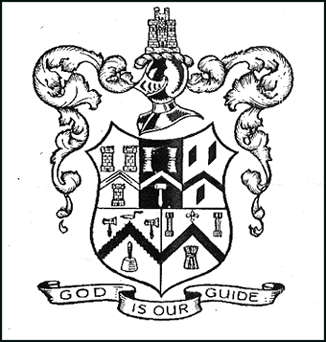
Mark Masonry is one of the oldest degrees in Freemasonry and helps bridge operative and speculative Freemasonry. Some of the earliest Marks found in England date back to the 12th century. Operative Masonry started emerged in England after Norman conquests. In the following centuries it would grow to such a level that required it to be regulated in custom and practices, thus Mason guilds arose. The first regulatory body was the Masons’ Company, formed in London sometime around 1375. This group would later known as the London Masons’ Company and was granted a coat of arms in 1472 during the reign of Edward VI. 

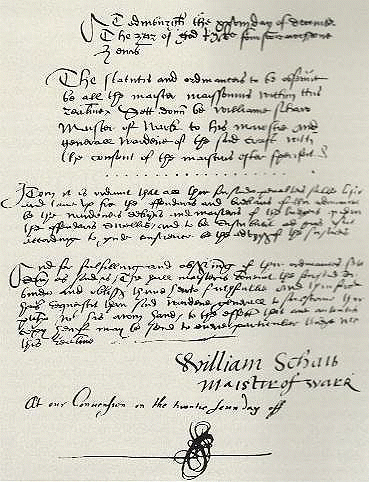
In 1598, William Schaw as Master of Works, named by King James VI of Scotland, published a set of statutes known today as the Schaw Statutes of 1598. These statutes established the duties and structure for Lodges among other things, but, more importantly, it required the recording of the Mason's Mark in a book:
No master or fellow of craft shall be received or admitted without there being present six masters and two entered 'prentices, the warden of the lodge being one of the six, when the day of receiving the new fellow of craft or master shall be duly booked and his mark inserted in the same book, with the names of the six admitters and entered 'prentices, as also the names of the intenders [intendaris-instructors] which shall be chosen for every person so entered in the book of the lodge. Providing always that no man be admitted without an essay and sufficient trial of his skill and worthiness in his vocation and craft.
Within the first half of the 17th century came the appearance of speculative Masons into the operative Mason's Lodge in Scotland. Many of these early Lodges have some existing records that show a combination of names of the Brothers with or without their Marks alongside the signature, but there are also some entries that are just the Marks themselves. Many of these ancient records also speak of men choosing their mark.

From recorded history it is seen that there wasn't much to the ritual of early Mark Masonry, but with the entry of speculative Masons, more elaborate ceremonies were established and enhanced throughout the years becoming more important. In the record books kept from early Lodges, we see entries talking about Mark Masons and Mark Master Masons, and this is still something seen outside of America were a Fellow Craft Mason would receive the Mark Man or Mason and a Master Mason would receive the Mark Master degree. 


The history of Mark Masonry in America is foggy due to lacking records. At various times, it has been conferred by Blue Lodges, the Scottish Rite, Chapters of Royal Arch Masonry, Knights Templar Encampments (now known as Commanderies), and independent Mark Mason Lodges. Eventually this degree would be absorbed and under the authority of Royal Arch Masonry in the 19th century. This was done through the efforts of Thomas Smith-Webb who published in 1798 a Monitor that became very popular and widespread in the US. Today for one to advance to the degree of Royal Arch Mason, one must go through the Mark Master Mason degree; this is true for Masonry in the US, Ireland, and Scotland. In England, Mark Masonry is an independent body known as Grand Lodge of Mark Master Masons of England, Wales and the Dominions and Dependencies of the British Crown which was established in 1856 and oversees around 1,200 Mark Lodges.

The Mark Master Mason degree teaches and explains many valuable lessons such as how to receive the wages talked about in the Blue Lodge, the value of labor, integrity, individual responsibility, and humility. It also teaches one not to judge one by simply on outward appearances, but seek the inner, hidden truth. In this degree we are introduced to the Mallet and Chisel, which, alongside the keystone, are prominent symbols of this degree as both of these instruments are essential preparing stone for the builder's use.

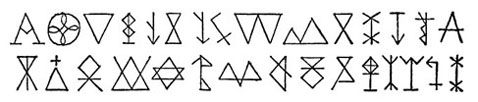
We are taught that through the Mallet we are to correct our irregularities and superfluous habits, and is similar to the Gavel talked about in the 1st degree and can be aligned with the Cardinal Virtue, Temperance. The Chisel is to stone, what education and discipline are to our mind, which reveals the hidden beauty and virtues hidden beneath the surface. It was through these two instruments that our ancient Operative Brethren were able to place their Mark upon their piece of work. Although today, we use other devices to draw our Mark, which allows us to come up with all sorts of designs, Marks of old were primarily a combination of straight lines as they only used the Chisel and the Mallet. Like the old days, once a Mason chooses his Mark it can never be changed.


It has always been man's desire to make his Mark upon the world. With the Mason's Mark, operative Masons proved their work, and, today, while we speculative Masons still choose a Mark, we must show our work by building ourselves and showing the world we are better men for being Masons. What will be your Mark?

References

1. Are you Worthy to Receive your Mark? n.d. http://www.eastangliamark.org.uk/about-the-degrees. 

2. Capitular Degrees of Freemasonry. n.d. http://www.goldenstatechapter.org/pdf/Capitular%20Degrees%20of%20Freemasonry.pdf. 

3. Mark Masonry. n.d. http://utahmarkmasonry.org/mark-masonry/. 

4. Mason's Marks. n.d. http://freemasonry.bcy.ca/aqc/masonmarks/operative.html. 

5. Speidel, Frederick. The York Rite of Freemasonry. Mitchell-Fleming Printing, Inc., 1978. 

6. Turnball, Everett R., and Ray V. Denslow. A History of Royal Arch Masonry. Vol. 1. 2 vols. Highland Springs, VA: Anchor Communications, 1956. 

7. Wallace, George M. The Mason's Mark. n.d. http://www.masonicworld.com/education/articles/the-masons-mark.htm. 

8. Woolmer, George. A History of Mark Masonry. n.d. http://www.themasonictrowel.com/books/mark_history_by_George_Woolmer/files/origins_operatives_and_mark_masonry.htm.

Friday, September 6, 2013

This is Your Day

Author Unknown

Blessed is the man, indeed, 
Who in this life can find; 
A purpose that can fill his days, 
And goals to fill his mind! 

The world is filled with little men 
Content with where they are; 
Not knowing joys success can bring, 
Not willing to go that far! 

Yet, in this world there is a need, 
For men to lead the rest 
To rise above the "average" life, 
By giving of their best! 

Would you be one, who dares to try, 
When challenged by the task; 
To rise to heights you've never seen, 
Or is that too much to ask? 

This is your day--a world to win 
Great purpose to achieve; 
Accept the challenge of your goals 
And in yourself, believe! 

You will be proud of what you've done, 
When at the close of day; 
You look back on your battles won, 
Content, you came this way!